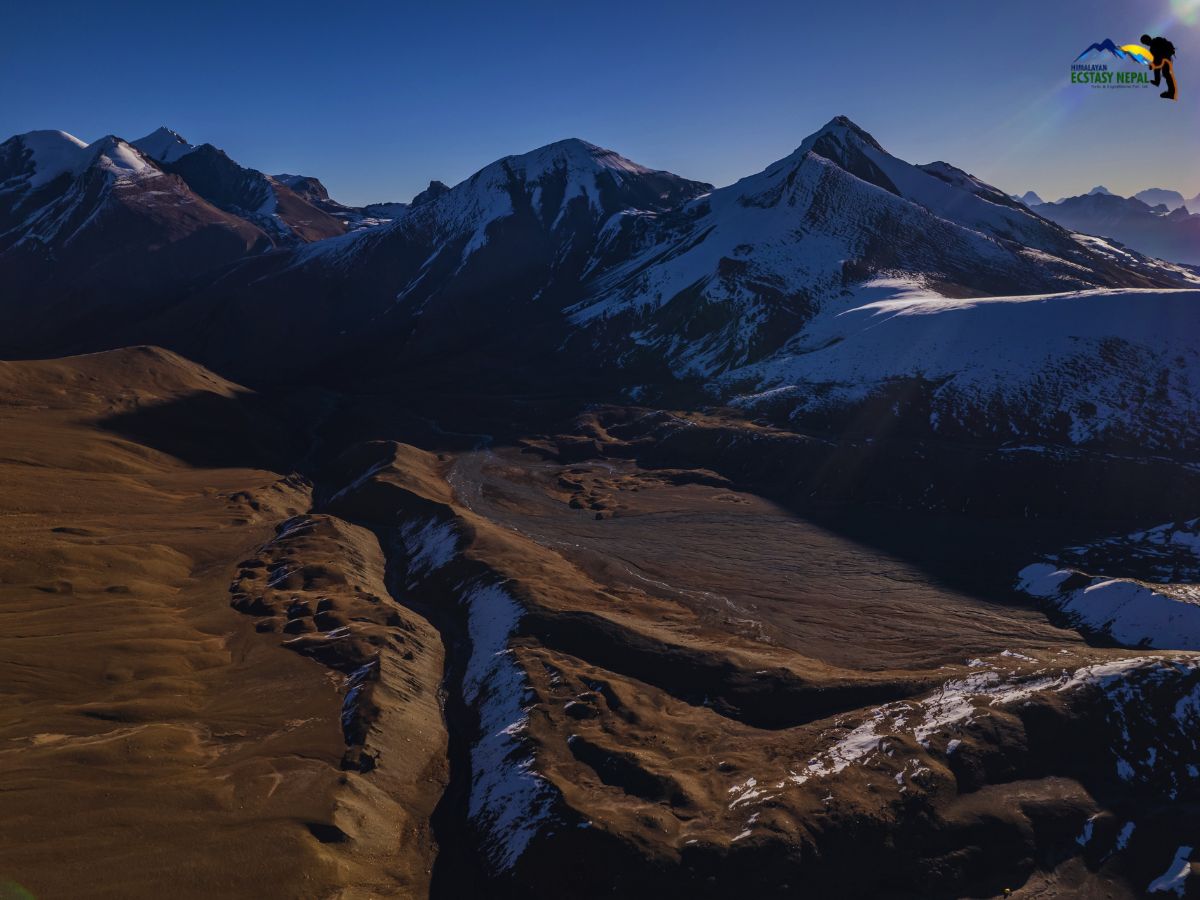
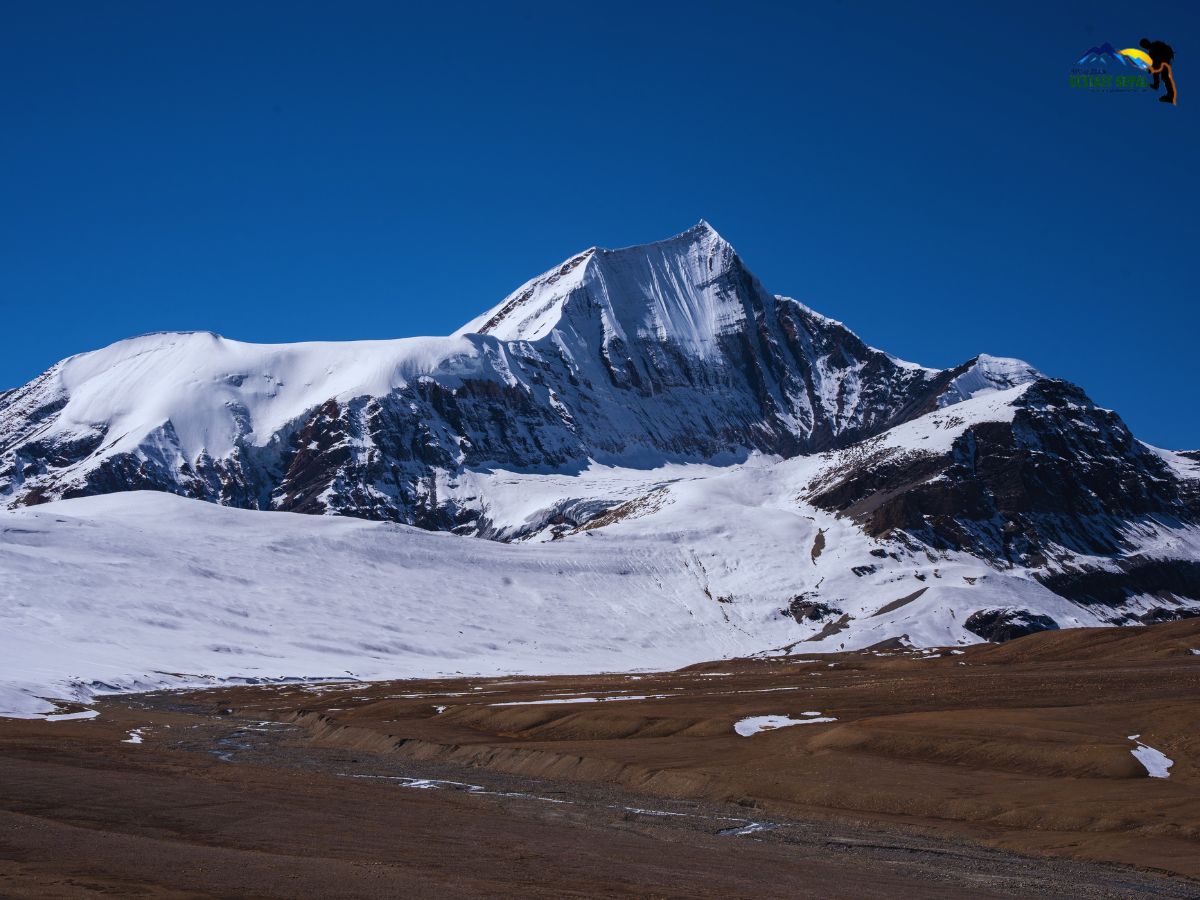
The Dhaulagiri Circuit Trek is one of the most remote and less crowded treks in Nepal, perfect for those who want a true wilderness experience. Unlike popular routes like Everest and Annapurna, this circuit takes you far from busy trails into quiet valleys and high mountain passes. It circles around Dhaulagiri (8,167 m), the seventh highest mountain in the world (Latitude: 28.6967° N, Longitude: 83.4875° E). This is a full camping trek, where you stay in tents throughout the journey, adding to the raw and authentic experience. The trek includes challenging sections like French Pass (5,360 m) and Dhampus Pass (5,200 m), with glaciers, ice, and rugged terrain along the way. Located in western Nepal, this journey combines wilderness, technical trekking, and peaceful surroundings. Full-board camping services and guided support are available, making it safer and more organized.
Grade: D / D+ (Difficile)
Trip Overview
Duration15 Days
Trip GradeStrenuous
Strenuous trips like expeditions to 6,000 m plus peaks, 7,000 m and 8,000 m mountains involve high altitudes, extremely difficult terrain, and very extended durations - need technical climbing skills and use of climbing equipment.
CountryNepal
Maximum Altitude5,360 m
Group Size1-20
StartsKathmandu
EndsKathmandu
ActivitiesTrekking
Best TimeMarch - May, October - November
TREK HIGHLIGHTS
Trek through one of Nepal's most isolated and technically demanding routes, starting from Bagar and finishing near Marpha or Jomsom in the Mustang region.
Cross three high mountain passes, including French Col (5,360 m) and Dhampus Pass (5,240 m), with dramatic views of Dhaulagiri I (8,167 m) and the surrounding range.
Walk alongside the Kaligandaki Gorge, widely recognised as the deepest gorge in the world, carved between Dhaulagiri and Annapurna.
Experience a full self-managed camping trek from Italian Base Camp onward, with the HEN team handling all meals, equipment, and logistics on the mountain.
Spend nights at high-altitude camps including Italian Base Camp (3,660 m), Japanese Base Camp (approx. 4,200 m), and Hidden Valley (approx. 5,050 m).
Encounter the Magar community in Bagar, one of Nepal's oldest indigenous groups, with a rich living culture rooted in the mountains.
Trek through avalanche-prone terrain with professional guidance from HEN's experienced and technically skilled team, including a recommended climbing guide.
Complete a route that very few trekkers ever attempt, with full team support, weather monitoring, and flexible logistics from Himalayan Ecstasy Nepal.
Some treks in Nepal reward you with views. The Dhaulagiri Circuit rewards you with something rarer. It gives you the feeling that you have actually earned the mountains.
This is not a trail you choose because it is convenient. You choose it because you want a genuine Himalayan adventure, the kind that very few people complete, that pushes you physically and mentally, and that leaves you with a deep sense of pride when it is over.
The route begins in Bagar, a village in the Myagdi district where the Magar community has lived for generations. From there, the trail climbs steadily through forests, teahouses, and river valleys before entering the raw and remote world of the Dhaulagiri massif.
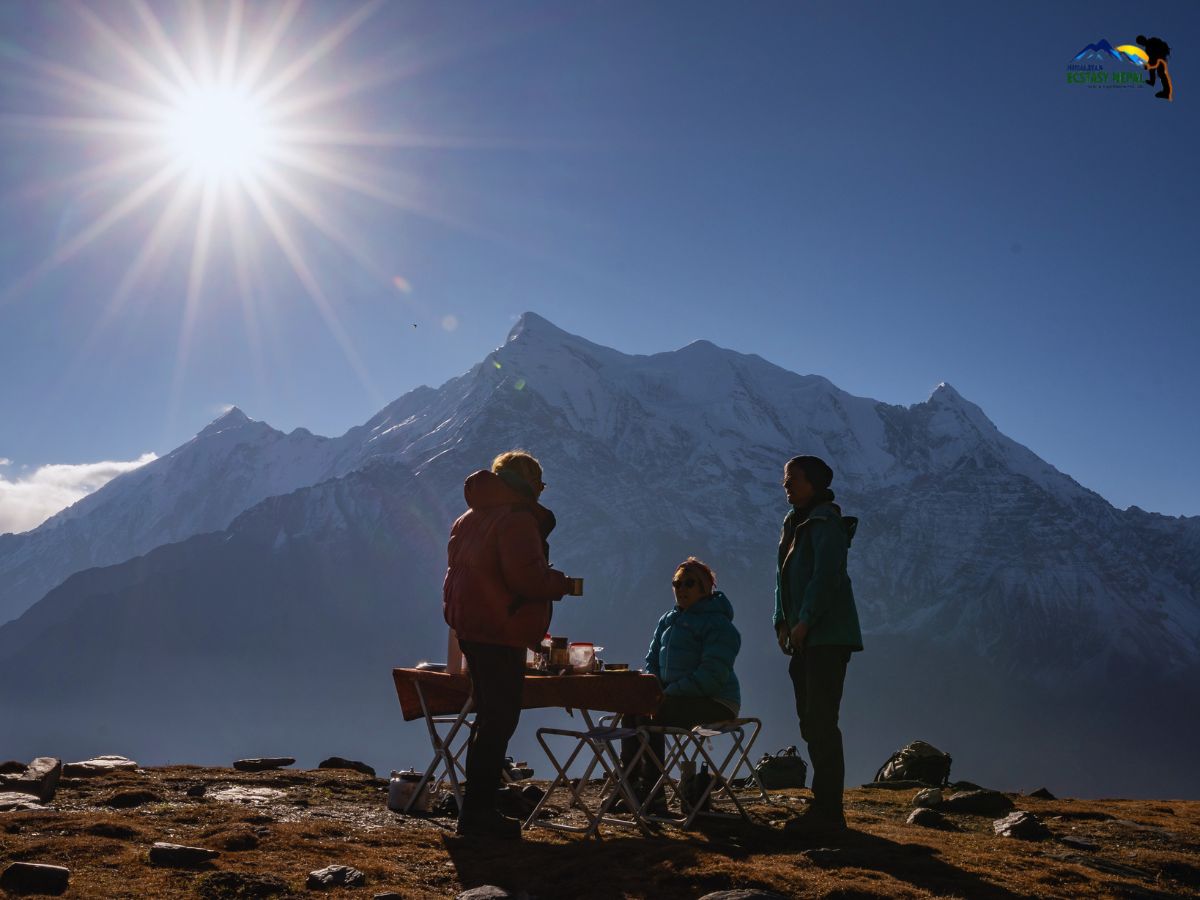
Once you pass Sallaghari and reach Italian Base Camp, the teahouses disappear. From this point, everything becomes a self-managed camping experience. Your team cooks your meals, carries your high-camp supplies, and makes every decision together, including when to move and when to wait.
The technical heart of the circuit is the crossing of French Col at 5,360 m and then Dhampus Pass at 5,240 m. These are not casual high passes. The terrain involves glacier walking, steep snow slopes, and moraine.
The route is avalanche-prone in sections, and weather in this region can shift without warning. That is exactly why our team recommends having a professional climbing guide alongside the guide!
Not just for technical skill, but for safety decisions that affect every single person on the mountain, from trekkers to porters to staff. When we say teamwork, we mean it in the most serious sense of the word.
After crossing the passes and descending through Hidden Valley, one of the most surreal landscapes in the Himalayas, the trail drops into the familiar world of the Mustang region. Tea houses return. The wind carries the smell of apple orchards in Marpha. And somewhere in that descent, it hits you. You crossed it. You actually did it!
The Dhaulagiri Circuit today takes between 14 and 16 days. It used to take three weeks, but road access has changed the starting conditions considerably. What has not changed is the mountain itself, or what it demands of you. If your fitness is solid, your mindset is strong, and you have the right team behind you, this trek will be one of the greatest things you have ever done.
Why Do the Dhaulagiri Circuit and Why Choose HEN?
There are a handful of treks in Nepal that carry genuine prestige among serious trekkers and mountaineers. The Dhaulagiri Circuit is one of them. It is not famous for being easy or scenic in a predictable way. It is famous because it is hard, isolated, and deeply rewarding in the way that only remote and demanding places can be.
What separates this route from others in Nepal is the combination of terrain, altitude, and commitment it requires. You are not walking a well-worn teahouse trail. From Italian Base Camp onward, you are in a self-contained camping environment.
Your team has to manage everything. No lodge owner will sort out your dinner. No teahouse will charge your phone. It is your group, your guides, and the mountain. For trekkers who want a peaceful and deeply personal adventure with a small, trusted team, there is nothing better!
The route also takes you through one of the most geographically dramatic corridors in the world. The Kaligandaki Gorge, which carves its way between Dhaulagiri I and Annapurna I, holds the title of the world's deepest gorge.
The two peaks are both above 8,000 m, and the river between them sits at just over 2,500 m. The vertical difference between the summits and the valley floor is staggering, and you feel it as you move through this landscape.
At Himalayan Ecstasy Nepal, we do not take this route lightly. Our team has done it, studied it, and continues to refine how we operate on it. We monitor weather forecasts carefully throughout the trek.
We recommend a professional climbing guide as part of every Dhaulagiri Circuit team, not as a luxury, but as a genuine safety measure in terrain that demands technical awareness.
We believe in flexible logistics, because this mountain will sometimes ask you to wait, and being willing to do that is what keeps everyone safe. If you want a team that puts your life and experience first, we are confident we are the right people to take you through this circuit.
Main Attractions of the Dhaulagiri Circuit Trek
The Dhaulagiri Circuit Trek is a journey through constantly changing terrain, moving from traditional villages and deep river gorges into remote alpine wilderness. Its appeal lies in its raw, less-commercial nature, where the experience is shaped by scale, isolation, and the gradual transition into high-altitude landscapes.
Each stage offers something distinct, from the dramatic Kaligandaki Gorge and cultural encounters in lower villages to the demanding sections of Italian Base Camp, French Col, Hidden Valley, and Dhampus Pass. Together, these highlights create one of Nepal’s most challenging and rewarding trekking experiences. Let's get into these in detail:
The World's Deepest Kaligandaki Gorge Right Beneath Your Feet
Before you even reach the high camps, the Dhaulagiri Circuit hands you one of the great geographical wonders of the world. The Kaligandaki Gorge is recognized as the deepest gorge on earth, and the reason comes down to two mountains and one river.
Dhaulagiri I rises to 8,167 m to the west. Annapurna I rises to 8,091 m to the east. The Kaligandaki River flows between them at roughly 2,520 m. That difference of over 5,500 m in vertical height on both sides is what earns the gorge its title.
As a trekker on this route, you move through this corridor, not just past it. The scale is difficult to describe. The walls of the gorge press close in sections, and the roar of the river follows you. This is not a viewpoint you visit. It is the terrain you inhabit, and it sets the tone for everything that follows.
Meet the Magar People and Explore Magar Villages
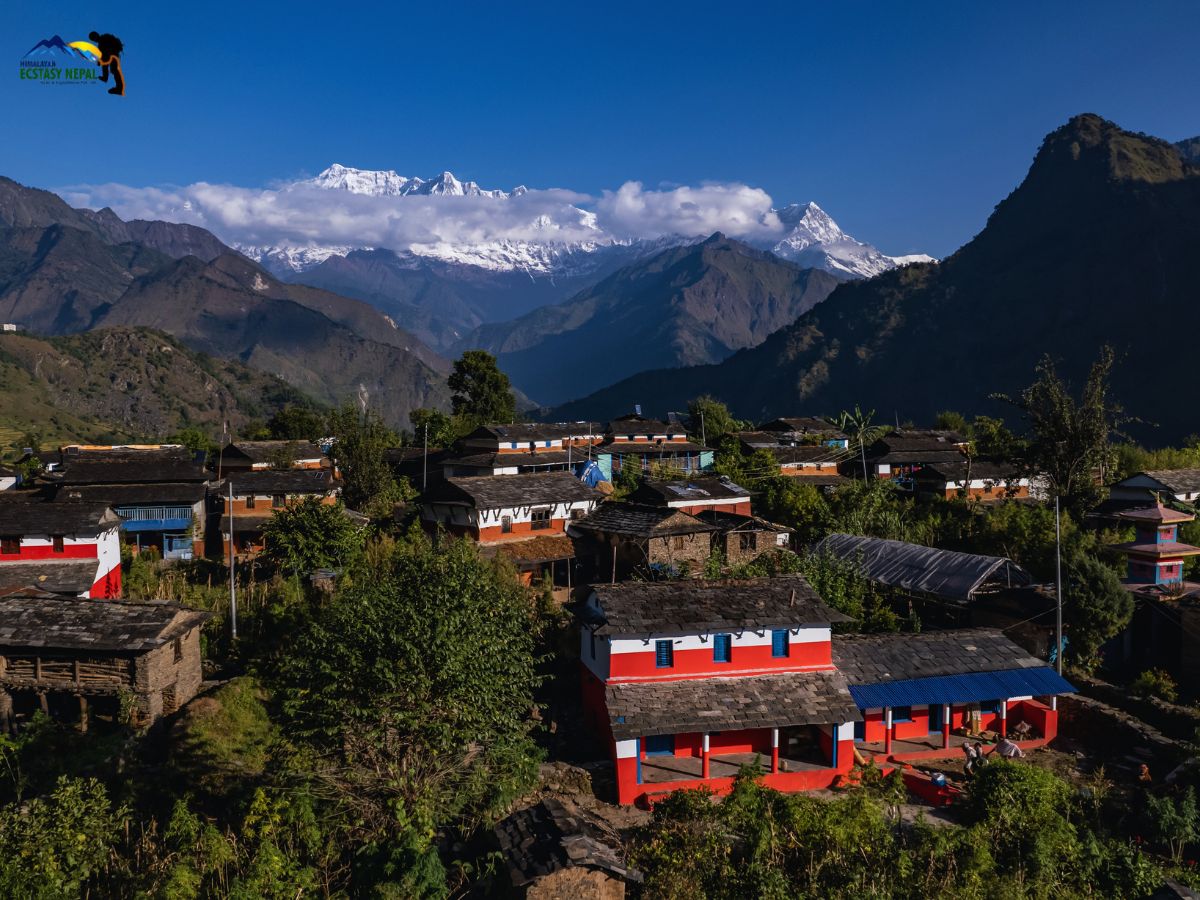
Takam, a Magar Village in Dhaulagiri Circuit Trek
The trek begins in Bagar, and it is worth slowing down here before the climbing starts. Bagar is a Magar village, and the Magar people are one of Nepal's oldest and most culturally distinct indigenous communities.
They have a deep historical connection to this part of the Himalayas, and their presence along the lower sections of the Dhaulagiri route gives the early days of the trek a warmth and human richness that you will not find once you are high on the mountain.
We have always believed that a Himalayan trek is not only about altitude and passes. The people you meet along the way matter just as much. In multiple magar villages (like Bagar, Takam, , you get a glimpse of a mountain community that has lived in the shadow of Dhaulagiri for generations.
Their livelihood is tied to the land, the river, and the trails you are walking. Greet them, observe their daily life, and carry that sense of connection with you as the terrain gets harder.
Along the route, particularly in Dovan, you will also find a small European-style eatery that feels entirely unexpected in this setting. It is a small but memorable detail that reminds you of how the world finds its way even into remote Himalayan corridors.
Italian Base Camp and the Start of the Real Adventure
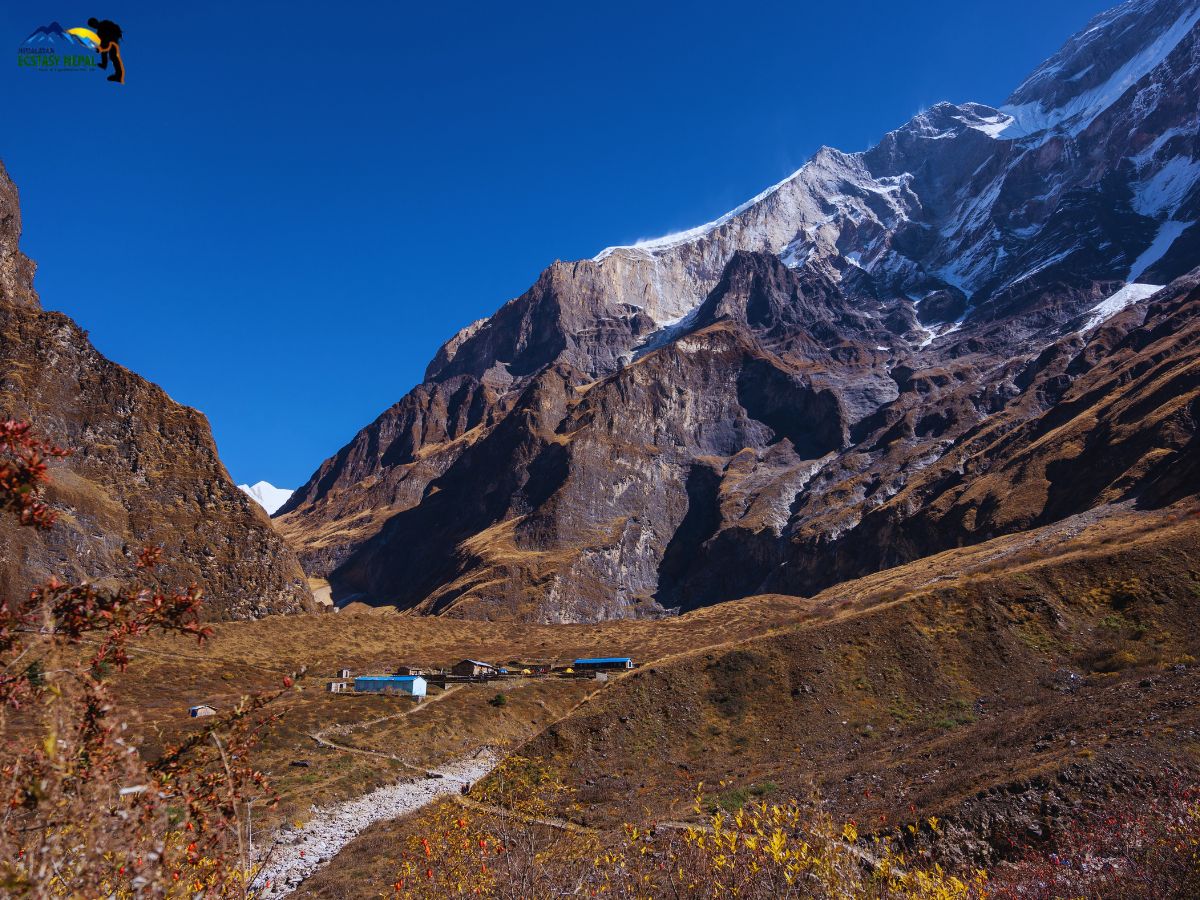
From Sallaghari onward, the trail enters a different world. Italian Base Camp at 3,660 m is where the teahouses end and the camping begins. This is the moment the Dhaulagiri Circuit earns its reputation.
Your tent is your shelter. Your team prepares your food. The mountain is directly above you, and the route ahead is serious.
This section also marks the beginning of the weather-dependent decision-making. Our team watches the forecasts closely from this point forward.
The stretch between Italian Base Camp and Japanese Base Camp at approximately 4,200 m is one of the most avalanche-prone sections of the entire route. If heavy snow or deteriorating weather moves in, the right decision is to wait, and sometimes, to turn back.
We have seen trekkers face this situation, and the teams that handle it best are the ones who trust their guides completely and understand that protecting the whole team, porters and staff included, is more important than any summit or pass.
What Italian Base Camp gives you, on a clear and settled evening, is one of the most breathtaking campsites in Nepal. Dhaulagiri towers above you. The silence is absolute. That night, you will understand why serious trekkers call this one of the great adventure routes in the Himalayas.
French Col: The Highest Point and the Hardest Day
The crossing of French Col aka French Pass at 5,360 m is the defining moment of the Dhaulagiri Circuit. From Dhaulagiri Base Camp at 4,750 m, the trail climbs steeply through glacier, moraine, and snow.
It is a long push of six to eight hours, and it demands everything you have physically. Crampons and an ice axe may be necessary depending on conditions. This is the primary reason we strongly recommend having a professional climbing guide as part of your HEN team on this route.
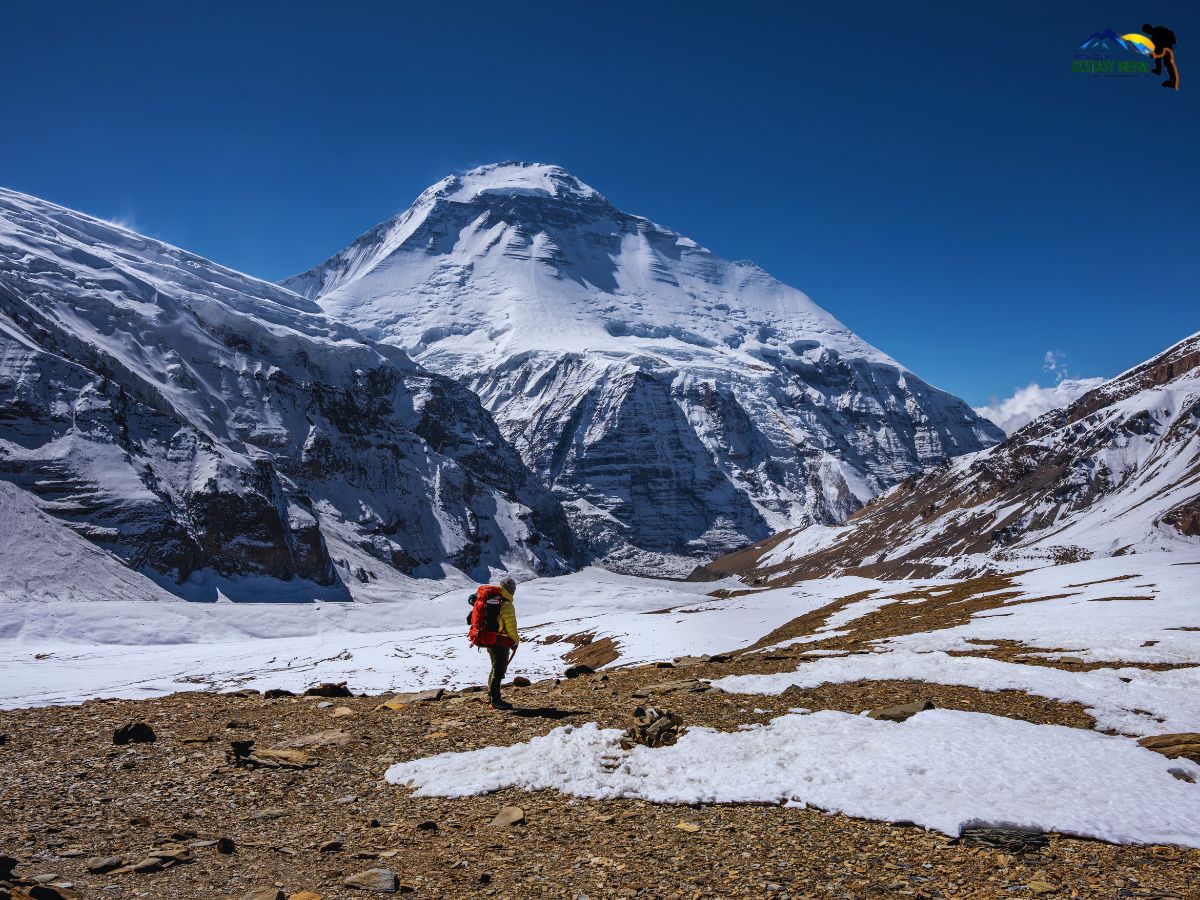
From the top of French Col, the view opens up in every direction. The Dhaulagiri massif stands behind you in full. The Hidden Valley stretches out ahead. There is no experience quite like standing at 5,360 m on terrain you have worked hard to earn, with clear sky above and two great Himalayan wildernesses on either side of you.
The descent into Hidden Valley is steep and technical. The terrain remains serious. But once you are in the valley, a different kind of wonder takes over.
Hidden Valley: The Place That Feels Like Another World
Hidden Valley sits at around 5,050 to 5,140 m, a wide and completely open high-altitude plateau unlike anything else on this route. It is cold, exposed, and extraordinarily beautiful.
The flatness of it surprises you after the technical climbing to get here. There is almost nothing to compare it to in the rest of Nepal.
Camping in Hidden Valley is one of the experiences our team speaks about most when they come back from this circuit. The wind is constant, the sky is enormous, and the sense of isolation is total. You are high above almost everything, in a place that most people will never see.
That feeling of being somewhere genuinely rare is something Himalayan Ecstasy Nepal is proud to offer!
Dhampus Pass and the Long Descent
After Hidden Valley, the route crosses Dhampus Pass at 5,240 m before beginning the descent toward Yak Kharka, also known as Aloo Bari, at 3,680 m. The descent is long and demanding.
The legs feel it after the days of high-altitude climbing, and the trail does not give you any easy sections. This is the part of the trek where mental endurance becomes just as important as physical strength.
What awaits you at the bottom is the return of the inhabited world. The Mustang trade corridor, with its juniper scrub, apple orchards, and familiar teahouse culture, comes back into view as you descend. Yak Kharka connects to the main highway within roughly an hour of walking.
From there, the options open up. Marpha, Jomsom, a flight to Pokhara, or a jeep down to Tatopani. The finishing chapters of this circuit are flexible, and your HEN team will help you navigate them based on your preference and conditions.
The Quiet Pride of Finishing
We want to say something directly to those considering this trek. When you cross French Col and Dhampus Pass and come down the other side, you will feel something that is hard to put into words.
Trekkers who have completed circuits at this level often go on to attempt peaks above 6,000 or even 7,000 m. The Dhaulagiri Circuit gives you that kind of foundation.
It builds a confidence in the mountains that stays with you. You will feel, in the most genuine sense, like a winner. And that is not a marketing line! That is what our team has watched happen, again and again, on this route.
Dhaulagiri Circuit Trek in 15 Days Itinerary
Kathmandu to KathmanduExpand all
Your Dhaulagiri Circuit adventure starts the moment you land at Tribhuvan International Airport. Our team will be waiting to receive you and transfer you to your hotel in Kathmandu. The city is lively, layered with culture, and a great place to settle in before the mountains begin.
This is the day for rest, rehydration after travel, and a relaxed orientation meeting with your guide. We will walk you through the full route, explain what to expect at each stage, answer every question you have, and make sure your gear is ready.
If anything is missing, Thamel is right outside your door and has everything a trekker could need. Your guide can point you in the right direction.
In the evening, spend time exploring Thamel, or simply rest. Tomorrow begins the journey toward one of the most dramatic landscapes in Nepal.
Max Altitude: 1,400 m Meals: DinnerAccommodation: 3-star HotelTransportation: On a private basis
Today you fly from Kathmandu to Pokhara. The flight takes about 25-30 minutes and already delivers views of the Himalayan range that make the short journey memorable.
Pokhara itself is a beautiful lakeside city at the foot of the Annapurna range, and if time allows, it is a wonderful place to spend a few relaxed hours before the trek begins.
Depending on your arrival time and how efficiently the morning moves, there is an option to continue directly from Pokhara toward Beni on the same day. Our HEN team will assess this with you based on conditions and timing.
Max Altitude: 820 m Meals: Breakfast, Lunch, DinnerAccommodation: 3-star HotelTransportation: Flight + Private Car/Jeep
Today is a full driving day, and it is one that sets the mood for the adventure ahead. From Pokhara you drive to Beni, which takes about three hours. From Beni, the road continues for another five hours to reach Bagar.
Some sections of this road are off-road and bumpy, particularly as you leave the main highway and push deeper into the Myagdi district.
The drive passes through Darbang, Sibang, Muri, and Jukepani, all of which used to be trekking waypoints before road development reached them. Trekkers used to walk these sections as part of the journey. Today, they are covered by vehicles, which shortens the overall timeline considerably.
That said, the drive itself is scenic and gives you a strong first impression of the river valley and the villages that line it.
When you arrive in Bagar, you are in Magar territory. This is a community with deep roots in this part of Nepal, and you will feel that warmth and groundedness immediately. Spend the evening settling in and observing the village before the trail begins tomorrow.
Max Altitude: 1,800 m Meals: Breakfast, Lunch, DinnerAccommodation: TeahouseTransportation: Private/Shared Jeep
The trek begins in earnest today. The trail from Bagar to Dovan takes roughly four to five hours and follows the river valley upward through forested terrain.
The path is well-established in this section, and the walking is steady rather than technical. Tea houses are available along the way, and a lunch stop is easy to arrange.
Dovan is a small settlement where the trail begins to feel more remote. The air is noticeably fresher, and the sounds of the lower valley start to fade.
For those who love their food, Dovan holds a small and unexpected surprise: a European-style eatery run locally that serves food you would not expect at this altitude. It is worth stopping for!
The first day on trail is always about finding your rhythm. Let the pace settle, keep the energy steady, and take in the forests and river sounds around you.
Max Altitude: 2,200 m Meals: Breakfast, Lunch, DinnerAccommodation: Teahouse
Today, the trail climbs more noticeably as you leave the lower valley behind. The route from Dovan to Sallaghari is a steady ascent through increasingly alpine terrain, and you will start to feel the altitude gaining. The walking typically takes five to six hours, and the views begin to open up as the tree line shifts.
Sallaghari is effectively the last proper tea house stop before the route transitions into full camping mode. This is an important logistical point for the team. Supplies that need to be carried higher are organized here. Equipment is checked after conformation from your guide.
The camping section that begins tomorrow is where the real Dhaulagiri Circuit experience starts, and Sallaghari is the final threshold before it. Rest well tonight. Tomorrow the mountain takes over!
Max Altitude: 3,000 m Meals: Breakfast, Lunch, DinnerAccommodation: Teahouse
Today marks a significant shift. The tea houses end at Sallaghari, and from here the trek becomes a fully self-managed camping operation. There are no lodges ahead. Your HEN team carries, cooks, and manages everything. This is the experience that makes the Dhaulagiri Circuit unlike any other trek in Nepal.
The walk from Sallaghari to Italian Base Camp takes approximately five to six hours. The trail climbs through open terrain with increasing views of the Dhaulagiri range above. As you approach Italian Base Camp, the scale of what lies ahead becomes clear. The glacier, the ridgelines, and the sheer mass of Dhaulagiri I come into full view.
Camp is set up by the HEN team, and your first proper high-altitude camping night begins. The temperature drops sharply after sunset. Make sure your sleeping layers are ready and accessible. A warm dinner, prepared by the team, will make the evening feel like exactly the kind of adventure you came here for.
Max Altitude: 3,660 m Meals: Breakfast, Lunch, DinnerAccommodation: Tent
This rest day is not optional. It is essential. The section between Italian Base Camp and Japanese Base Camp ahead is one of the most serious parts of the entire route, and your body needs time to adjust before you attempt it.
From this point forward, weather becomes the most important variable on the mountain. Our team monitors forecasts carefully, and decisions about when to move and when to wait are made with the safety of everyone in mind, not just trekkers, but every guide, porter, and staff member on the expedition.
If conditions are unsettled, waiting an extra dayhere is always the right call. We have seen teams push forward in poor conditions on this section and regret it. We have also seen teams wait one extra day and cross in perfect clarity. Patience is one of the most important skills on this circuit.
Use today for short walks around camp to aid acclimatization, hydration, and rest. The views from Italian Base Camp on a clear morning are extraordinary, and this day gives you time to absorb them properly.
Max Altitude: 3,660 m Meals: Breakfast, Lunch, DinnerAccommodation: Tent
This is one of the most critical days of the entire circuit. The route from Italian Base Camp to Japanese Base Camp passes through terrain that is avalanche-prone and heavily snow-affected.
The decision to move today is made by your HEN team based on weather conditions and the safety assessment for all members of the group.
If conditions are good, the walk takes approximately four to five hours of steady climbing. The terrain becomes more exposed and the trail less defined as you gain altitude. Snow and ice are common on this section even in the main trekking seasons.
Proper footwear, warm layers, and trekking poles are essential. If your team includes a professional climbing guide, their judgment on this section is invaluable (which is why we have included one on this 15-day Dhaulagiri Circuit Trek package)
Japanese Base Camp at approximately 4,200 m is a dramatic and austere campsite. The surrounding mountains fill the skyline in every direction. Sleep early and sleep warm. Tomorrow is one of the two hardest days of the trek!
Max Altitude: 4,200 m Meals: Breakfast, Lunch, DinnerAccommodation: Tent
The trail continues to climb today from Japanese Base Camp to Dhaulagiri Base Camp at 4,750 m. The walking takes approximately five to six hours, and the terrain includes moraine, boulder fields, and sections of snow.
The air is thin, and the pace will naturally slow. This is completely normal and expected. Your guide will keep the group moving at a steady and sustainable rhythm.
Dhaulagiri Base Camp is one of the iconic high camps of the Himalayas. Expeditions to the summit of Dhaulagiri I pass through this point, and being here as a trekker carries its own weight of meaning.
The north face of the mountain above is immense and raw. In the evenings, when the light shifts, it turns shades of orange and gold that make it impossible to look away!
Rest as much as possible tonight. Tomorrow is the biggest day of the circuit!
Max Altitude: 4,750 m Meals: Breakfast, Lunch, DinnerAccommodation: Tent
This is the day the Dhaulagiri Circuit is built around. You will be moving before first light, because the climb to French Col is long, technical, and demands an early start.
From Dhaulagiri Base Camp, the trail heads steeply upward through glacier and moraine terrain. The ascent is relentless, and the altitude makes every step deliberate. Snow slopes and icy sections are common, and crampons and ice axe use may be required depending on conditions at the time of your trek.
This is precisely the section where having a professional climbing guide on your HEN team makes the most meaningful difference, both in terms of technical guidance and in reading the mountain safely.
After approximately six to eight hours of climbing and careful navigation, you reach French Col at 5,360 m, thehighest point of the entire Dhaulagiri Circuit. The views from the pass are extraordinary. Himlung Himal, Cheo Himal, Kang Guru, and the Annapurna range are all visible on a clear day.
The Dhaulagiri massif stands behind you in full scale. Take your time here, because you have earned every second of this view.
The descent from French Col into Hidden Valley is steep and requires care. The trail drops down through snow and loose rock before leveling out into the wide, open plateau of Hidden Valley at roughly 5,050 m.
The contrast between the violent climb and the quiet enormity of the valley is one of the most memorable transitions of the entire route.
Camp in Hidden Valley is set in a place that feels genuinely unlike anywhere else on earth. Cold, silent, and vast. Sleep early and keep warm as you've been doing every other day!
Max Altitude: 5,050 m Meals: Breakfast, Lunch, DinnerAccommodation: Tent
The second major pass of the circuit is today. From Hidden Valley, the trail climbs to Dhampus Pass at 5,240 m before beginning a long and sustained descent toward Yak Kharka, also known as Aloo Bari, at 3,680 m.
The ascent to Dhampus Pass is shorter and less technical than French Col, but coming after yesterday's effort, your body will feel it. The terrain remains exposed and serious.
From the top of Dhampus Pass, the landscape ahead transforms completely. The brown and white world of the Dhaulagiri high camps gives way to the broader valleys and warmer tones of the Mustang region below.
The descent to Yak Kharka is long, roughly five to six hours of downhill walking on mixed terrain including snow, scree, and trail. So, your knees and quads will be tested. Trekking poles are your best friends today!
By the time you reach Yak Kharka, you will have crossed both major passes of the Dhaulagiri Circuit. That is a genuine achievement, and the sense of it settles in beautifully as you rest at camp.
Max Altitude: 3,680 m Meals: Breakfast, Lunch, DinnerAccommodation: Tent
Today the world becomes familiar again. From Yak Kharka, the trail connects to the main Mustang trade road approximately one hour of downhill walking away.
From here, regular jeeps are available, and the transition from remote high-altitude camping to the inhabited world of lower Mustang happens quickly.
If you are planning to fly back to Pokhara, the route heads toward Jomsom, where domestic flights operate regularly. If you prefer to travel by road, it is not necessary to go all the way to Jomsom. Our HEN team will coordinate the logistics based on your preference and conditions on the day.
Marpha is one of the most charming villages in the Mustang region. It is famous for its apple orchards, apple brandy, and the whitewashed stone houses that line its narrow lanes.
After the raw exposure of the high circuit, walking through Marpha feels like stepping into a completely different Nepal. A warm meal, a proper roof overhead, and the knowledge that the hardest part is behind you make this one of the most satisfying evenings of the entire journey.
Tip: You can even extend this package and explore more of Mustang. Read our Upper Mustang Jeep Tour package for more details.
Max Altitude: 2,670 m Meals: Breakfast, Lunch, DinnerAccommodation: Local Lodge
This morning, you fly from Jomsom to Pokhara. The flight takes around 20 minutes and gives you a final aerial view of the Mustang region and the Annapurna range before landing in Pokhara's warmer, greener landscape.
Alternatively, if flying is not available or preferred, you can drive from Tatopani to Pokhara through the Kaligandaki valley road.
Once in Pokhara, our HEN team will transfer you to your hotel. You may stay in the same hotel that you stayed in on Day 2.
As you experienced already, the lakeside city is calm and beautiful, and the evening is entirely yours. Phewa Lake, the lakeside promenade, a warm shower, and your choice of Pokhara's excellent restaurants are all waiting!
Max Altitude: 820 m Meals: Breakfast, Lunch, DinnerAccommodation: 3-star HotelTransportation: Flight (option for drive) + Car/Jeep
Today offers flexibility. You can fly or take a scenic drive back to Kathmandu, or spend one more day resting and exploring Pokhara before returning. For those who want a nature add-on, a short excursion to Chitwan National Park is a wonderful option at this stage of your Nepal visit.
If flying to Kathmandu, the flight takes about 25 minutes and lands at Tribhuvan International Airport. Your HEN team will arrange your transfer to the hotel. Kathmandu on the day before departure is a great time for any last shopping, a good meal, or a visit to any heritage sites you may have missed on arrival.
Max Altitude: 820 m / 1,400 m Meals: Breakfast, DinnerAccommodation: 3-star HotelTransportation: Flight or Drive
Your Dhaulagiri Circuit Trek concludes today. Depending on your flight time, our team will transfer you to Tribhuvan International Airport with enough time for check-in. If your flight is in the afternoon or evening, there is still time for a final breakfast and a relaxed morning in Thamel.
We hope the Dhaulagiri Circuit Trek has given you something that stays with you far beyond Nepal. Safe travels, and whenever the mountains call you back, be sure to contact Himalayan Ecstasy Nepal right away!
Meals: BreakfastTransportation: On a private basis
Trip Cost Details
Includes
Transfers to and from Kathmandu airport
All ground transportation: Kathmandu - Beni - Bagar (private jeep or local bus) for staff and all logistics required for the trip
Flight ticket Kathmandu - Pokhara - Kathmandu (optional), or drive all the way from Kathmandu to Pokhara and back
Jomsom to Pokhara flight or optional private jeep drive down to Pokhara
2 nights in a comfortable hotel in Kathmandu before and after the trek
2 nights in a comfortable hotel in Pokhara after the trek
Food and accommodation in tents during the trip, with full camping equipment and porter support for gear and supplies; lower sections can use tea houses in Marpha/Jomsom
All required trekking permits for the Dhaulagiri Circuit route
Required number of porters for all logistics and guest luggage
Licensed English-speaking trekking guide, assistant guide, and kitchen crew with full insurance included
A professional climbing guide, along with a 50-meter rope and one set of climbing gear, is recommended and available as part of your HEN team for technical sections and overall team safety. It is optional, but a very good factor to minimize risk
Group equipment: First aid kit, portable solar system for lighting and device charging, satellite phone (pay-per-call basis), and a couple of walkie-talkies within the team
Tea and coffee are served at breakfast and dinner throughout the trek
Portable chamber (Gamow bag)
Excludes
Personal expenses during the trek
International flights to and from Nepal
Nepal tourist visa fee (two passport-sized photos required)
Personal travel and health insurance, including emergency helicopter evacuation coverage
Any meals not listed in the itinerary, including drinks, snacks, chocolate bars, and alcoholic or non-alcoholic beverages
Hot showers, Wi-Fi, phone, and internet charges along the route
Charging of high-capacity electronic devices at higher altitude camps
Laundry services in Kathmandu or Pokhara
Personal trekking gear, clothing, and hygiene items
Any costs arising from natural disasters, bad weather, political disruptions, or events outside our control
Costs due to early departure decisions, which are non-refundable
Tips for guides, porters, and staff (not required but genuinely appreciated)
Any service not listed under “Cost Includes”
Optional Extra Services
Additional porter support: USD 470 per porter (carrying 20–22 kg)
Private jeep pick-up and drop-off: USD 430 additional if someone returns due to AMS or sickness, plus hotel costs
Trip Gallery
See More
Essential Information
Best Time for the Dhaulagiri Circuit Trek
Choosing the right season for the Dhaulagiri Circuit is not just about preference. Given the technical nature of the passes and the avalanche-prone sections above Italian Base Camp, the season you choose has a direct impact on your safety and your chances of completing the route successfully.
Our team has operated on this circuit across multiple seasons and here is what we know from experience.
Spring (March to May)
Spring is one of the two main windows for the Dhaulagiri Circuit and for good reason:
From March onward, the temperature rises steadily, the snowpack on the high passes begins to stabilize after winter, and the sky clears up for long stretches.
April and May are particularly reliable months.
The mornings are crisp and sharp, and on clear days the views from French Col and Dhampus Pass are extraordinary.
The lower sections of the trail through Bagar, Dovan, and Sallaghari are lush and green in spring, with wildflowers on the forest floor and clear river water rushing below.
The Magar villages are active and warm.
By the time you reach Italian Base Camp and above, the days are long enough to give you good light for the technical sections, which matters considerably on a route like this.
One important note for spring: the pre-monsoon period beginning in late May can bring afternoon cloud build-up and occasional precipitation at higher altitudes. If your trek extends into late May, your team will monitor this carefully. In our experience, April and the first three weeks of May are the most dependable window within the spring season.
Autumn (October to November)
Autumn is the other primary season, and many experienced Himalayan trekkers consider October to be thesingle best month for this circuit. Here's why:
The monsoon clears in late September to early October, leaving the sky washed clean and the visibility extraordinary.
Mountain views at every stage of the route are at their best.
The high camps are cold but stable, and the passes are typically clear of the deep winter snow that blocks them from December onward.
Early October can still carry some residual moisture from the monsoon, particularly in the lower valleys. The trail may be wet and the river crossings fuller than usual.
By mid-October, conditions are typically excellent throughout.
Late October and early November offer cold, still days with the clearest possible views and a trail that is quieter as the peak season begins to wind down.
One important consideration for autumn trekkers is that climate patterns have shifted in recent years. Our team has observed more unpredictable weather events during autumn than was the case a decade ago. This does not mean autumn is unreliable. It means that weather monitoring and flexible scheduling remain important throughout this season, and we always factor that in when planning your itinerary.
Seasons to Approach with Caution
Winter on the Dhaulagiri Circuit, from December to February, is a serious undertaking. The high passes are typically buried in deep snow, and crossing French Col or Dhampus Pass becomes extremely risky or impossible.
Temperatures at high camp drop to levels that require specialist cold-weather equipment and experience. We do not recommend this circuit in mid-winter unless you are an experienced mountaineer with a fully equipped technical team.
The monsoon season from July to September also makes this route inadvisable for most trekkers. The lower sections through the Budhi Gandaki and Myagdi valleys become prone to landslides and flash flooding. Trail conditions deteriorate significantly, and the camping sections above become wet and exposed.
While some trekkers do attempt remote circuits during monsoon for the isolation and dramatic atmosphere, the Dhaulagiri Circuit specifically carries too much risk on the high technical sections in heavy rain or snow.
Early summer from late May to June sits in an interesting middle ground. The weather is transitional and less predictable than the main spring window, but the lower sections are green and beautiful, and the route is quiet.
For trekkers with schedule flexibility and a patient mindset, early June can work well with careful planning and a team that is responsive to conditions. Our team is happy to assess this with you depending on the year and the long-range forecast.
Our General Recommendation
For most trekkers attempting the Dhaulagiri Circuit for the first time, we recommend targeting mid-April to mid-May in spring, or mid-October to early November in autumn.
These windows give you the most reliable combination of clear weather, manageable pass conditions, and the full visual reward this route deserves. Whatever season you choose, book with enough flexibility to add one or two buffer days at Italian Base Camp if the mountain asks you to wait.
Difficulty Level of the Dhaulagiri Circuit Trek
We want to be direct with you about this. The Dhaulagiri Circuit is a strenuous and technically demanding trek. It is not suitable as a first Himalayan trek or for trekkers without a solid base of fitness and some prior high-altitude experience.
That is not a warning meant to discourage you. It is honest information meant to help you prepare properly so that you can complete it and enjoy it.
The daily walking hours range from four to eight hours depending on the section. The total route covers significant elevation gain and loss across multiple days, with two major pass crossings above 5,200 m.
The highest point is French Col at 5,360 m, and you will spend multiple nights above 4,000 m in tent accommodation. The combination of altitude, cold, physical output, and remote terrain is what earns this circuit its strenuous classification.
The technical factor is what truly sets this trek apart from other challenging routes in Nepal. The section from Italian Base Camp through to Hidden Valley involves glacier walking, snow slopes, and moraine terrain where a professional climbing guide adds genuine safety value. This is not the kind of trail that is simply long or steep!
In certain conditions, it requires equipment like crampons and an ice axe, and the ability to read mountain terrain correctly. Our team manages this for you, but you need to be the kind of trekker who can move steadily and follow guidance precisely in high-stakes situations.
This trek suits those who have completed other demanding high-altitude routes before, whether in Nepal or elsewhere. If you have done the Annapurna Circuit, Everest Base Camp, or similar multi-week treks and found them manageable, you have a reasonable foundation.
You will want to add specific strength and endurance training in the months before departure. Daily cardio, stair climbing with a weighted pack, and long-distance hikes with 15 to 18 kg of load are the best preparation. Your legs, your lungs, and your mental stamina all need to be ready.
For those who are well-prepared, fit, and willing to trust the team around them completely, this circuit delivers rewards that very few treks anywhere in the world can match.
The sense of accomplishment at the top of French Col, and again at Dhampus Pass, is something our team has watched change people. You come off this mountain knowing you are capable of more than you thought.
Permits Required for the Dhaulagiri Circuit Trek
The Dhaulagiri Circuit Trek does not pass through a restricted area. Despite how remote and demanding the route feels, it lies within the Annapurna region (parts of the Annapurna Conservation Area).
You only need one essential permit for this trek, which is the Annapurna Conservation Area Permit. There is no requirement for a Restricted Area Permit, and the route does not fall under its protocols.
You may also come across the TIMS card, the Trekkers’ Information Management System. In recent years, TIMS has become less strictly enforced. However, for a route like Dhaulagiri, it is still highly recommended from a safety standpoint. It helps authorities keep track of trekkers in remote areas, which can make a real difference in case of emergencies.
The confusion around permits usually comes from the Mustang region. Places like Jomsom and Marpha are not part of the restricted zone. The restricted area begins further north, beyond Kagbeni, which this circuit does not enter.
We at HEN will arrange all required permits in advance. What matters from your side is ensuring everything is in place before the trek begins, so your movement through checkpoints remains smooth and uninterrupted.
General Expectations on the Dhaulagiri Circuit
The Dhaulagiri Circuit is a camping-dominant trek from Day 6 onward, and it is important to understand what that means in practice. From Italian Base Camp through to Yak Kharka, you are in a self-contained environment.
Our HEN team sets up the tents, cooks all meals over camp stoves, manages all supplies, and makes all safety decisions in coordination with you. There are no lodge owners, no teahouse menus, and no backup facilities. Everything the team carries is everything you have!
In the lower sections of the trek from Bagar through Sallaghari, you stay in tea houses and lodges. These are simple but clean, with twin bed rooms, shared bathrooms, and a warm common dining area.
Food in these sections covers the standard Himalayan tea house menu, including dal bhat, noodles, fried rice, soups, bread, tea, and coffee. The higher you go, the simpler the food becomes, and at camp, meals are nourishing and practical rather than varied.
Communication on this route is limited and genuinely so. Mobile network and data are unreliable above the lower valley sections. This is part of the experience, and your team handles all coordination.
Carrying a power bank is strongly recommended, particularly for the nights at high camp where charging is not possible.
Weather monitoring is something our team takes very seriously on this circuit. We use available forecast tools, rely on team experience, and stay in communication with conditions reports throughout the trek. When the mountain says wait, we wait.
This is not a rigid fixed itinerary. It is a living expedition where decisions are made in real time with your safety as the only priority!
As you meet locals along the route, make sure to ask before photographing. Buy local snacks and produce where it is offered. Your presence on this trail is a visit to someone's home, and our team will always remind you of that!
Travel insurance covering emergency helicopter evacuation is not optional on this route. It is essential (although not legally compulsory, we highly recommend it). The technical terrain, the altitude, and the remoteness make it the single most important preparation item outside of fitness. So, please do not book this trek without adequate coverage.
Transportation and Camping Conditions
The camping trek requires multiple sections of transportation for staff and crew, as well as for essential camping logistics such as tents, kitchen utensils, and other equipment.
This type of trek involves expert planning and operational strategy to properly mobilize ground support staff and ensure high-quality service for guests.
The trek must be confirmed at least 7–8 monthsin advance, including an advance payment. This allows our company to transport essential equipment to higher sections in advance, reducing the number of porters required during the trek.
Fewer porters means lower risk. A lighter and well-managed camping setup also helps reduce stress and minimizes potential risks.
Safety and Professional Support
We highly recommend a professional climbing guide with full equipment (rope, harness, ice axe, helmet). This is a strong safety advantage for both guests and HEN staff. It is not about money, safety and life are most important, so having a professional climbing guide is strongly advised.
Porters and staff are well supported at Himalayan Ecstasy as we provide proper gear such as good shoes, jackets, woollen hats, sunglasses, gloves, and sleeping bags to the ones who lead you in the Himalayas.
Additional tents are also provided for staff for cooking and sleeping!
Experience and Philosophy
Our founders, Anil Bhattarai and Moti Bhattarai, started their tourism careers on challenging routes like the Dhaulagiri Circuit and have completed it multiple times (6 to 7 times). Their deep experience has shaped how we operate in that region today!
We focus on proper preparation so that the difficult and risky situations faced in the past, such as frostbite, losing fingers, or getting lost, do not happen again. This trek is a challenge, but it is a challenge that can be done safely with the right planning.
In earlier days, there were no teahouses; everything was camping here. Not just these, even other high passes of Nepal (like Amalapcha, Tashi Lapcha, Sherpani Col, Lumba Sumba, Teri La Pass, and Mesokanto La) were all done with full camping setups. That experience still guides us today!
We believe in doing things properly so that our guests do not face unnecessary difficulties. Safety and careful planning are always our priority (read our responsible tourism policy here).
Rather than minimizing cost, it is more important to have expert guides and experienced climbers. There are many registered companies, but very few with this level of real experience (not bragging, though). Even a small mistake in such remote areas can create serious risk.
So, it is always better to choose an experienced and responsible company that takes care of every detail because if something goes wrong, the experience is no longer enjoyable. And since you're already reading this, we hope you give our team at HEN a chance to serve you!
Equipment Lists
With our experience in high mountains, we already have all the necessary equipment required for the Dhaulagiri Circuit. We are experienced not only in high passes but also in mountaineering, so all essential technical and camping equipment is available at our company.
The Dhaulagiri Circuit is a full camping trek beyond Italian Base Camp, with overnight temperatures in Hidden Valley dropping as low as minus 20 degrees Celsius. Packing right is not optional here. It is a safety requirement. Your guide will check your gear in Kathmandu before departure. Please go through this list carefully and make sure everything is ready.
Head
Sun hat with wide brim or cap for protection from strong high-altitude sunlight
Warm beanie or fleece hat for cold temperatures
Buff or neck gaiter for wind, dust, and cold protection
Balaclava for the high camp sections, especially Hidden Valley where temperatures drop sharply at night
Headlamp with extra batteries for early morning starts at high passes and night use at camp
Sunglasses with full UV protection. At high altitude on snow and glacier, light reflection is intense. Standard sunglasses are not enough. Use glacier glasses or goggles rated for high-altitude snow environments.
Ski goggles or mountaineering goggles as a backup for windy and snowy conditions on French Col and Dhampus Pass
Upper Body
Thermal base layers, 2 to 3 sets, to keep the body warm and dry
Fleece jacket for insulation in cold conditions
Softshell jacket for active trekking days in wind
Down jacket, rated to at least minus 15 degrees Celsius, for high altitude and camp use. Do not compromise on the quality or rating of this item.
Waterproof and windproof hard shell jacket for rain, snow, and exposed ridge sections
Lightweight long-sleeve trekking shirts for lower trail sections and sun protection
Hands
Lightweight liner gloves for mild cold conditions on lower trail sections
Warm fleece or softshell gloves for mid-altitude trekking
Waterproof insulated mittens for the high camps, passes, and glacier sections. These are essential above Italian Base Camp.
Lower Body
Thermal leggings or base layer pants for warmth at camp and high sections
Trekking trousers, 1 to 2 pairs, in quick-dry material
Softshell trousers for higher altitude trekking
Waterproof rain pants for wet weather and snow sections
Comfortable trekking shorts, optional for lower altitude sections before Italian Base Camp
Foot Wear
Waterproof mountaineering or high-ankle trekking boots suitable for snow, ice, and glacier terrain. Standard trekking boots are not enough for this route. Your boots must be crampon-compatible.
Camp shoes or sandals for resting at teahouses in the lower sections
Trekking socks, 3 to 4 pairs, in wool or synthetic material
Liner socks to prevent blisters on long trekking days
Gaiters for protection against snow, mud, and loose rock, especially above Italian Base Camp
Travel Documents
Passport and Nepal visa
Travel and emergency medical insurance, covering helicopter evacuation
Airline tickets or e-tickets
Passport-size photos for permits, bring at least 4 copies
Cash in Nepalese rupees for personal expenses on the trail. ATMs do not exist beyond Pokhara.
Copies of all important documents stored separately from the originals
Sun Stuffs
Sunscreen with high SPF, minimum SPF 50 recommended for glacier and snow sections
Lip balm with SPF
Toiletries
Toothbrush, toothpaste, and biodegradable soap
Moisturizer and hand sanitizer
Quick-dry towel
Toilet paper and wet wipes
Feminine hygiene products if required. These are not available on the remote sections of the trail.
Eating & Drinking
Energy bars or granola bars
Nuts and dried fruits
Chocolate and trail mix
Crackers or biscuits
Electrolyte powder or energy drink mix. Staying hydrated at altitude is critical, and plain water alone is not always enough.
Sleeping Bags
Sleeping bag rated to minus 15 to minus 20 degrees Celsius. Hidden Valley camp nights can reach minus 20. Do not bring anything rated warmer than minus 15.
Sleeping bag liner for added warmth and hygiene
Compression sack or waterproof bag to keep the sleeping bag dry throughout the trek
Bag Packs
Main trekking backpack, 40 to 60 litres, for carrying personal gear. A porter handles your main duffel on lower sections. On high sections, you carry your daypack only.
Daypack, 20 to 30 litres, for water, snacks, camera, extra clothing, and essentials during each trekking day. Keep this under 5 kg on high sections.
Rain cover for the backpack
Dry bags or waterproof stuff sacks for keeping critical gear dry inside your pack
Climbing Equipments
These items are mainly for team safety and support, not something every trekker must carry personally. Our team, including experienced climbing Sherpas, manages this equipment to keep everyone safe on difficult sections of the trail.
Crampons may be used in certain conditions, especially on high passes like French Col and Dhampus Pass. These are handled by the guide team, and in some cases, a basic spike (mini crampon) may be provided to trekkers or porters if needed for extra grip on snow and ice.
Ice axes are carried by the climbing Sherpa team for safety support. They are used when required, especially on steep or icy terrain.
Fixed ropes are not always required, but the team carries a main rope (around 50m) for safety. This can be used in challenging sections depending on the weather and trail conditions.
Trekking poles are strongly recommended for all trekkers. They help with balance on rough terrain and reduce strain on your knees during long descents.
Our company provides climbing Sherpa support, which is not always included by others. This adds an extra level of safety and confidence for the entire group.
Medical & First Aid
Diamox, acetazolamide, for altitude sickness prevention. Consult your doctor before use.
Paracetamol or ibuprofen for headache, pain, or fever
Anti-diarrhea medication such as loperamide
Oral rehydration salts
Antibiotics if prescribed by your doctor
Anti-nausea medication
Cough and cold medicine
Throat lozenges
Antihistamines for allergies
Blister treatment such as Compeed or moleskin
Antiseptic cream or wipes
Adhesive bandages
Elastic bandage for minor sprains
Personal prescription medications, bring enough for the full duration plus extra
Water purification tablets or drops
Miscellaneous
Power bank, fully charged before leaving Kathmandu. Charging is not available at high camps from Italian Base Camp onward. A high-capacity power bank of at least 20,000 mAh is recommended for longer sections without electricity.
Water bottles or hydration bladder, minimum 2 litres capacity. Hydration bladders can freeze at high altitude so carry an insulated bottle as backup.
Camera and memory cards. Bring enough storage because this route delivers views worth capturing every day.
Universal travel adapter compatible with Nepal's standard voltage of 230V and 50Hz frequency for use in Kathmandu and Pokhara hotels.
Zip-lock bags for keeping documents, electronics, and snacks dry and organized inside your pack
Lightweight camp towel
Spare batteries or a solar charger for your headlamp
Notebook and pen, optional but useful for notes, sketches, or journaling in one of Nepal's most remote and beautiful environments
Dhaulagiri Circuit Trek in 15 Days FAQs
The two reliable windows are spring, from mid-March to mid-May, and autumn, from mid-October to early November. Both seasons offer stable weather, clear skies, and manageable conditions on the high passes. Our team at HEN considers mid-October to early November to be the single most dependable window, because the monsoon has fully cleared, visibility is excellent, and the passes are free of fresh snow. That said, mid-April to mid-May is equally beautiful, with warmer temperatures in the lower valley and long daylight hours for the technical sections. Whatever season you choose, we always build in buffer days at Italian Base Camp to account for weather delays, because the mountain sets the schedule on this route, not the calendar.
That depends on what kind of hiking experience you have. If you have completed multi-day mountain hikes with significant elevation gain and walked six to eight hours a day in the mountains, you have a reasonable starting point. But the Dhaulagiri Circuit goes significantly further than standard hiking. From Italian Base Camp onward, you are walking on glacier and moraine terrain, camping at altitude, and crossing two passes above 5,200 metres where crampons and an ice axe may be required. If your background is trail walking at lower altitudes, this circuit will push you well beyond your current experience level. We recommend either building up through a preparatory high-altitude trek first, or reaching out to our team so we can honestly assess your readiness before you commit to booking.
You need prior high-altitude trekking experience, meaning you should have already spent time above 4,000 metres and know how your body responds to altitude. Strong physical fitness is essential, with the ability to walk six to eight hours a day for up to ten consecutive days. Beyond fitness, the technical sections between Italian Base Camp and Hidden Valley require comfort on snow and glacier terrain. You do not need to be a trained mountaineer, but you do need to be the kind of trekker who can take clear instruction from a guide in serious terrain, move carefully on steep snow slopes, and stay calm when conditions are demanding. Our team provides basic training on crampon and ice axe use at Dhaulagiri Base Camp before the French Col crossing. But arriving with zero snow experience puts extra pressure on everyone, including you.
Yes, the Dhaulagiri Circuit is a full camping operation from Italian Base Camp onward. There are no lodges, no teahouses, and no permanent settlements beyond that point. Everything your group needs is carried in by the HEN team. Our cook and kitchen crew prepare all three meals daily using a mobile camp kitchen. Tents are pitched and broken down each day by the support team. The dining tent, toilet tent, and sleeping tents are all set up and managed entirely by our staff.
Our team members who operate on this route are not general trekking guides. They have specific experience on high-altitude camping circuits and technical terrain in the Dhaulagiri region. The lead guide is government-licensed and English-speaking. We strongly recommend including a professional climbing guide for the French Col and Dhampus Pass sections, and this is something we actively encourage for every group we take on this route. On a route like this, the quality of your team is not a comfort factor. It is a safety factor.
Yes. The Himalayan Ecstasy Nepal team has hands-on experience operating on the Dhaulagiri Circuit with full camping logistics. We have managed this route across different seasons, dealt with unexpected weather holds at Italian Base Camp, and successfully guided groups through both French Col and Dhampus Pass. We monitor weather forecasts throughout the trek, coordinate logistics daily, and make all movement decisions with the safety of every team member in mind, including trekkers, guides, porters, and kitchen staff. This is not a route we read about. It is a route we have operated on, and that experience is behind every decision we make when you are up there with us.
Weather on the Dhaulagiri high circuit can turn fast and without much warning, particularly above Italian Base Camp where the terrain is avalanche-prone and exposed. Our strategy is built on one principle: we do not move unless it is safe for everyone on the team.
In practice, this means we check weather forecasts every morning before making any movement decisions. If conditions are deteriorating or a storm window is approaching, we hold at camp and wait. If we are already on the mountain and the weather closes in rapidly, we assess whether to push forward to the next camp or return to a lower position. We never choose speed over safety. In an extreme scenario where conditions do not improve within a safe waiting window, we discuss the options with the group, which may include turning back and descending via the route we came in on. There is no fixed rule beyond this: every person on this team goes home safely, including every porter and staff member. That is non-negotiable for us at HEN.
Mobile network coverage is unreliable from Italian Base Camp onward and essentially non-existent on the high camps and passes. For this reason, our team carries a satellite phone on all Dhaulagiri Circuit operations. This is used for weather forecast updates, logistics coordination, and emergency evacuation arrangements if required. GPS tracking can also be enabled so that your route progress is visible to people you designate back home. Your personal mobile phone will work normally in Kathmandu, Pokhara, and the lower valley sections. We always recommend making sure your emergency contacts have your full itinerary and expected check-in points before you leave Pokhara.
This is one of the most important questions anyone can ask about a high-altitude camping trek, and we are glad when trekkers raise it. At HEN, every porter and kitchen staff member working on the Dhaulagiri Circuit is provided with proper cold-weather gear, including insulated jackets, sleeping equipment rated for high-altitude conditions, and appropriate footwear. They are all covered by staff insurance. Their safety is managed with the same care as yours. We have seen what happens when operators cut costs on staff gear at altitude, and we refuse to operate that way. A team that is well-equipped and looked after performs better, stays safer, and makes your experience better in every way.
A typical camping day on the Dhaulagiri Circuit has a clear rhythm. Your team wakes early, usually before dawn on pass crossing days and later on regular trekking days. Hot tea or coffee is brought to your tent before you get up. Breakfast is served in the dining tent, which is already set up and warm by the time you arrive. After breakfast, the kitchen crew and porters break down camp while you pack your daypack and prepare for the trail.
On the trail, the head guide sets the pace and makes all route decisions. You carry your daypack only. The porters handle everything else and move ahead to the next campsite to have it ready when you arrive. Lunch is either a hot meal at a stop along the route or packed food for sections where stopping is not practical. When you reach camp in the afternoon, tea is waiting. The kitchen team prepares dinner while you rest. Evening briefings with your guide cover the next day's route, weather update, and any important instructions. Lights out early, because the next day starts before most of the world is awake.
The setup includes a sleeping tent for every two trekkers, a shared dining tent with table and chairs, a separate kitchen tent, and a toilet tent at each campsite. The HEN team manages all of this. You show up and you walk.
The standard access route begins in Kathmandu. From Kathmandu, you fly or take a tourist bus to Pokhara, which takes roughly 25 minutes by air or six to seven hours by road. From Pokhara, the drive continues west to Beni, taking about three hours, and then from Beni the road pushes further into the Myagdi district to reach Darbang or Bagar, adding another five hours. Some sections beyond Beni are off-road and bumpy.
Previously, trekkers had to walk the approach through Darbang, Sibang, Muri, and Jukepani. Road development now covers these sections by vehicle, which has shortened the overall timeline considerably. From Bagar, the trail begins on foot. At the end of the circuit, most trekkers exit via Jomsom in the Mustang region, from where a short domestic flight returns you to Pokhara. If flying is not preferred or available, a jeep or bus option exists from Yak Kharka down through Marpha and Tatopani to Pokhara by road.
There are no proper medical facilities on the Dhaulagiri Circuit trail itself. Basic health posts exist in a small number of lower valley villages, but these are not equipped to handle serious altitude-related emergencies or injuries. The nearest hospitals with proper facilities are located at Beni at the start of the trek, Jomsom near the end of the circuit, and Pokhara. Dhaulagiri Hospital in Baglung also serves as a significant regional facility operating around the clock.
In the case of a serious emergency on the mountain, the only realistic option is helicopter evacuation directly to Pokhara or Kathmandu. This is why travel insurance covering emergency helicopter rescue is not a recommendation on this trek. It is a requirement. Our team carries a comprehensive first aid kit and a pulse oximeter throughout, and monitors every group member's health closely, particularly above 3,500 metres.
Yes. Our team at HEN has coordinated helicopter rescue and evacuation on previous high-altitude operations in Nepal. We know the process, the contacts, and the protocols involved. In the event of a serious medical emergency on the Dhaulagiri Circuit, our guide initiates evacuation coordination immediately via satellite phone. The rescue helicopter can reach most sections of the route, though weather conditions and terrain can affect response time. Your travel insurance policy must explicitly cover emergency evacuation from altitudes above 5,000 metres. Please verify this before your departure.
This question deserves a careful and honest answer, because the answer is different from what you might read on some general trekking websites.
The Dhaulagiri Circuit is classified as a trekking route, not a mountaineering expedition. You do not need a formal mountaineering permit to complete it. However, the terrain between Italian Base Camp and Hidden Valley, particularly the crossing of French Col at 5,360 m, involves glacier walking, steep snow slopes, and loose moraine that in certain conditions requires crampons and an ice axe. Basic familiarity with this equipment is beneficial, and your guide will provide training on crampon and ice axe use at Dhaulagiri Base Camp before the crossing.
At HEN, we strongly recommend including a professional climbing guide as part of your team. Not because it is a legal requirement, but because the technical sections of this route demand a level of mountain judgement, route-reading, and hands-on guidance that goes beyond standard trekking. The safety of every person on the team, including our porters and kitchen staff, depends on having the right expertise when the terrain gets serious. A climbing guide is not a luxury here. It is the smart decision.
Not in our honest assessment. This circuit involves technical terrain, high-altitude camping above 5,000 m, avalanche-prone sections, and two serious pass crossings above 5,200 m. First-time trekkers in Nepal should gain experience on routes like Annapurna Base Camp or Everest Base Camp before attempting this one. That said, if you have a strong fitness base, prior high-altitude experience from outside Nepal, and the right mindset, we are happy to assess your suitability with you before booking.
You need to be able to walk six to eight hours per day on uneven and sometimes technical terrain, for up to ten consecutive days, carrying a day pack. You also need to function well at altitude. We recommend starting a dedicated training program at least two months before departure. This should include daily cardio, stair climbing, and loaded hikes of at least four to five hours. If you are unsure whether your fitness level is sufficient, contact our team and we will help you assess it.
The section from Italian Base Camp through French Col involves glacier, snow slopes, and terrain where map reading, route-finding, and the ability to handle basic snow and ice work are genuinely important. A professional climbing guide brings technical skill, equipment expertise, and the kind of mountain judgement that protects the whole team. We do not make this recommendation lightly, and it is one of the ways HEN ensures that your safety is real, not just promised.
We wait. Weather in the Dhaulagiri high zone can shift quickly and with significant consequences. Our team monitors forecasts daily and the decision to move upward is made only when conditions are safe for everyone, trekkers, guides, porters, and staff. If we need to hold at Italian Base Camp for an extra day or two, that is planned for in the itinerary structure. If conditions do not improve within a safe window, we may descend and discuss alternatives. Your safety always comes before the schedule.
No. The Dhaulagiri Circuit passes through restricted zones that legally require trekking through a registered agency with a licensed guide. Beyond the legal requirement, the technical nature of the route, the camping logistics, and the safety demands of the high passes make solo or independent trekking genuinely dangerous here. This is a route that rewards the kind of small, trusted team that HEN puts together.