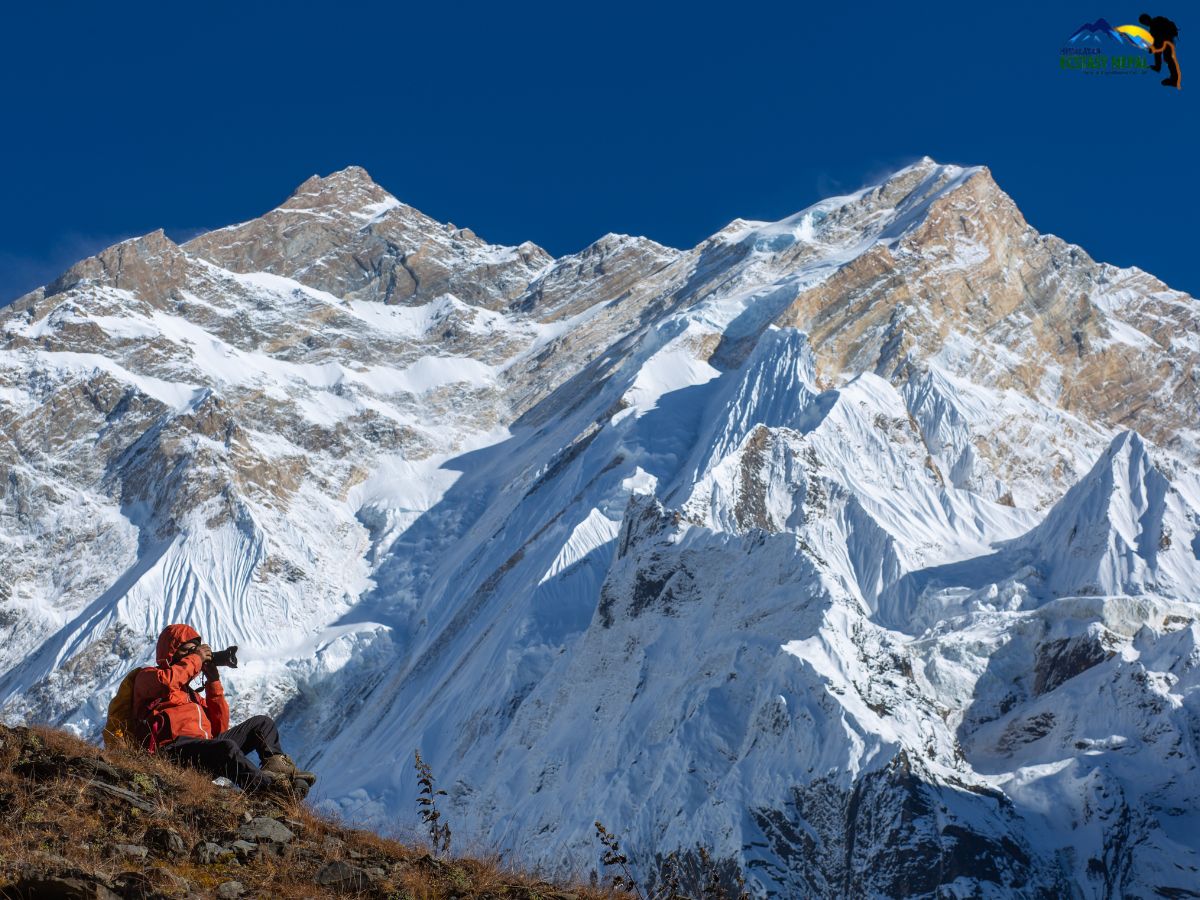
The North Annapurna Base Camp Trek (North ABC) follows the historic Maurice Herzog Trail through the remote Myagdi Valley in western Nepal. This 14-day camping journey reaches 4,190 m at the foot of Annapurna I's north face, passing the sacred Panchakunda Lake (Diki Cho Lake), glacial waterfalls, and open highland pastures rarely seen by outside visitors. Views include Annapurna I, Nilgiri, Tilicho Peak, and the surrounding peaks within Annapurna range. Coordinates: [28.5637° N, 83.8808° E]. HEN handles permits, camping logistics, and all transport. This trek is for those who want the Himalayas without the crowds.
Grade: Easy
Trip Overview
Duration14 Days
Trip GradeEasy
Treks up from 2,000 meters to 3,000 meters on well-defined trails with short durations. Suitable for beginners and those with average fitness.
CountryNepal
Maximum Altitude4,190 m
Group SizeMin. 2
StartsKathmandu
EndsKathmandu
ActivitiesTrekking and Camping
Best TimeMarch to May, October to November
TREK HIGHLIGHTS
North Annapurna Base Camp (4,190 m) on the north face of Annapurna I (8,091 m)
The historic Maurice Herzog Trail approach route of the first-ever 8,000 m summit
Panchakunda Lake (Diki Cho Lake at 4,050 meters), a sacred turquoise glacial lake below base camp
Views of Annapurna I, Annapurna Fang, Nilgiri, Tilicho Peak, and other parts of Annapurna range
Phutphute Waterfall, Red waterfall during monsoon, and glacial streams along the ascent
Dense rhododendron and mixed Himalayan forest in the lower and middle sections of the trail
A peaceful, low-traffic Himalayan route ideal for trekkers seeking a more raw and healing mountain experience
Scenic Himalayan landscapes transitioning from forest to alpine plateau
14-Day North ABC Trek (aka Annapurna I Base Camp Trek)
The North ABC trek runs through the Myagdi Valley in western Nepal on a route that was mainly used by mountaineers and local people from nearby villages. Commercial trekking in this area only started becoming popular around the last 8 to 10 years, first among domestic trekkers and slowly among international trekers after photos and videos were shared online.
Often called the Maurice Herzog Trail, the route follows the approach connected to the historic 1950 French expedition that completed the world’s first ascent of the 8,000-metre peak, Annapurna I (8,091 m).
Despite the trending name “North Annapurna Base Camp,” or "North ABC", it's more preferable to call it the 'Annapurna I Base Camp' as that's how locals want it to be called!
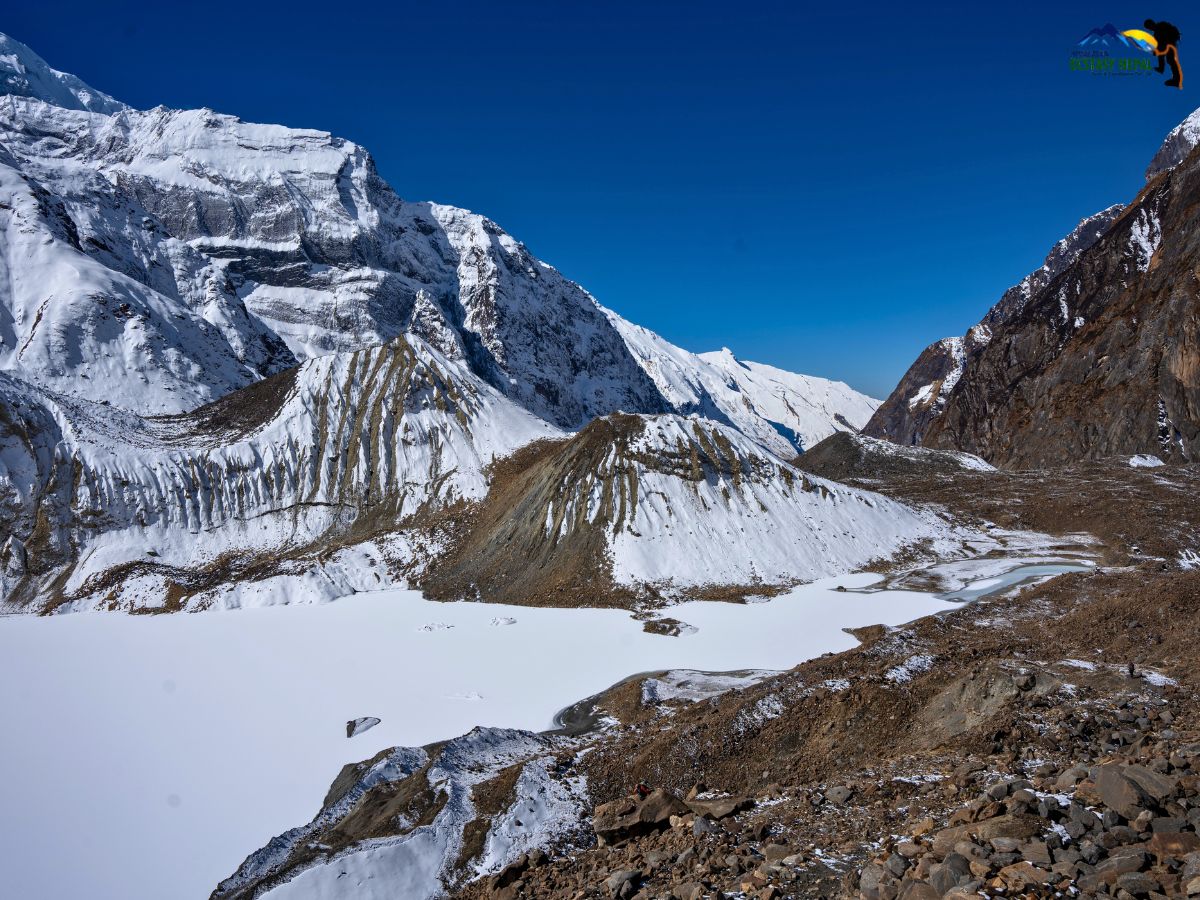
So, the Annapurna I Base Camp trail passes through mixed forest, open kharka (pastureland), waterfalls, and high alpine landscapes before reaching the Panchakunda Lake (aka Panchadham Lake) area. From the lake, a short hike of around 30 minutes leads to the North Annapurna Base Camp at 4,190 meters (slightly higher than the popular Annapurna Base Camp South)!
This is primarily a camping trek, especially from Day 5 onward, as the trail climbs into the upper valley. Small groups of fewer than 10 people can sometimes use basic local lodges in the lower sections where available, while larger groups are generally better supported through organised camping (which is what our team at HEN will do for you).
Beyond Bhusket Mela, there are no permanent lodges or teahouses, making camping necessary for the upper part of the trek. The trail becomes increasingly remote as it gains altitude.
Continue reading this package and our content team at Himalayan Ecstasy Nepal will share some delightful insights that will surely make you want to book this North ABC Trek package!
Main Attractions of North ABC Trek
The North Annapurna Base Camp trek passes through remote valleys, high pasturelands, waterfalls, and glacial landscapes that still see relatively few trekkers compared to Nepal’s busier trekking routes. Here are the main attractions of this trek:
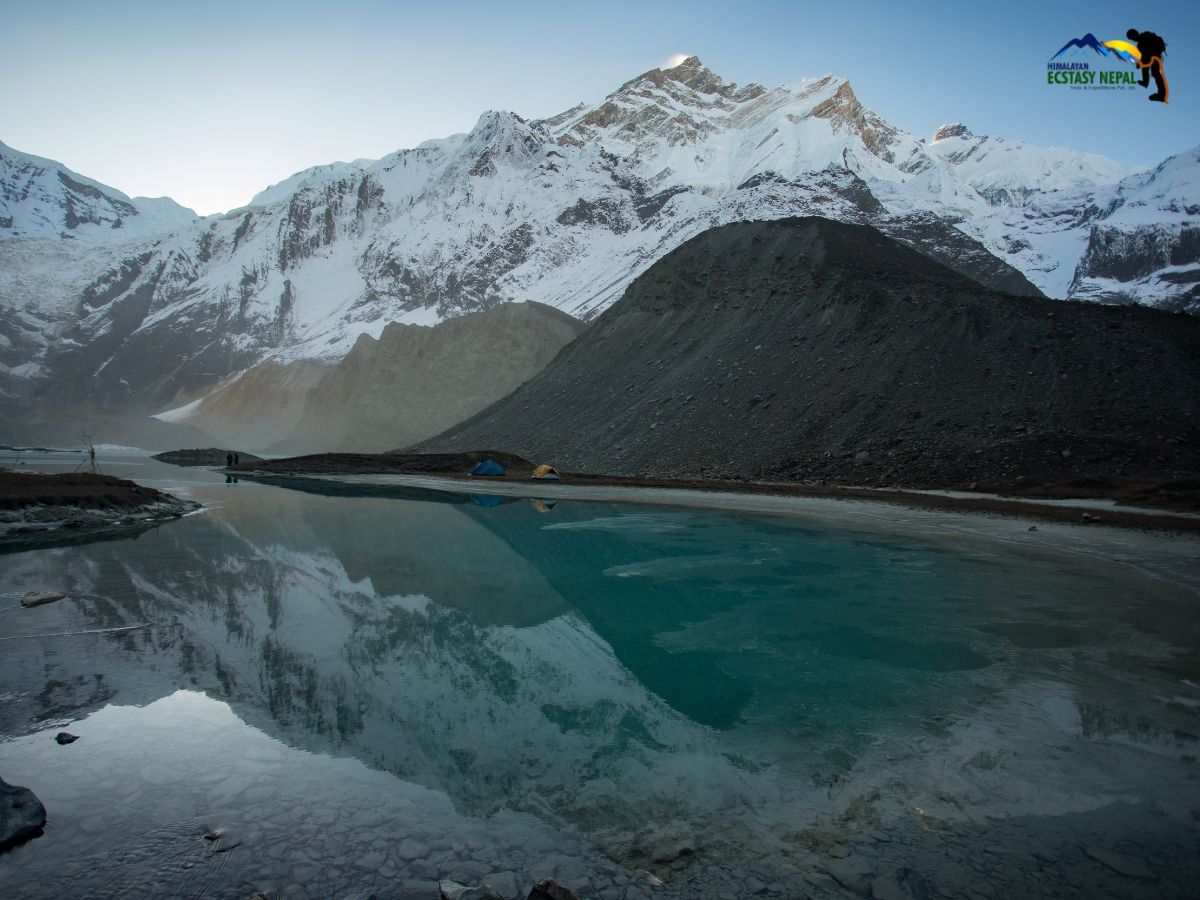
Panchakunda Lake (Diki Cho Lake): Surrounded by steep mountain walls and high alpine terrain, Panchakunda Lake is one of the most beautiful parts of the trek. The name comes from five lakes that once existed here, said to form the shape of a snake. Over time, the structure changed, and it is now one large glacial lake.
North Annapurna Base Camp (4,190 m): A short climb above Panchakunda leads to the North Annapurna Base Camp viewpoint. Standing below the massive north face of Annapurna I feels completely different from the more commercial trekking routes in Nepal. The area remains quiet, raw, and deeply connected to the history of the 1950 French Annapurna expedition.
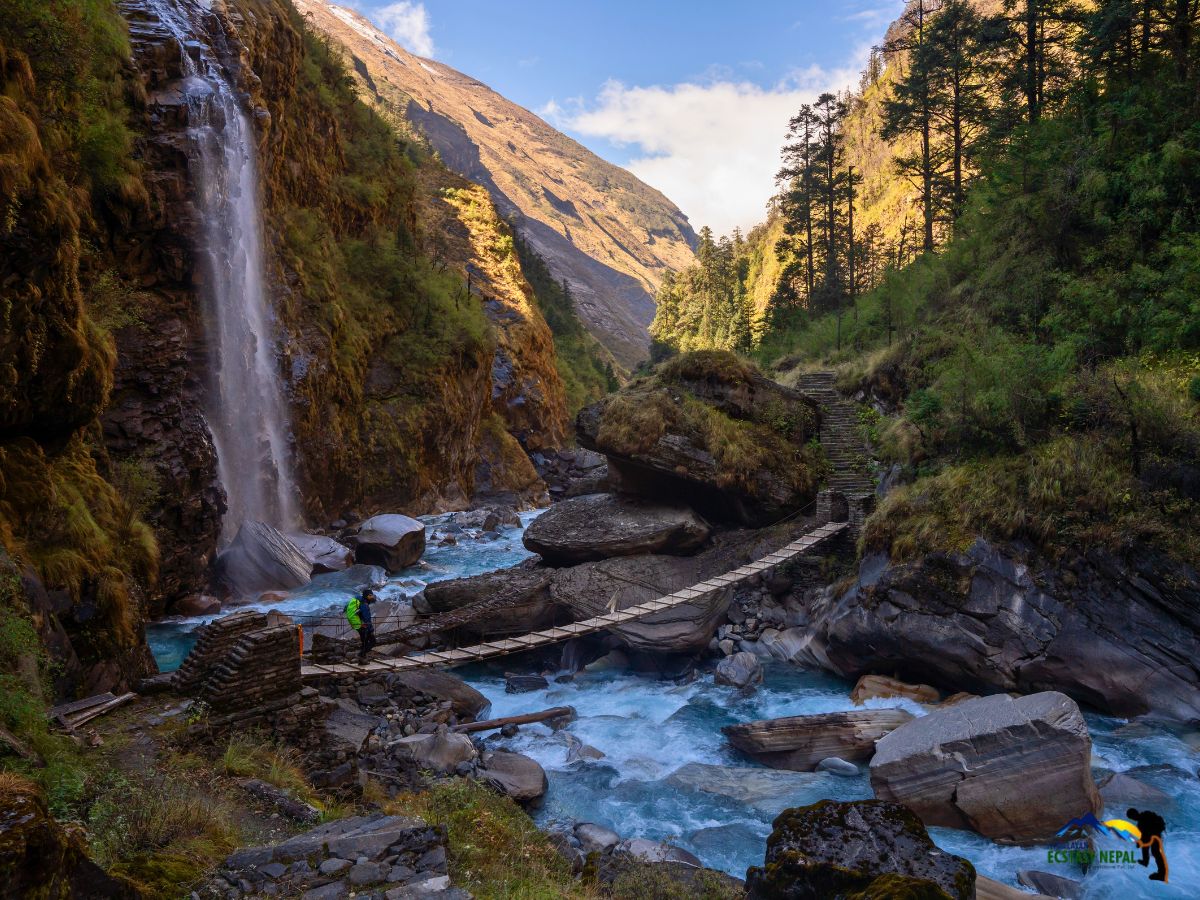
Phutphute Waterfall: One of the best rest points along the ascent, Phutphute Waterfall crashes down a steep rock face surrounded by moss-covered cliffs. Many trekkers notice unusual shapes in the rocks nearby, with some locals comparing them to a human face or a lion’s profile.
Sky Caves: Higher up the valley, enormous natural caves can be seen carved into the cliffs above the trail (in Gupha Phant area). Their size and location make them look almost unreachable from below, adding a dramatic and unusual feel to the landscape.
Why Trek North ABC with Himalayan Ecstasy Nepal?
We handle all required permits before the trek begins.
Our team provides licensed, English-speaking guides with full local route knowledge of theMaurice Herzog trail.
We manage all camping logistics: tents, meals, and porter support.
We match group size to accommodation: teahouse for smaller groups, camping for larger ones.
We arrange all transport from Kathmandu to Pokhara to the trailhead (Humkhola) and back.
IMPORTANT NOTE: Small groups can sometimes use basic local lodges (mostly provided with tents) in the lower sections where available, though for groups larger than 6 people, organised camping with backup tents and sleeping mats is generally the more reliable option, which our team will take care of!
North ABC (Annapurna I Base Camp) Trek - 14 Days Itinerary
Kathmandu to KathmanduExpand all
After you arrive at Tribhuvan International Airport, our team will meet you and welcome you in a Nepali style before transfering you to your hotel.
The rest of the day is free to rest and settle in. In the evening, you can enjoy dinner with the team in any restaurant you prefer.
Max Altitude: 1,400 m Meals: N/AAccommodation: 3-Star HotelTransportation: On a private basis
Your day is dedicated to rest and self exploration. And our job at HEN is to get all your permits ready before you move from Kathmandu.
During the afternoon, you can go out to explore Thamel or pick up any last-minute trekking gear. In the evening, we'll introduce you to our guide for a full trek briefing so you know what's coming next!
Max Altitude: 1,400 m Meals: BreakfastAccommodation: 3-Star Hotel
We have arranged a short morning flight that takes you to Pokhara with Himalayan views on clear days. It takes about 20 to 30 minutes to land in the domestic airport of Pokhara.
After checking in, the afternoon is for you to relax around Lakeside or even go for water activities in Phewa Lake. And if you want us to include half-day sightseeing, do let us know prior and we'll arrnage that for you (at an additional cost).
Max Altitude: 820 m Meals: BreakfastAccommodation: 3-Star HotelTransportation: Domestic Flight
Today, you'll drive along the Kali Gandaki Valley towards Tatopani in Myagdi district. You'll pass rivers, terraced hillsides, and small villages of Kaski and Myagdi along the way.
Some sections of the roads become rougher, mainly from Beni to Tatopani onwards. Well, Tatopani is known for its natural hot springs, so a good soak after the long road journey would be perfection!
Max Altitude: 1,190 m Meals: B, L, DAccommodation: Local LodgeTransportation: Shared Jeep or Local Bus
First and foremost, a morning jeep drive will take you to Humkhola, which is the trailhead at approximately 2,883 m.
The trail climbs through forest and past Phutphute Waterfall (one of the major attractions), and then you reach the open pastureland of Sadhi Kharka after just 4 to 5 hours of hiking.
Max Altitude: 3,180 m Meals: B, L, DAccommodation: CampTransportation: Shared Jeep
The trail continues through rhododendron forests and rocky sections for 3 to 4 hours via Gupha Phant as tree cover gradually thins and wider mountain views begin opening across the valley.
Bhusket Mela sits in a broad pasture and serves as one of the main high camps on the ascent towards North Annapurna Base Camp.
Max Altitude: 3,650 m Meals: B, L, DAccommodation: Camp
The trail passes the Sun Khola stream crossing before reaching the sacred Panchakunda Lake (4,050 m), which happens to be a turquoise glacial lake fed by snowmelt from the Nilgiri and Tilicho peaks.
From the lake, the final push to North Annapurna Base Camp takes just 30 minutes to an hour in total (depends on one's walking pace) and arrives directly beneath the north face of Annapurna I.
Depending on the weather conditions, our team will set up camp in the North ABC itself or return back to Panchakunda Lake (aka Panchadham Lake) as there's a new tenthouse (teahouse with tent stays) available right now.
Max Altitude: 4,190 m or 4,050 m Meals: B, L, DAccommodation: Camp
What's unique from HEN is that we offer a full day at base camp to rest and explore the surrounding terrain!
You can walk the area at your own pace, go explore hidden corners, take in close views of Annapurna I, Nilgiri, and Tilicho Peak, and enjoy the elevated views of Panchakunda Lake from the top!
Max Altitude: 4,190 m or 4,050 m Meals: B, L, DAccommodation: Camp
Your descent begins back through Panchakunda Lake and the alpine terrain to Sadhi Kharka, which can be covered anywhere from 4 to 5 hours.
The downhill trail is much easier on the lungs but may require caution on rocky sections, especially to those who suffer from knee pains (hiker's knee).
Max Altitude: 3,160 m Meals: B, L, DAccommodation: Camp
Today will be the final trekking day and you will have to descned through mostly forest path and past Phutphute Waterfall before reaching Humkhola in 3 to 4 hours.
From Humkhola, you and your guide will catch a jeep to return to Tatopani, where the hot springs are available again in the evening!
Max Altitude: 1,190 m Meals: B, L, DAccommodation: Local Lodge
Early morning, we'll take another jeep (or bus) to return to Pokhara via the same Kali Gandaki river valley. The afternoon is free for rest, walks, kayaking/boating, or exploring the cafes and shops in Lakeside.
It's at your own pace! So, go visit nearby destinations if you've got time, like World Peace Pagoda, Gupteshwor Mahadev Cave, Devi's Falls, Pumdikot, etc.
Max Altitude: 820 m Meals: BreakfastAccommodation: 3-Star HotelTransportation: Shared Jeep / Public Bus
We have included a morning domestic flight to return you to Kathmandu from Pokhara and that comes with final Himalayan views on clear days!
Our team transfers you to the Kathmandu hotel (yours or the one we include, based on how our tour expert has communicated). For the rest of the day, you can take your time and enjoy shopping in Thamel or Ason area.
Max Altitude: 1,400 m Meals: BreakfastAccommodation: 3-Star HotelTransportation: Domestic Flight
Today, it will be a rest day for your team after that wonderful adventure you enjoyed in the North Annapurna Base Camp area.
But if you're opt for it, we can arrange a full-day sightseeing to explore Kathmandu on your rest day. This will include UNESCO World Heritage Sites, including Pashupatinath Temple, Boudhanath Stupa, Swayambhunath, and Kathmandu Durbar Square (or even Patan/Bhaktapur of your choice) at an additional cost. It's the similar option we gave in Day 2, but if you want to visit on your own, that's also fine!
Max Altitude: 1,400 m Meals: BreakfastAccommodation: 3-Star Hotel
It's time to say bye! Our team transfers you to Tribhuvan International Airport for your departure flight. It will be somewhere around three hours before your international flight.
But if you'd like to extend your Nepal trip, know that we are always one call or text away. And if you're coming back to Nepal, be sure to contact us and allow us to serve you yet again. Thanks for choosing us!
Meals: BreakfastTransportation: On a private basis
Trip Cost Details
Includes
Airport transfers on arrival and departure by private vehicle
4 hotel nights in Kathmandu in a 3-star hotel
2 hotel nights in Pokhara in a 3-star hotel
Domestic flight from Kathmandu to Pokhara and Pokhara to Kathmandu
Shared jeep from Pokhara to Tatopani, Tatopani to Humkhola, and Humkhola to Pokhara
All accommodation during trekking days (camping with full tent and equipment setup)
Annapurna Conservation Area Permit (ACAP)
Licensed English-speaking guide with salary and insurance
All meals on trekking days: breakfast, lunch, and dinner
Tea and coffee at breakfast and dinner
Porter support (1 porter per 2 trekkers, carries up to 22 kg)
All camping equipment: tents, mattresses, and kitchen gear
All logistical arrangements
Excludes
Personal expenses
International flights
Nepal tourist visa fee
Personal travel and health insurance covering emergency helicopter evacuation
Meals outside the itinerary
Hot showers, Wi-Fi, battery charging
Laundry
Personal gear and clothing
Costs from natural disasters, weather, or anything outside our control
Early departure costs, non-refundable
Tips for guides and porters
Any service not listed above
Optional Extra Services
Additional porter: USD 280 per porter for two trekkers, carries 20 to 22 kg
Private jeep upgrade for the full journey: USD 380 extra
Extra hotel nights in Kathmandu or Pokhara on request
Guided Kathmandu sightseeing upon request
Essential Information
Best Time to Visit Annapurna First Base Camp
The best season for the North Annapurna Base Camp Trek is autumn, from October to early December, when skies are clearest, and mountain views are most reliable.
The second best season is Spring (March to May), but it can come with unpredictable afternoon weather, and not the best views of waterfalls.
You can even choose to do the trek in other months of the year if your'e trekking with a reliable operator like ourselves for safety reasons.
Permits Required for North ABC
Since this trek falls within the Annapurna Conservation Area, it requires the ACAP permit which costs NPR 3,000 (approximately USD 25–30) per person for foreign nationals.
TIMS is not currently enforced on Annapurna trails, though permit requirements can shift. So, our team at HEN confirms that we will arrange everything before your trek so you don't have to worry about the permits factor at all.
Difficulty Level of North ABC Trek
The difficulty grade of North Annapurna Base Camp Trek can be rated "Easy". The highest point reached is 4,190 m, with most trekking days involving around 4 to 6 hours of walking.
The trail passes through forest, pastureland, rocky sections, and high alpine terrain. There are no technical climbing sections or glacier crossings on the standard route. With proper pacing and acclimatization, many first-time trekkers complete this trek pretty comfortably!
Accommodation and Food: What to Expect?
Basic teahouses and local stays are available in the lower sections near Narchyang and Humkhola. Beyond Sadhi Kharka, the route becomes fully camping-based with no permanent lodges.
Good news for you: our team at Himalayan Ecstasy Nepal manages tents, sleeping arrangements, and camp meals throughout the upper sections of the trek.
Food on the trail is simple, warm, and filling, with dal bhat, noodles, potatoes, soup, and tea commonly served.
Drinking water comes from natural sources, so make sure you drink only boiled water. Since proper facilities are yet to reach this part of Myagi district, finding filtered water is tough. However, the tenthouses along the way have kept processed drinking water, so you may consume that!
How to Prepare for Your North Annapurna Base Camp Trek?
Physical Preparation: Be prepared to walk 4 to 6 hours daily on uneven Himalayan terrain. Regular walking, stair climbing, and uphill training for several weeks before the trek are strongly recommended.
Mental Preparation: North ABC is quieter and more remote than Nepal’s commercial trekking routes. Mobile signal disappears after Guranse Danda, facilities are basic, and the upper trail can feel isolated. Many trekkers enjoy this peaceful environment, but it is important to come prepared for simple conditions.
Altitude Sickness and Safety: The trek reaches 4,190 m, where altitude sickness can affect anyone. Common symptoms include headaches, nausea, fatigue, and poor sleep. Walk slowly, stay hydrated, and avoid rushing toward higher camps. Consult your doctor before the trek if you plan to use preventive medication like Acetozolamide (Diamox).
Hydration and Nutrition: Drink plenty of water throughout the trek and eat regularly to maintain energy. Dal bhat remains one of the best meal options for long trekking days. Carrying snacks like nuts, chocolate, or energy bars is also recommended!
Travel Insurance: You should get insured covering high-altitude trekking and emergency helicopter evacuation is strongly recommended. In the upper Myagdi Valley, helicopter rescue may be the only emergency evacuation option available.
Proper preparation matters on any Himalayan trek! For the North Annapurna Base Camp Trek, you will be camping at altitudes up to 4,050 m in remote terrain with no permanent lodges beyond the lower valley sections. Temperatures drop sharply after sunset, and the upper route is fully exposed. Every trekker must carry the right clothing and gear to stay safe and comfortable throughout. Here is what our HEN team recommends for you:
Head
A wide-brimmed sun hat or cap to protect against strong high-altitude sunlight during the day.
A warm fleece beanie for cold evenings and early morning starts at camp.
A buff or neck gaiter for wind protection on exposed upper sections.
A headlamp with extra batteries for early morning trekking starts and use inside the tent at night.
Sunglasses with full UV protection to shield your eyes from intense mountain glare.
Upper Body
Thermal base layers (2 to 3) to keep moisture away from the skin during active trekking hours.
A fleece or softshell jacket for warmth during rest breaks and evenings.
A waterproof and windproof outer jacket for rain, wind, and snow at higher elevations.
A down jacket for cold nights at Bhusket Mela, Sadhi Kharka, and base camp.
Long-sleeve trekking shirts for sun protection during the day.
Hands
Lightweight liner gloves for moderate cold in the lower forest sections.
Warm fleece or softshell gloves for the upper route and camp evenings.
Waterproof insulated mittens for the final ascent and nights at base camp.
Lower Body
Thermal leggings or base layer pants for warmth at altitude and in the tent.
1 to 2 pairs of quick-dry trekking trousers for active days on the trail.
Waterproof rain pants for wet weather on lower sections during or after monsoon.
Comfortable trekking shorts for warmer lower-elevation days if preferred.
Foot Wear
Waterproof trekking boots with strong ankle support for mixed terrain from forest trail to rocky alpine ground.
Camp shoes or sandals for resting at teahouses and in camp.
Trekking socks (3 to 4 pairs) in wool or synthetic material.
Liner socks to prevent blisters on longer walking days.
Gaiters for protection against mud, snow, and loose rock on upper sections.
Travel Documents
Passport and Nepal tourist visa.
Travel and medical insurance documents with emergency evacuation coverage clearly listed.
Airline tickets or e-tickets.
Passport-size photos for permit processing.
Cash in Nepalese rupees (NPR) for personal expenses along the route.
Copies of all important documents stored separately from the originals.
Sun Stuffs
Sunscreen with SPF 50 or higher for intense high-altitude UV exposure.
Lip balm with SPF to prevent cracking and sun damage at elevation.
Toiletries
Toothbrush, toothpaste, and biodegradable soap to minimise environmental impact on the trail.
Moisturiser and hand sanitiser for daily use in camp.
A quick-dry towel.
Toilet paper and wet wipes.
Eating & Drinking
Energy bars or granola bars for trail snacking between meals.
Nuts and dried fruits for sustained energy on longer climbing days.
Chocolate and trail mix.
Electrolyte powder or sachets to replace salts lost on high-output trekking days.
Sleeping Bags
A warm sleeping bag rated to at least -10°C for cold nights at Sadhi Kharka, Bhusket Mela, and base camp.
A sleeping bag liner for added warmth and hygiene.
A compression sack to keep the sleeping bag compact and dry in your pack.
Tents are provided by HEN on a sharing basis.
Bag Packs
A main trekking backpack of 40 to 60 litres for personal gear if trekking without a porter.
A daypack of 20 to 30 litres for daily essentials: water, snacks, camera, and a spare layer.
A rain cover for your backpack.
Dry bags or waterproof stuff sacks to protect electronics and documents.
Medical & First Aid
Consult your doctor before the trek regarding altitude sickness prevention medication.
Paracetamol or ibuprofen for headache, pain, or fever.
Anti-diarrhoea medication.
Oral rehydration salts (ORS).
Antibiotics if prescribed by your doctor.
Anti-nausea medication.
Cough and cold medicine.
Throat lozenges.
Antihistamines for allergies.
Blister treatment pads.
Antiseptic cream or wipes.
Adhesive bandages.
An elastic bandage for minor sprains.
All personal prescription medications with copies of prescriptions.
Water purification tablets or a portable filter for treating water from streams and teahouse taps on the upper route.
Miscellaneous
Trekking poles reduce strain on the knees significantly on the long descents from Sadhi Kharka to Humkhola.
A reusable water bottle or hydration bladder holding at least one litre.
A power bank for charging cameras and phones when electrical charging is unavailable on the upper route.
A small padlock for your bag in Kathmandu and Pokhara.
Zip-lock bags for keeping documents and small items dry in wet conditions.
North ABC (Annapurna I Base Camp) Trek - 14 Days FAQs
Yes because the ascent is gradual and non-technical. In fact, beginners, older adults, and families can all complete the North ABC Trek successfully with proper pacing and asistance from a guided operator like Himalayan Ecstasy Nepal.
No, we at HEN will provide you with tents and mattresses. However, you need to bring a sleeping bag rated to at least -10°C for the upper campsites (renting is available and we can help you out). And in case you're in a small group, the tenthouses (teahouse with tent stays) that have opened up recently can be used, which will be decided by the guide and we'll inform you directly!
If you show signs of acute mountain sickness (AMS), tell your guide immediately! If these symptoms do not ease with rest and water, your guide will help you descent without delay. Note that emergency helicopter evacuation is the only medical rescue option in the upper valley. That's the reason travel insurance is non-negotiable on this trek!
While not legally mandatory, hiring a licensed guide is always the best option. That upper route has no trail markers and navigation without local knowledge becomes a real risk. So, for safety reason, even we have included a local guide for you who knows the route well here.
From North ABC, you get to see Annapurna I, Annapurna Fang, Nilgiri South, Nilgiri Cnetral, Nilgiri North, Tilicho Peak, Khangsar Kang, and other smaller peaks within Annapurna range are all visible. The north face of Annapurna I appears at very close range from this vantage point and it's the main reason for your visit!