Pikey Peak Trek remains one of Nepal's most quietly rewarding journeys in the lower Khumbu region. Less crowded and far more intimate, this trek takes you through the heart of authentic Sherpa Buddhist culture in the Solukhumbu district of eastern Nepal (Latitude: 27.3800° N, Longitude: 86.5800° E). We provide full-board teahouse trekking services with experienced guide support, handling all permits and logistics so you can focus entirely on the journey. Whether you come as a solo traveller, a family, a group of friends, or a team looking for something meaningful together, the trail suits anyone willing to walk at a steady pace and keep their eyes open. The reward is a sunrise from 4,065 meters that Sir Edmund Hillary himself called one of the finest views of Everest he had ever seen.
View Photos
Pikey Peak Trek in 10 Days
Trip Overview
Duration10 Days
Trip GradeEasy
CountryNepal
Maximum Altitude4,065m
Group Size1-20
StartsKathmandu
EndsKathmandu
ActivitiesTrekking
Best TimeMarch - May, October - December
TREK HIGHLIGHTS
- Reach Pikey Peak (4,065 m), named after the Sherpa clan deity Pikey Hlapchen Karbu, and one of Sir Edmund Hillary's favourite Everest viewpoints
- Panoramic sunrise views of Mt. Everest, Lhotse, Makalu, Numbur, and Gaurishankar, with other peaks appearing in clear conditions
- Trek through rhododendron, oak, and pine forests of the lower Solukhumbu on quiet, uncrowded trails
- Explore Junbesi, one of the most beautifully preserved Sherpa villages in the Solu region, with its apple and kiwi orchards and ancient monastery
- Visit Thupten Choling Monastery (2,920 m), home to hundreds of monks and nuns, founded by His Holiness Trulshik Rinpoche in the 1960s
- Discover the Tashi Thongmen Monastery (Junbesi Gumba),one of the oldest monastery in the Solukhumbu region with a six-metre statue of the Buddha
- Overnight stay at Pikey Peak Base Camp (3,640 m) for sunset and sunrise views that few trekkers get to experience
- No domestic flight required on the approach, the trek starts with a direct jeep drive from Kathmandu to Jhapre
- Optional flight exit via Phaplu Airport for those who prefer to skip the return drive
- All permits, guide, and logistics fully arranged by Himalayan Ecstasy Nepal
Pikey Peak: A Trek That Earns Its Views Without the Crowds
There is a reason experienced trekkers keep returning to the Everest region even after doing Everest Base Camp. The lower valleys here have something the high routes cannot offer: peace, unhurried Sherpa village life, and panoramic mountain views from altitudes the body reaches without distress.
Pikey Peak sits at 4,065 meters, which means even trekkers with no prior high-altitude experience can reach the summit with proper pacing. And the view from the top does not ask you to earn it with technical difficulty. It simply shows you the Himalayas the way they are best seen, in the full sweep of the horizon at sunrise, with no crowds, no queue, and nothing between you and the mountains.
The name 'Pikey' itself comes from a Sherpa clan deity, Pikey Hlapchen Karbu, a sacred figure worshipped by the local communities of the lower Khumbu. Locally, the peak is known as a 'danda', meaning a prominent ridgeline or high point visible from all sides.
When people in the valley point toward it, they are pointing toward something that has held spiritual significance for generations. That is the kind of place this is!
And when you trek with Himalayan Ecstasy Nepal through this region, you travel with guides who understand that significance, who know the families in the villages you pass through, and who bring that knowledge into every day on the trail.
Main Attractions of Pikey Peak Trek
Here are the major attractions of this 10-day Pikey Peak Trek:
Drive to Jhapre: Where the Trek Really Begins
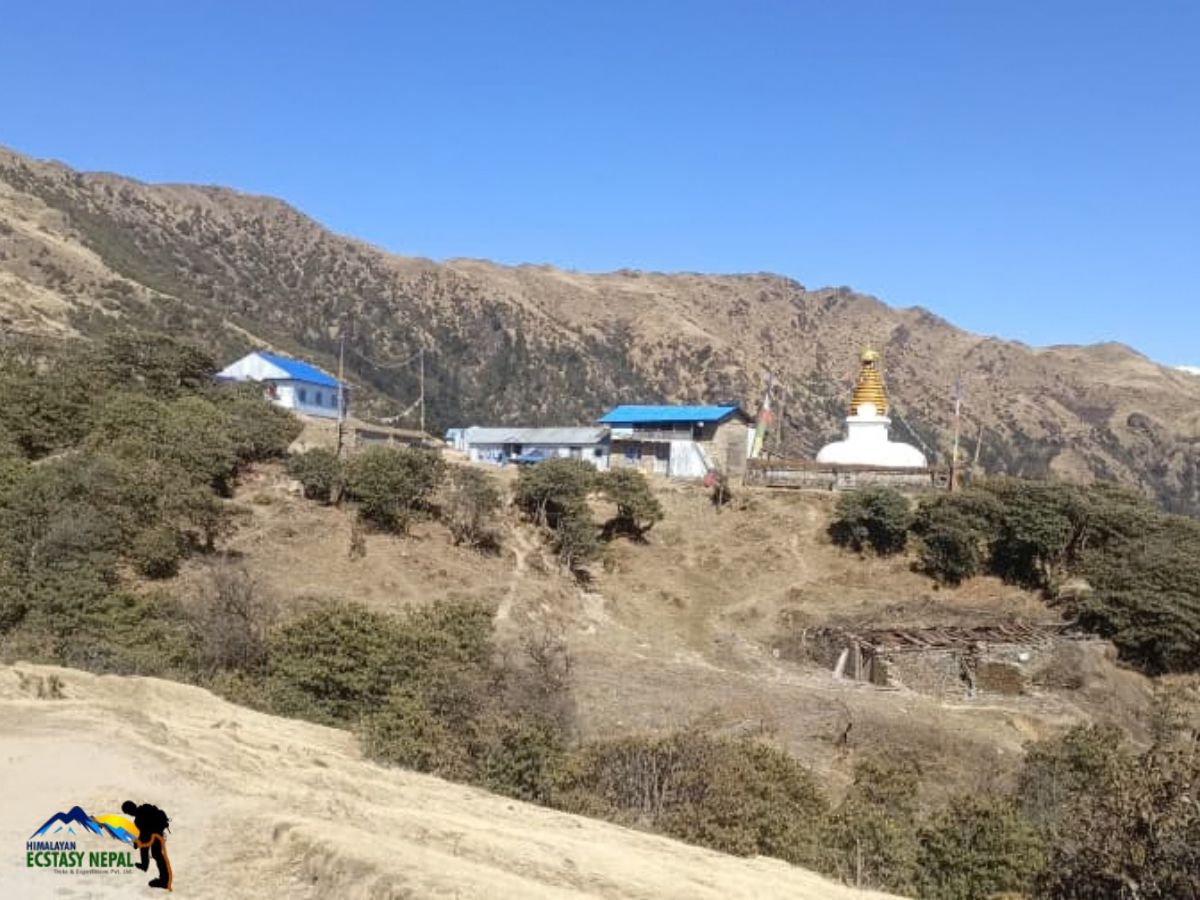
Most trekkers heading into the Everest region fly to Lukla. The Pikey Peak Trek does not ask that of you. Instead, the journey begins with a full-day jeep drive from Kathmandu to Jhapre, a hilltop Sherpa village at approximately 2,820 meters in the Solukhumbu district.
The drive covers around 230 to 250 km and takes 7 to 9 hours depending on road conditions, following the BP Koirala Highway through the middle hills of Nepal before climbing into the Solu region.
What makes this drive worth mentioning is not just the logistics. The landscape changes hour by hour. Kathmandu valley gives way to open farmland, then river gorges, then forested ridgelines with the first distant glimpses of snow-capped peaks to the north.
By the time you reach Jhapre, the air is cooler, the pace is slower, and the Himalayan world has already begun. We have done this drive many times, and we can tell you it never feels like lost time. It feels like the right kind of arrival!
Pikey Peak Summit: Sunrise That Changes Your Morning!
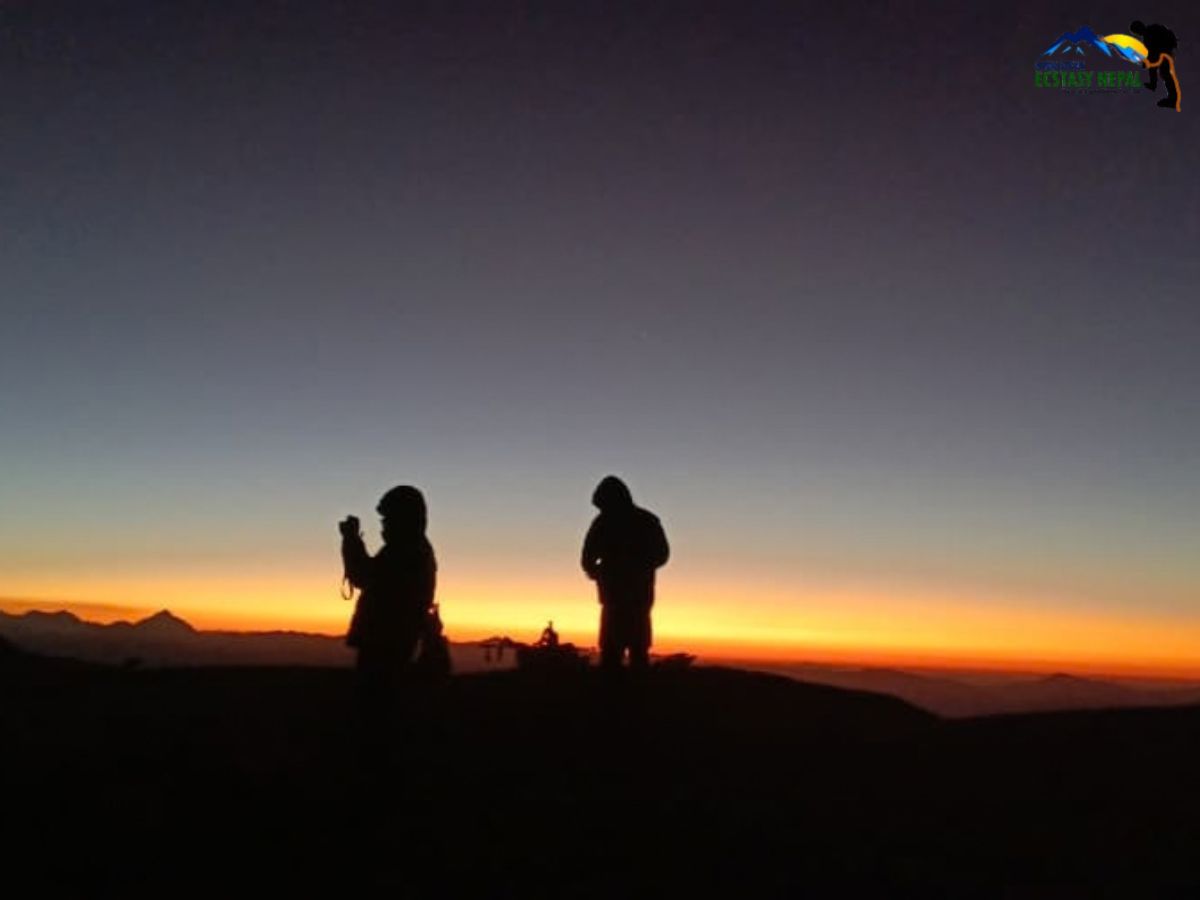
The moment that defines this entire trek comes before most people are awake. You leave Pikey Peak Base Camp in the dark, headlamp on, moving steadily up the ridge trail toward the summit at 4,065 meters. The cold is proper at this hour. The trail is quiet. And then the light begins.
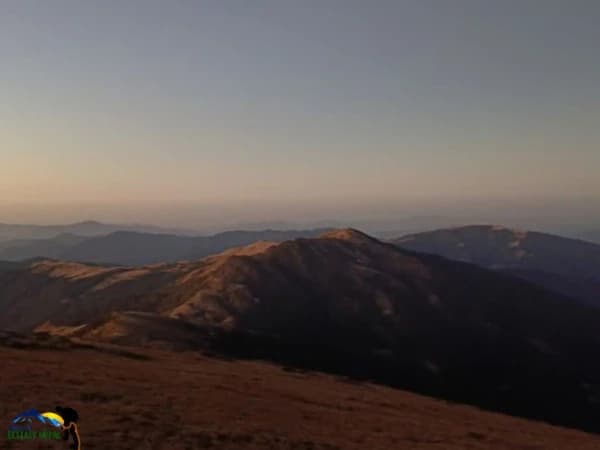
From the summit of Pikey Peak, the panorama unfolds left to right in a way that is genuinely difficult to describe. Mt. Everest sits to the northeast, unmistakable even from this distance. Beside it, Lhotse, Makalu, Numbur, and Gaurishankar fill different sections of the horizon, with other distant peaks appearing on exceptionally clear days.
Sir Edmund Hillary, who knew the Everest region better than almost anyone, is often said to have considered this one of his favourite view points in Nepal. We always make sure our trekkers reach the summit in time for the sunrise.
The timing matters here, and getting it right is one of the small things our guides manage with care on every expedition.
Junbesi Village: Sherpa Life That Has Not Changed
After descending from Pikey Peak, the trail works its way down through forest and open meadows to Junbesi, a Sherpa village at approximately 2,700 meters in the Junbesi Valley. If there is one place on this trek that trekkers talk about long after they have returned home, it is Junbesi.
The Sherpa people migrated to the high valleys south of Everest from the Kham region of eastern Tibet roughly 500 years ago. Their language, their religion, their architecture, and their entire way of life carry the mark of that Tibetan origin. In Junbesi, you see that clearly!
The stone houses are solid and low, the monastery sits at the centre of the village rhythm, and the orchards of apple, kiwi, and mandarin that line the valley floor give the place a gentleness that feels very different from the high-altitude stone and ice world above.
Animal butchering is prohibited in Junbesi, as it is in most Sherpa villages in the Khumbu. The community observes strong Buddhist values in daily life. Our guides walk you through the customs as you arrive, so you can move through the village with genuine respect for what it represents.
Thupten Choling Monastery: A Living Buddhist Community
About an hour's walk uphill from Junbesi, following the Junbesi Khola river to an altitude of approximately 2,920 meters, sits one of the most significant monasteries in the entire Everest region.
Thupten Choling was founded in the 1960s by His Holiness Kyabje Trulshik Rinpoche, one of the most respected masters of Tibetan Buddhism, after the Tibetan diaspora following the 1959 Chinese invasion of Tibet. It is not a museum piece. It is a living, active community of hundreds of monks and nuns engaged in daily practice, ceremony, and Buddhist education.
Walking into the monastery grounds is like entering a completely different pace of life. Butter lamps burn inside the main prayer hall. The sound of chanting carries across the courtyard in the mornings. You can observe the daily puja if you arrive at the right time, and your guide can arrange an introduction with the community if you wish.
The Mani Rimdu festival, one of the most important celebrations in Sherpa Buddhist culture, is also performed here, usually in October or November at the full moon.
For those who prefer not to make the uphill walk, we can also arrange a vehicle to drop you at the monastery. Both options are available and we will help you decide based on how your legs are feeling that day.
Tashi Thongmen Gumba: The Oldest Monastery in Solukhumbu
Within Junbesi village itself stands the Tashi Thongmen Monastery, the oldest in the entire Solukhumbu region. The original monastery was built in the 16th century after the Sherpa people first settled in this valley following their migration from Tibet over the Nangpa La pass.
The monastery houses a six-metre statue of the Buddha, precious sacred scriptures, and centuries of unbroken monastic tradition. Nearby is the Serlo Monastery, a teaching monastery focused on educating young monks and novices in Buddhist studies.
Spending time in Junbesi between these three monasteries, Tashi Thongmen, Serlo, and Thupten Choling, is one of the richest cultural and educational experiences available on any trek in Nepal. The fact that so few trekkers come this way makes it even more meaningful!
The monks here are not performing for tourists. They are just living their lives, and you are fortunate to be passing through.
The Forest Trails: Rhododendrons, Pine, and Quiet Paths
Between the summit views and the monastery visits, the Pikey Peak Trek is also simply a beautiful walk through some of Nepal's finest forest.
The rhododendron and oak forests on the slopes above Jhapre and along the descent from Pikey Peak Base Camp are dense, old-growth, and extraordinarily pretty in spring when the rhododendrons bloom in deep red and pink.
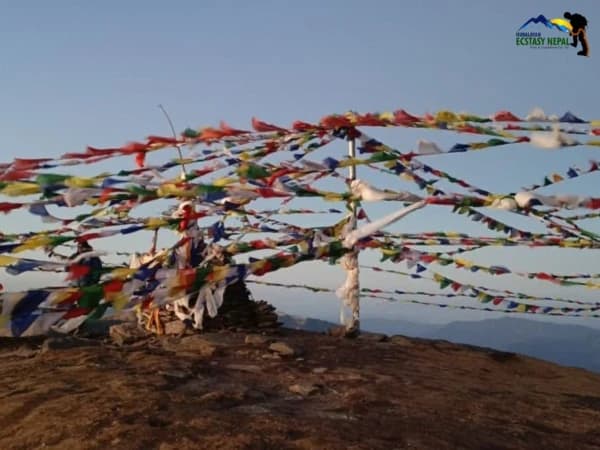
Pine trees take over at higher sections, and the trails through them are soft underfoot and shaded. You will pass mani walls, chortens, and prayer flags at every turn, the landscape quietly decorated with centuries of Sherpa devotion.
These are trails where you walk for hours and meet almost no one. That is the honest truth about Pikey Peak, and it is exactly what makes it special!
Pikey Peak Trek in 10 Days Itinerary
Kathmandu to KathmanduExpand all
Our team meets you at Tribhuvan International Airport and transfers you to your hotel in Thamel. The rest of the day is yours to settle in and explore Kathmandu at your own pace.
Thamel has everything you might need for gear shopping, so use the afternoon to check your packing list and pick up anything missing.
In the evening, we sit together for a full trip briefing covering the route, daily distances, cultural tips for the Sherpa region, and what to expect at every stage of the trek.
All your permits will be ready today. You have nothing to do on that front.
The day is free for you to explore Kathmandu's UNESCO World Heritage Sites: Pashupatinath Temple, Boudhanath Stupa, Swayambhunath Stupa, and Kathmandu Durbar Square are all within easy reach of Thamel and well worth a morning or full day of exploration.
In the evening, charge your devices, double-check your packing, and get an early night. The drive tomorrow starts early, so sleep early!
The drive to Jhapre covers approximately 210 to 230 km and takes 8 to 10 hours, depending on road and traffic conditions. The route follows the BP Koirala Highway east out of Kathmandu, passing through the middle hills and eventually climbing into the lower Solukhumbu region.
The landscape shifts steadily as you gain altitude, from terraced farmland to forested ridgelines, with the first mountain views appearing to the north as you approach Jhapre. A private jeep or 4WD vehicle is used depending on group size.
On arrival in Jhapre, a hilltop Sherpa village at 2,820 meters, you settle into your lodge with the valley views already making clear that this trek is going to be something different.
Today's walk covers approximately 13 to 14 km and takes 6 to 7 hours through rhododendron and oak forest on a well-marked trail.
The ascent is gradual and steady for most of the day, passing through the small settlement of Bhulbhule at the halfway point and continuing upward through Boudha hamlet before the final stretch to Pikey Peak Base Camp at 3,640 meters.
The base camp sits in an open meadow with sweeping sunset views of the surrounding ridgelines. The air is noticeably thinner here than in Jhapre, and a good night's rest before tomorrow's summit push is essential.
This is the day the trek builds toward. An early start, typically between 4 and 5 AM, puts you on the trail to the summit in darkness, arriving at the top of Pikey Peak at 4,065 meters just as the light begins to change.
The summit push from Base Camp takes around 1 to 1.5 hours. From the top, on a clear morning, the panorama includes Mt. Everest, Lhotse, Makalu, Numbur, and Gaurishankar.
After spending time at the summit, the trail continues along the ridge to its highest point before a steady 2-hour descent to Jase Bhanjyang at 3,549 meters, a small saddle settlement with traditional teahouses. The valley below, with its jasmine-scented grasses and yak houses, makes for a gentle end to a big day.
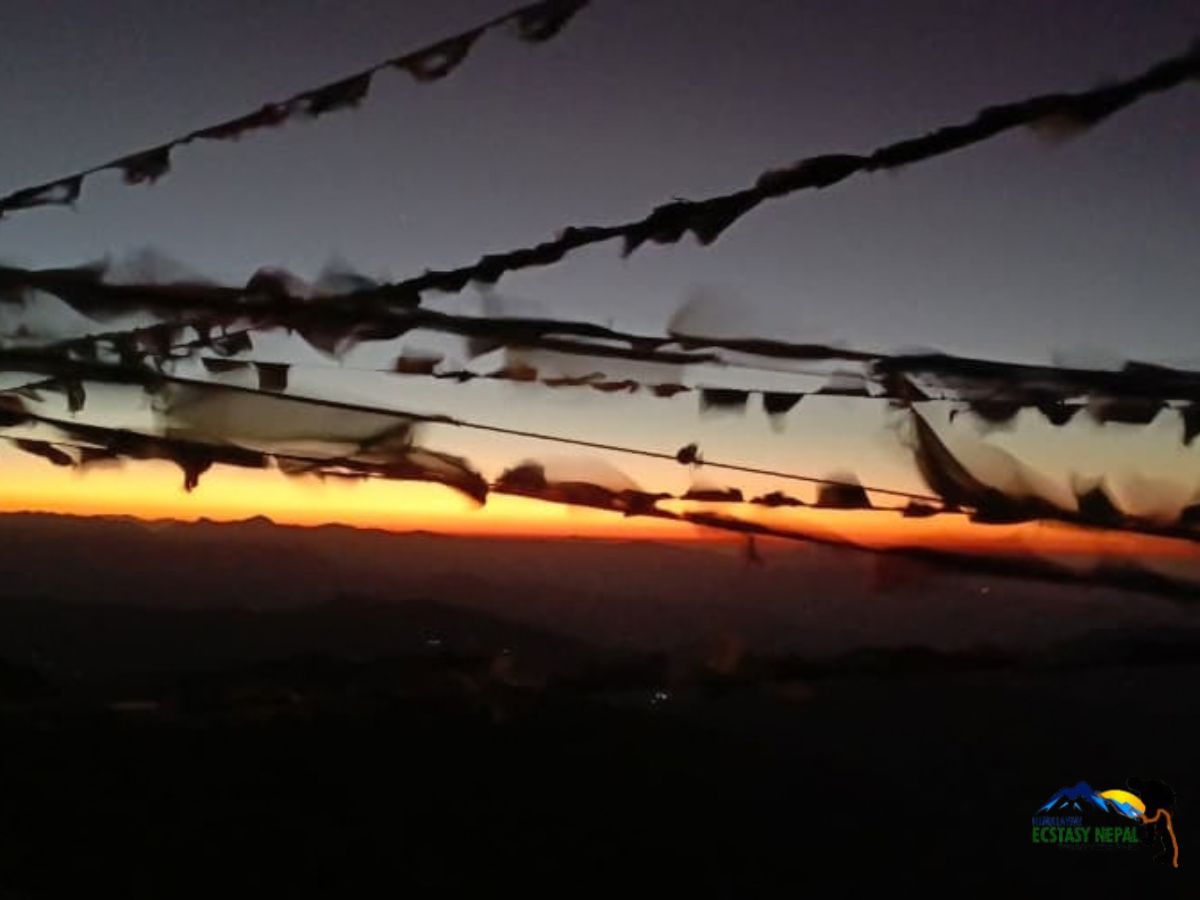
The descent to Junbesi covers approximately 11 kmand takes 5 to 6 hours through a combination of forest trail and open hillside. The route passes through Taktor village, where the trail intersects with the classic Everest Base Camp route from Jiri, and continues downward through old-growth woodland before levelling out into the Junbesi Valley.
Junbesi village at 2,700 meters is one of the finest Sherpa settlements in the entire Solu region. Apple and local farms line the valley floor, the monastery sits at the heart of the community, and the scale of the place, quiet, settled, and genuinely beautiful, makes it one of the most memorable overnight stops on any trek in Nepal.
Today is the cultural heart of the entire trek. The morning begins at Tashi Thongmen Monastery, one of the oldest in Solukhumbu, right within Junbesi village. Built in the 16th century, it houses a six-metre Buddha statue and precious ancient scriptures.
From here, you can also visit the Serlo Monastery, a teaching institution for young monks in active Buddhist education.
The main excursion of the day is Thupten Choling Monastery at approximately 2,920 meters. You can reach it on foot by following the Junbesi Khola uphill for around 2 to 3 hours, a pleasant and steady walk through forest and pasture.
For those who prefer, a vehicle can also take you up to the monastery and back, which we are happy to arrange. Founded by His Holiness Trulshik Rinpoche, Thupten Choling is home to hundreds of monks and nuns living in active practice.
If your timing aligns with a morning puja, the experience of sitting quietly in the courtyard while the chanting fills the air is one you will carry home with you!
The final trekking day covers approximately 12 to 13 km and takes 5 to 6 hours on a descending trail through Sherpa hamlets and terraced farmland, offering the last wide views of the valley and the Numbur range to the north.
Phaplu, at approximately 2,413 meters, is the end of the trail and home to Phaplu Airport, a small domestic airstrip that serves the Solu region.
You have two options for returning to Kathmandu from here: a drive back the following day, or an optional short domestic flight from Phaplu to Kathmandu, which takes around 35 to 40 minutes and offers beautiful aerial views of the Himalayan foothills. Let us know your preference in advance and we will arrange accordingly!
If you are returning by road, the drive from Phaplu to Kathmandu covers approximately 270 km and takes around 8 to 9 hours.
A private jeep or 4WD vehicle is used depending on group size. If you have opted for the flight, the departure is early morning from Phaplu Airport and the journey takes around 35 to 40 minutes, arriving in Kathmandu by mid-morning.
Either way, our team will be waiting to transfer you to your hotel.
Our team transfers you to Tribhuvan International Airport in good time for your departure. If the mountains have called you and you are already thinking about the next trip, we are always here.
Nepal has more routes than most people get to in a lifetime, and our doors are open whenever you are ready to come back!
Trip Cost Details
Includes
- Airport transfers on arrival and departure in a private vehicle
- 3 nights hotel accommodation in Kathmandu (3-star standard) on bed and breakfast basis
- Private jeep or 4WD transfer from Kathmandu to Jhapre
- Private vehicle return from Phaplu to Kathmandu (or domestic flight if preferred, at additional cost)
- All teahouse accommodation along the trail (twin-sharing basis)
- 3 meals per day during all trekking days: breakfast, lunch, and dinner
- Tea and coffee with breakfast and dinner throughout the trek
- All required permits
- Licensed English-speaking trekking guide with salary and insurance
- Porter support (one porter for every two trekkers, carrying up to 20 to 22 kg)
- Porter equipment and insurance included
- All logistical arrangements, route planning, and safety management
Excludes
- International airfare to and from Kathmandu
- Nepal tourist visa fee (USD 50 for 30 days, two passport-sized photos required)
- Personal travel and health insurance covering emergency evacuation (mandatory, not optional)
- Optional domestic flight from Phaplu to Kathmandu (USD 130 to 160 per person approximately, arranged on request)
- Personal trekking gear, clothing, equipment, and hygiene items
- Meals in Kathmandu beyond those listed above
- Personal expenses: hot showers, Wi-Fi, phone charging, alcoholic and non-alcoholic drinks, snacks
- Tips for guide and porter (not required but always genuinely appreciated)
- Any costs arising from natural calamities, weather, or circumstances outside our control
- Any service not listed in the includes section
Optional Extra Services:
- Domestic flight Phaplu to Kathmandu in place of the return drive: approximately USD 130 to 160 per person
- Additional porter for solo trekkers carrying heavier loads: USD 280 per porter for the full trek
- Vehicle drop-off and pick-up at Thupten Choling Monastery on Day 07
Trip Gallery
Essential Information
Best Time for the Pikey Peak Trek
October to December and March to May are the two primary windows. Autumn and early winter from October through to mid-January bring some of the clearest skies of the year in the Solukhumbu, with sharp mountain visibility and dry trails.
Brief light snowfall can occur in January and February at Pikey Peak Base Camp and the summit ridge, but it clears quickly and adds rather than detracts from the experience.
Spring from March to May brings rhododendron bloom across the lower forest sections, turning the trail into something genuinely spectacular in colour.
Both seasons are suitable for all fitness levels. The monsoon from June through August brings heavy rain, slippery trails, and poor visibility. December and January are cold but manageable for trekkers with the right gear.
Difficulty Level of Pikey Peak Trek
The Pikey Peak Trek is graded easy, which means it is suitable for trekkers with basic fitness and no prior high-altitude experience. The maximum altitude reached is 4,065 meters, and you sleep no higher than 3,640 meters at Base Camp, which keeps serious altitude risk low for most people.
Daily walking hours range from 5 to 7 hours on mixed terrain, combining forest paths, open ridgelines, and village trails. The most demanding section is the ascent from Pikey Base Camp to the summit, which is short (1 to 1.5 hours)but steep.
No technical skills, special equipment, or prior trekking experience is required. That said, a reasonable base fitness level, regular walking or light exercise in the months before the trek, makes the experience significantly more enjoyable.
Permits Required for this Trek
The Pikey Peak Trek requires:
- Gaurishankar Conservation Area Permit
- Local Entry Permit as required for the Solu region.
Worry not! Our team at Himalayan Ecstasy Nepalhandles all permit arrangements on your behalf before the trek begins, so you do not need to arrange anything yourself!
General Expectations
- Accommodation throughout the trek is in local teahouses with basic but comfortable rooms. Hot showers are available at most stops in the lower sections, though facilities become simpler the higher you go.
- Food on the trail covers traditional Nepali options, including dal bhat, noodle soups, and rice dishes, alongside common trekker items like omelettes, pancakes, and pasta.
- Drinking water should be treated or purchased at each teahouse.
- Mobile network coverage with an NTC SIM card is generally available in the lower villages but becomes unreliable above Jhapreand around Base Camp.
- Bring a fully charged power bank from Kathmandu as charging facilities at higher altitude teahouses are inconsistent.
- Travel insurance covering emergency helicopter evacuation is mandatory for this trek. The nearest hospital is in Salleri, the district headquarters of Solukhumbu, which is accessible by vehicle in an emergency from the lower trail sections. In a serious situation on higher terrain, helicopter evacuation is the fastest option, which is exactly why insurance is non-negotiable.
Equipment Lists
We all know that proper preparation is essential for trekking in the Himalayan region. And when it comes to Pikey Peak Trek, you're going to reach high altitudes and pass through remote mountain areas. Hence, every trekker must be responsible in carrying suitable clothing, equipment, and other personal items. These are for yourselves, so you stay safe and comfortable throughout the high-altitude, rugged adventure. And for your comfort, here's what the experts at HEN have to say about the equipment list that you will require for a successful trek:
Head
- Sun hat or wide-brim cap to protect against strong lower-altitude sun on the drive and early trail days
- Warm beanie for cold mornings at Base Camp and the pre-dawn summit push
- Buff or neck gaiter for wind and cold on the exposed summit ridge
- Headlamp with extra batteries essential for the 4 to 5 AM summit start on Day 05
- Sunglasses with UV protection for the open ridgeline above treeline
Upper Body
- Moisture-wicking base layer shirts (2 to 3) for daily trekking
- Long-sleeve trekking shirt for sun protection on exposed sections
- Fleece jacket for cool evenings at lodge and Base Camp
- Down jacket or insulated jacket for the pre-dawn summit push and cold nights at Pikey Base Camp
- Waterproof and windproof outer shell jacket for sudden weather changes on the ridge
Hands
- Lightweight trekking gloves for the summit morning and cold upper sections
Lower Body
- Trekking trousers (1 to 2 pairs) in quick-dry material
- Thermal leggings for cold nights and the early summit start
- Waterproof rain trousers for wet weather on lower forest sections
- Trekking shorts for warm lower-altitude days on the drive and first trekking day
Foot Wear
- Waterproof trekking boots with ankle support the most important piece of gear on this trek
- Camp sandals or light shoes for teahouse rest time in the evenings
- Trekking socks (3 to 4 pairs) wool or synthetic blend
- Gaiters useful for muddy trail sections and any light snow near the summit
Travel Documents
- Valid passport with at least 6 months remaining validity
- Nepal tourist visa
- Travel and emergency evacuation insurance documents
- Cash in Nepalese rupees (ATMs are not available on the trail)
- Copies of all documents kept separately from originals
Sun Stuffs
- Sunscreen SPF 50 or higher for exposed ridge and summit sections
- Lip balm with SPF to prevent cracking in cold and dry summit conditions
Toiletries
- Toothbrush, toothpaste, biodegradable soap
- Quick-dry personal towel
- Hand sanitiser for use between teahouse meals and trail sections
- Wet wipes for freshen-up on days when hot water is limited
- Personal feminine hygiene items as needed
Eating & Drinking
- Personal water bottle (1 litre minimum) for the trail between teahouses
- Water purification tablets as backup for trail water sources
- Electrolyte sachets to support hydration at altitude
- High-energy trail snacks including nuts, dried fruit, chocolate bars, and protein bars for the summit morning
Sleeping Bags
- Sleeping bag rated to at least minus 10 degrees Celsius for nights at Pikey Base Camp (3,640 m)
- Sleeping bag liner for added warmth and hygiene across multiple nights
Bag Packs
- Main trekking daypack (25 to 35L) for daily carries with water, layers, snacks, and camera
- Larger duffel bag (50 to 60L) for porter carry with sleeping bag and extra clothing
Medical & First Aid
- Acetazolamide (Diamox) for altitude sickness prevention if recommended by your physician
- Ibuprofen and paracetamol for headache and pain management
- Blister treatment kit including moleskin and medical tape for multi-day walking
- Antiseptic cream and adhesive bandages for minor cuts and trail abrasions
- Oral rehydration salts for hydration management at altitude
- Personal prescription medications with written prescription copies
Miscellaneous
- Trekking poles (pair) strongly recommended for the long descent sections from Pikey Peak and Jase Bhanjyang
- Power bank (fully charged) charging is inconsistent from Day 04 onward
- Camera with protective case for the summit panorama and monastery photography
- Ziplock bags to keep documents and electronics dry in rain
- Small personal padlock for daypack security at teahouses