The Manaslu Circuit Trek is a less-traveled alternative to popular routes, offering isolation and authentic cultural experiences. The trek passes through remote villages, high passes, and lush valleys, providing breathtaking Himalayan scenery. Located in Nepal’s Gorkha and Manaslu region, the route allows budget-conscious travelers to experience full trekking support while maintaining independence. This trek is ideal for those who want solitude, local culture, and adventure away from crowded trails, with optional guides or porter support as needed.
Manaslu Circuit Budget Trek - 13 Days
Trip Overview
Duration13 Days
Trip GradeHard
CountryNepal
Maximum Altitude5,106 m
Group SizeMinimum 2 people
StartsKathmandu
EndsKathmandu
ActivitiesTrekking
Best TimeMarch - May, October - December
TREK HIGHLIGHTS
-
Trek through the remote and restricted Manaslu Conservation Area along the scenic Budhi Gandaki River valley.
-
Panoramic views of Mount Manaslu, Manaslu North, Naike Peak, Shringi Himal, Ganesh Himal, and the Annapurna range.
-
Cross the challenging Larkya La Pass (5,106 m), one of the most dramatic high mountain passes in Nepal.
-
Optional side trips to Manaslu Base Camp, Pungen Gumba, and the turquoise Birendra Lake from Samagaun.
-
Experience the authentic lifestyle, monasteries, mani walls, and traditions of the Nubri and Tibetan-influenced communities.
-
Walk through diverse landscapes from subtropical forests to alpine terrain as you ascend higher into the Himalayas.
-
Enjoy a budget-friendly Manaslu Circuit trek with public transportation and comfortable tea house stays.
-
Fully organized trek with experienced licensed guides and all permits arranged by Himalayan Ecstasy Nepal.
Is This Budget Manaslu Circuit Trek Suitable for You?
This budget version of the Manaslu Circuit trek is suitable for travelers who:
- Have more time but a limited travel budget
- Are comfortable using public transportation
- Prefer simple tea house accommodation
- Have a self-managing travel mindset
- Can adjust to small inconveniences that may arise in remote regions
This option is especially ideal for:
- Backpackers
- Students
- Budget travelers
- Independent trekkers
However, if you prefer a more convenient and hassle-free experience, the trip can easily be upgraded.
- Private jeep transportation for drop-off and pick-up
- Additional porter support
- More comfortable hotel categories in Kathmandu
- Fully customized private trekking arrangements
With these upgrades, the journey becomes more comfortable, convenient, and similar to a private trekking experience.
Himalayan Ecstasy Nepal (HEN) offers flexible travel options including budget treks, luxury trekking experiences, family trips, school groups, and institutional or corporate adventure programs.
What Determines the Cost of a Trek in Nepal?
The total cost of a trekking or climbing trip in Nepal can vary depending on several important factors:
- Mode of transportation (public bus, shared jeep, or private jeep)
- Total number of trekking days
- Number of guides and porters required
- Category of hotel or tea house accommodation
- Number and type of trekking permits required
- Difficulty and remoteness of the trekking route
- Guide and porter wages including insurance
- Company service charges, government taxes, and VAT
- Flights or transportation to remote destinations (if applicable)
- Total number of participants in the group
Because of these factors, the cost of a trek may vary from a budget-friendly trip to a more comfortable or luxury-style trekking experience.
While the standard Manaslu Circuit trek can be quite costly, this Manaslu Circuit Budget Trek is a more affordable version.
Our personally curated tour to Nepal’s best-kept secret (the Manaslu region) takes you through the high mountain passes, high-altitude villages, and the Himalayan range, but at a significantly lower cost!
This budget Manaslu Circuit Trek by Himalayan Ecstasy Nepal comes with public transportation and tea houses, which makes it quite cost-effective for trekkers looking for a budget.
We have especially curated this journey for students and backpackers who wish to visit Nepal and want to explore a major trekking destination despite being on a budget.
With Himalayan Ecstasy Nepal, this Manaslu circuit trekking route is not only affordable, but everything regarding logistics will be handled by the best professional Himalayan team. We will handle all your permits, offer you experienced and licensed guides, and ensure that your journey remains safe.
Remember: this might be a budget option, but that doesn’t mean we compromise on services and proper acclimatization planning.
Our team at HEN has years of experience handling remote Himalayan treks, so even if this Manaslu circuit trek is economical, we assure you that it shall be well-organized!
Your 13-day Manaslu Circuit Trek begins with a scenic drive from Kathmandu toward the Budhi Gandaki River valley. The trail gradually climbs through Machhakhola, Jagat, Deng, Namrung, and Samagaun, where the landscape changes from subtropical forests to alpine terrain.
As you move higher, the views of Mt. Manaslu and the surrounding Mansiri Range become closer and more dramatic, particularly from Pungen Gumba and Birendra Lake.
There’s an acclimatization/rest day included in Samagaun, where you even get an optional excursion to the iconic Manaslu Base Camp. After that, the trek leads you to Samdo and then to Dharamsala before crossing the challenging Larke Pass (aka Larkya La).
Once you cross the Larke Pass, you’re in the Annapurna region, and the descent towards Bhimthang begins, which is perhaps the toughest journey. The final part of the circuit trek will be a long downhill hike up to Dharapani before returning toKathmandu the next day.
Below are some of the major highlights that will ensure that you have the most rewarding experience on your Manaslu Circuit budget trek:
Adventure of Rugged Terrain and Secluded Experience
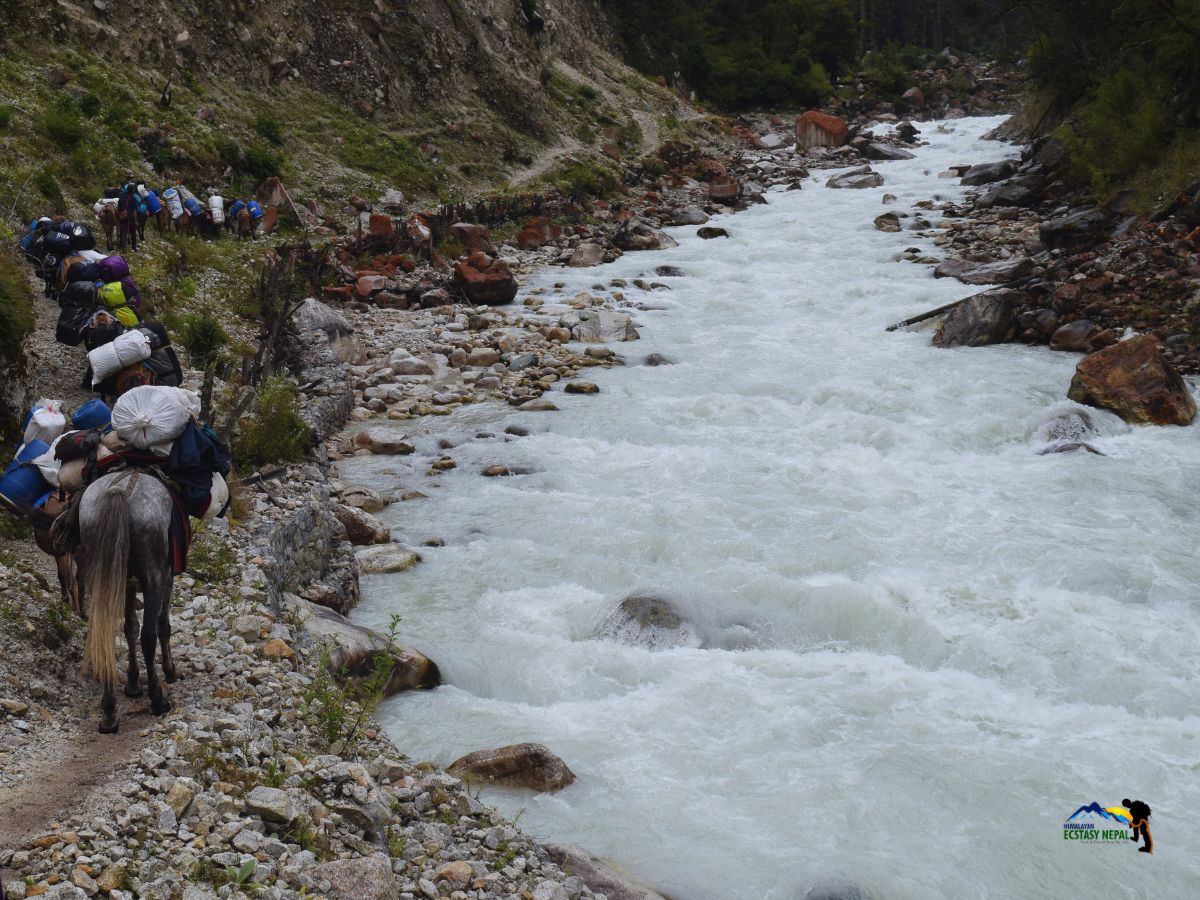
The Manaslu region is famous for its raw and remote experience. Still, it is as popular as the Everest Base Camp and Annapurna Circuit treks.
You’ll need to walk through narrow gorges, landslide-prone areas, suspension bridges, and villages that are still untouched by modern development. The rugged terrain is what adds a real sense of adventure to this 13-day Manaslu circuit budget trek.
Since Manaslu is a restricted region, the number of trekkers remains limited despite its high popularity. So, this makes your experience serene and authentic!
You trek for hours with only the sound of the river and the wind accompanying you. The remoteness, combined with towering cliffs and valleys, gives you the feel of an actual Himalayan adventure!
Face to Face with Mt. Manaslu and Mansiri Range
One of the major attractions of the Manaslu Circuit budget trek is getting to see Mount Manaslu (8,163 m), the eighth-highest peak in the world.
As you reach higher villages like Shyala and Samagaun, the snow-covered peak appears massive and incredibly close. Especially when you take the Pungen Gumba route, the view of Mt. Manaslu becomes breathtaking.
The entire Mansiri Himalayan range, comprising Manaslu North, Naike Peak, Thulagi Chuli, etc., surrounds the trail with glaciers, icefalls, and sharp ridgelines.
During clear mornings, the golden sunrise light hitting Mt. Manaslu looks heavenly! From Manaslu Base Camp and Larke Pass, the panorama becomes even wider and more dramatic.
Besides the Mansiri range, you even get clear glimpses of the Shringi, Kutang, and Ganesh mountain ranges (while heading to Nubri Valley) and the far-sighted Annapurna range (during downhill Bhimthang and beyond).
Meet the Nubri Community
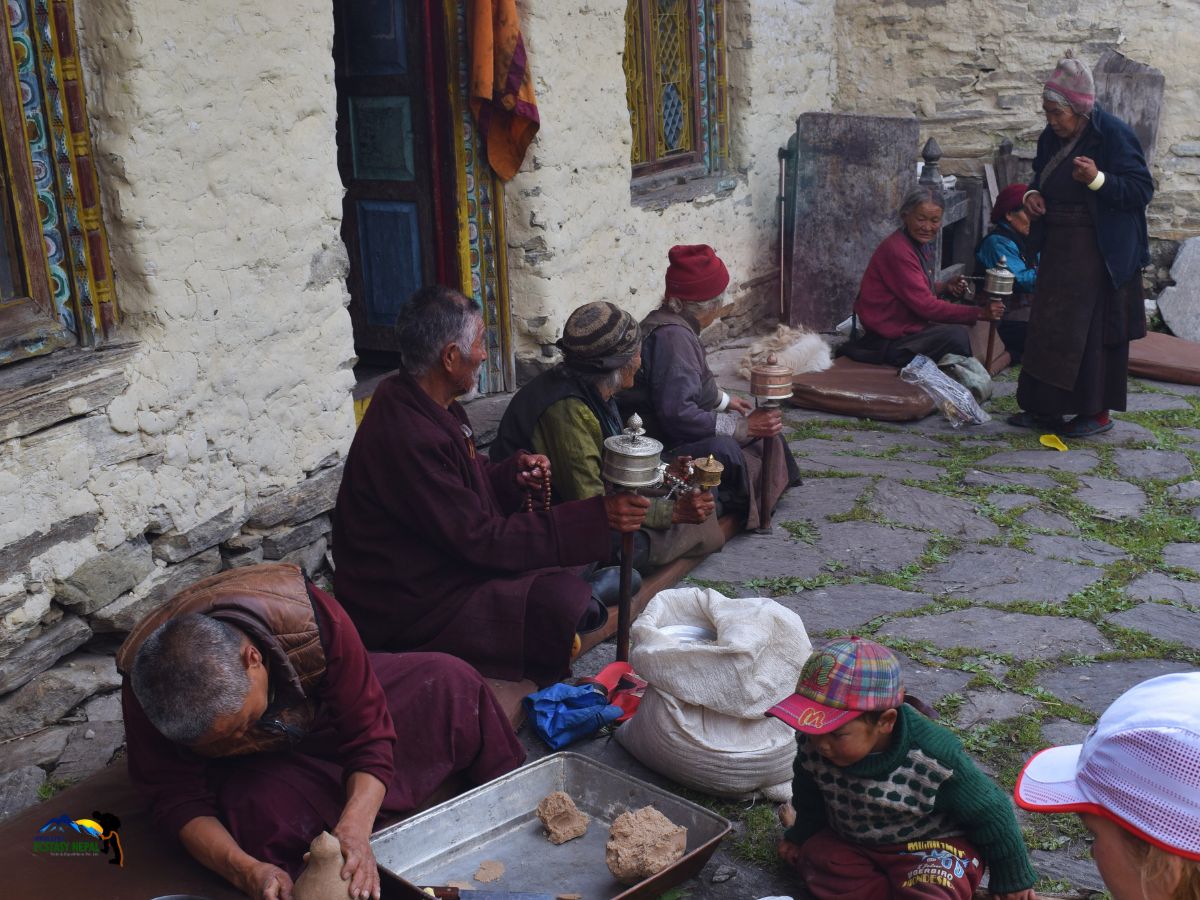
The Upper Nubri Valley is inhabited by the Nubri, aka Nubripa, people, whose culture is heavily dominated by Tibetan Buddhism. In most villages along the route (whether it be Sirdibas, Kutang, or the Nubri region), you will notice stone-walled houses, mani walls, prayer wheels, and old monasteries.
You see, this Manaslu circuit budget trek is not only about mountains, but also about people and the culture of the remote Chumnubri Rural Municipality.
As you’ll be spending nearly 10-11 days on the trail, you get to experience the daily mountain life, visit local monasteries, and mingle with the locals who are still carrying out their traditional ways of life.
Honestly, their warmth and simplicity in life give a rich experience to the trekking adventure. So, don’t hesitate booking this trek with HEN to visit the lotus feet of Manaslu heritage.
Best Side Trips to Take
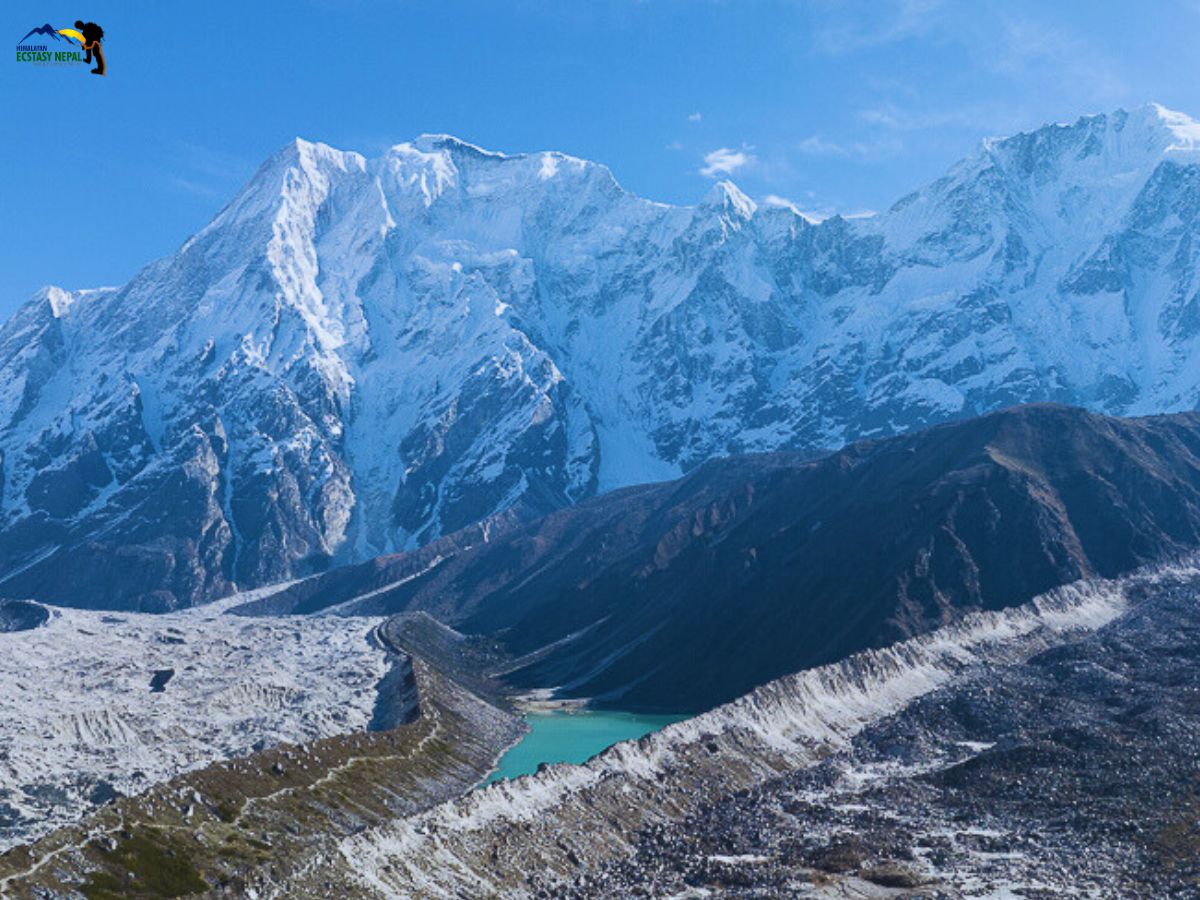
On acclimatization days, there are several side trips that can be taken. And our guide will help you out in every phase of the following journeys:
- Pungen Gumba: A peaceful monastery trek with absolutely close views of Manaslu glacier, Pungen glacier, Mount Manaslu, and open grounds.
- Birendra Lake: A short and beautiful hike away from the main trail to a turquoise colored lake in Samagaun, formed by the Manaslu Glacier with three main peaks (Manaslu, Manaslu North, and Naike Peak), making it perfect for photographs.
- Manaslu Base Camp: A challenging but rewarding trek with breathtaking views of surrounding mountain peaks, particularly the east pinnacle of the eighth-highest mountain in the world.
- Optional Visits: Ponkar Lake and Milarepa Cave for those with additional time and energy, which are within the Annapurna Conservation Area.
The above optional treks will be useful for acclimatization and make your Manaslu Circuit an even more enjoyable trek without any significant increase to the overall trekking package. So, you see, we aren’t missing out on the main highlights at all!
The Finale: Crossing Larke Pass
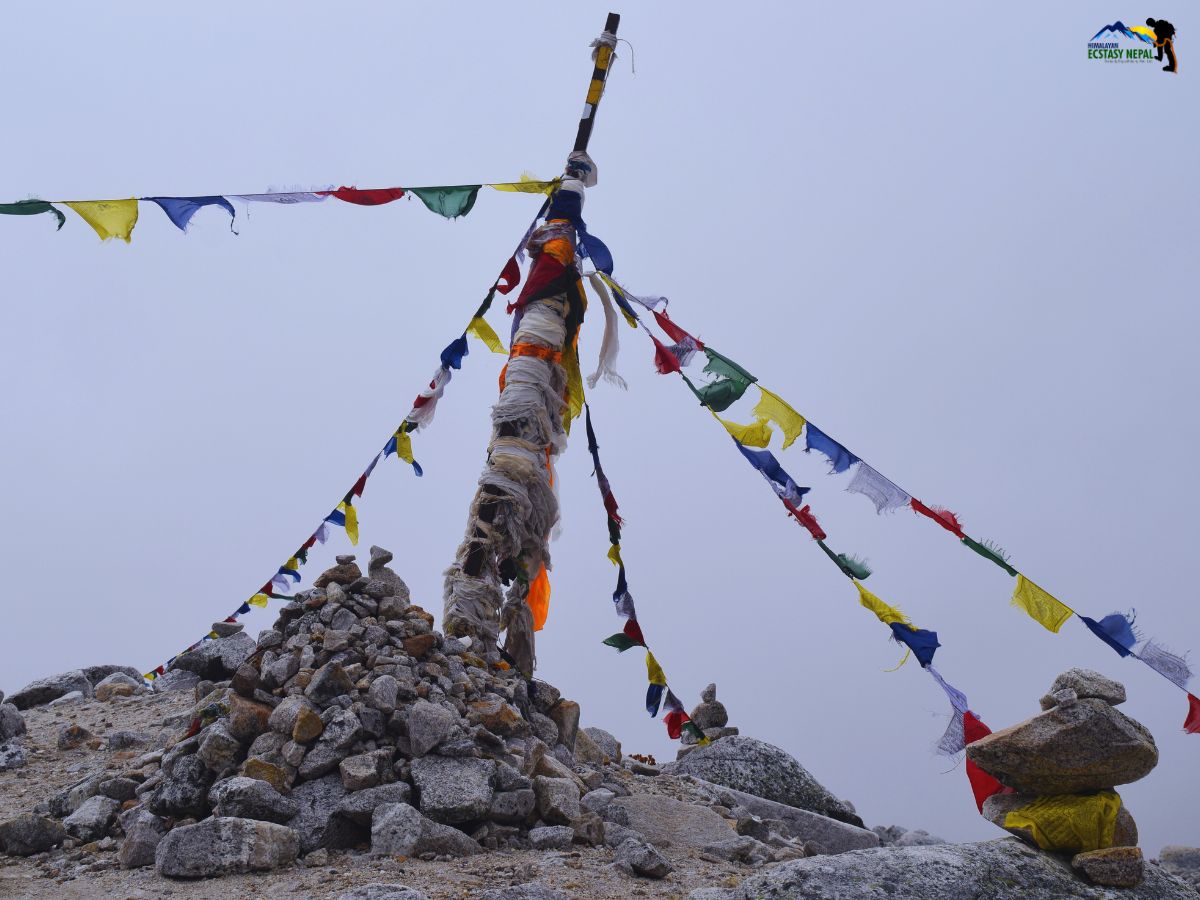
The most challenging and thrilling part of this Manaslu Circuit budget trek is crossing Larke Pass, which reaches an altitude of 5,106 meters. This trek starts before sunrise, ar around 3-4 AM. And to adopt with the high-altitude, the climb is going to be long and slow.
From the top of Larke Pass, you can see Himlung Himal, Cheo Himal, Kang Guru, and the Annapurna range. That sense of achievement you will feel at the summit is unforgettable, really.
After celebrating and taking photos, the long descent toward Bimthang begins via High Camp, marking the transition toward the Annapurna region.
Why Budget Manaslu Circuit Trek with HEN?
Choosing our Manaslu Circuit Budget Trek package does not mean choosing poor service. It’s just that we have cut down costs on certain aspects. Despite that, this Manaslu circuit trek with Himalayan Ecstasy Nepal is still expertly organized, authorized by law, and guided by knowledgeable experts.
At HEN, we're dedicated to openness, security, and acclimatization while making sure that our services are affordable.
Our Manaslu Circuit budget trek is ideal for travelers who want to save bucks but still wish to experience the best of the Himalayas. Among the cheapest treks in the market, ours stands out as the most reliable and professionally run in Nepal, which is why you should consider HEN for your upcoming trip in the Manaslu region.
Manaslu Circuit Budget Trek - 13 Days Itinerary
Kathmandu to KathmanduExpand all
Depending on your arrival time, our office representative will pick you up from Tribhuvan International Airport (TIA) and take you to the budget hotel we have arranged for you in Kathmandu.
If you prefer a more comfortable stay, you still have the option to upgrade to our 4-star property, Hotel Thamel Park, at an additional cost.
After checking in, we will have a brief meeting session, where you will meet our team and be introduced to your trekking guide. During this time, we will share you all the details about the trek and answer any questions you may have.
If you have extra time, you can explore Kathmandu, especially the lively Thamel area. We will suggest places for you to visit, or you may simply rest at the hotel after that exhausting flight!
You can also do last-minute shopping in Thamel. In case you missed any essential trekking gear, note that we even provide rental services at a reasonable cost. Not to forget that you can even rent gear with the HEN logo and proudly show it off during your trek.
Early in the morning, you will meet your guide and head to Gongabu Bus Park to catch a public bus. Driving through the countryside roads of Dhading, you will enter the Gorkha district. After passing through Malekhu, Arughat, and Arkhet Bazaar, you will finally reach Soti Khola after approximately 7 to 8 hours, covering a distance of 125 km.
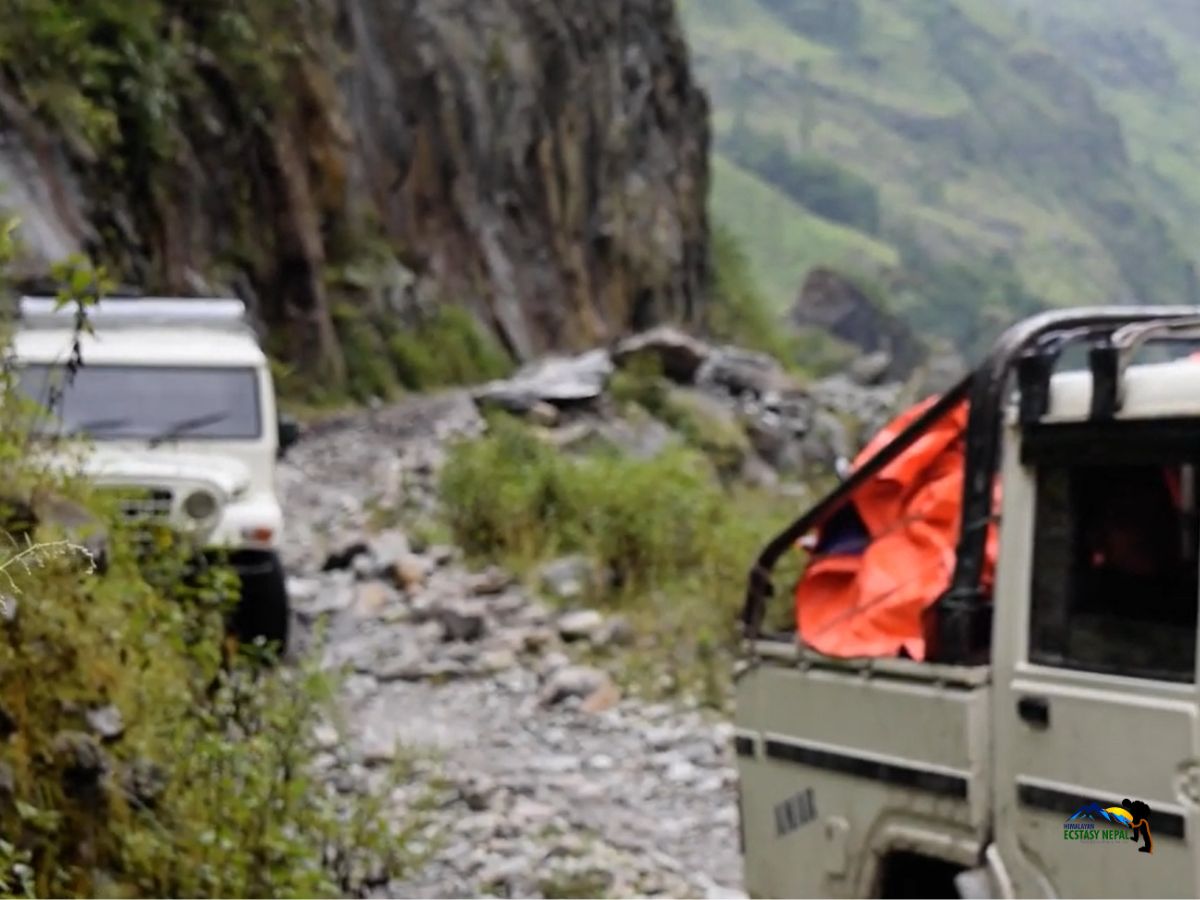
However, in case of bad road conditions, the bus may only reach Machhakhola (870 m) or Soti Khola(730 m). And that means you will have to switch to a shared jeep, which is surely a cost-effective option. The jeep ride to Machhakhola takes about 2 hours, covering around 14 km.
If daylight allows and road conditions are favorable, the same jeep may continue further to Jagat (1,370 m), which is another 17 km drive taking approximately 2 to 3 hours. Otherwise, you will stay overnight at Machhakhola.
In case jeeps cannot reach Jagat due to poor road conditions, an extra trekking day will be required to hike from Machhakhola to Jagat (that’s 18 km in 8 to 10 hours).
Upon reaching Jagat, your guide will assist you in showing the necessary permits and obtaining the local rural municipality permit from Chumnubri Rural Municipality office. After a long day of waterfalls, winding roads, and bumpy jeep rides, you will be exhausted. Have dinner and rest early for the night.
After breakfast, your actual trekking journey will start from Jagat. We will move ahead on the trekking trail towards Philim, where your permits will be checked again. Moving ahead, you will cross Ekle Bhatti (1,580 m) and then reach Nyak (1,625 m). The route is a combination of traditional villages and subtropical forests.
After lunch at Nyak, you will continue along the Budhi Gandaki corridor, reaching Pewa (1,750 m). From there, after a brief rest, you will make the final uphill stretch to Dyang, also known as Deng (1,860 m).
Today’s hike is around 20 km with a gradual ascent followed by a slightly steeper section. It may take 8 to 10 hours, depending on your pace. Deng offers views of Sringi Himal and the surrounding mountains. Here, you will also get to meet and greet with the Gurung community.
After a long day of hiking, have dinner early and rest well. Do not forget to step outside for some stargazing before you sleep!
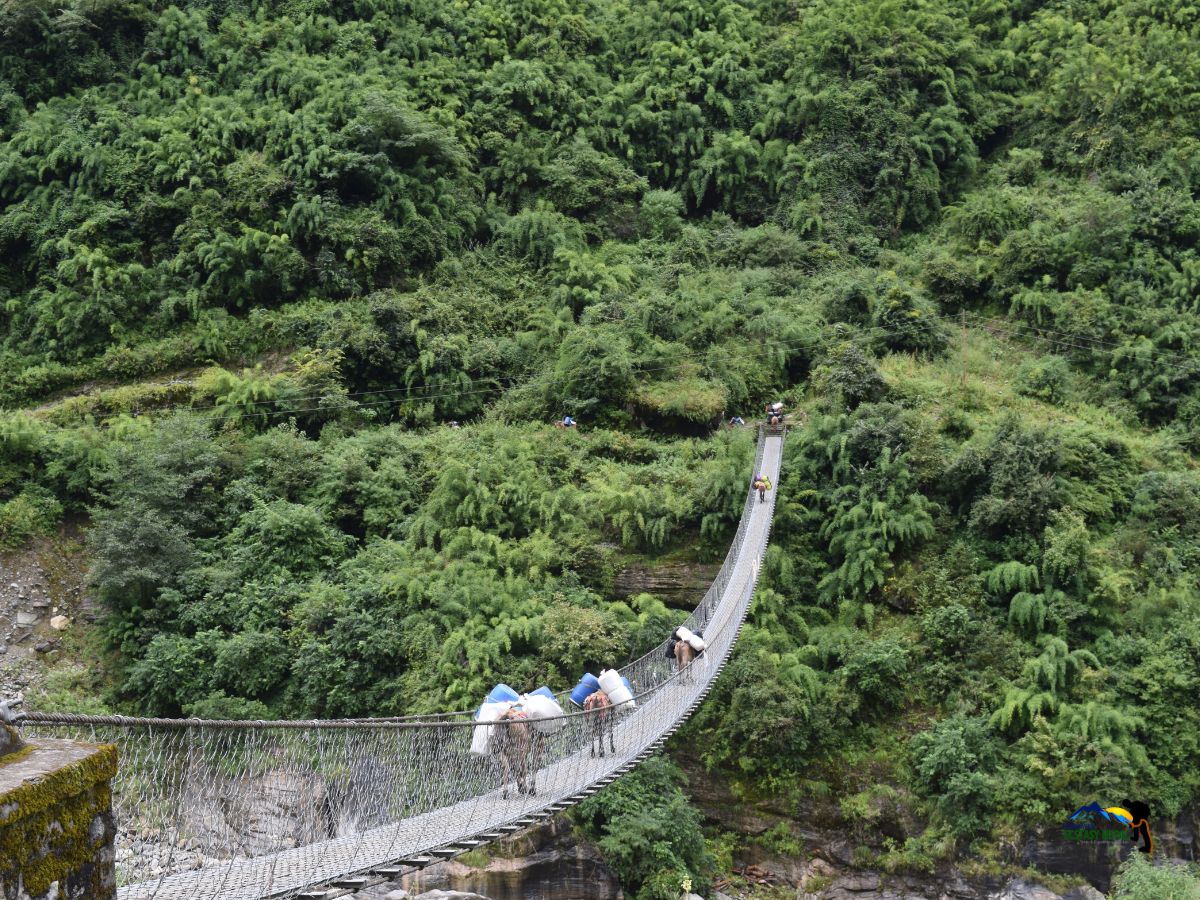
After breakfast, you begin your hike through the beautiful coniferous forests of pine and fir, along with rhododendron thickets. Crossing several suspension bridges, the lower Manaslu region slowly transitions into the Kutang region inhabited by the Kutangpa people.
You will pass Bihi (2,010 m) and Bhijam (2,005 m) before stopping for lunch at Gap (2,105 m). There is an alternative route from Bur that leads to Prok Village, home to Kalchuman Taal (Kal or Death Lake), but that requires an extra day for proper exploration.
If you are interested, we can adjust the itinerary accordingly. After lunch at Gap, you will continue past waterfalls, mani walls, and chortens reflecting strong Buddhist influence. Crossing Tom Khola as it meets the Budhi Gandaki River, you will follow a forested trail with a mix of straight paths and mostly steep uphill climbs.
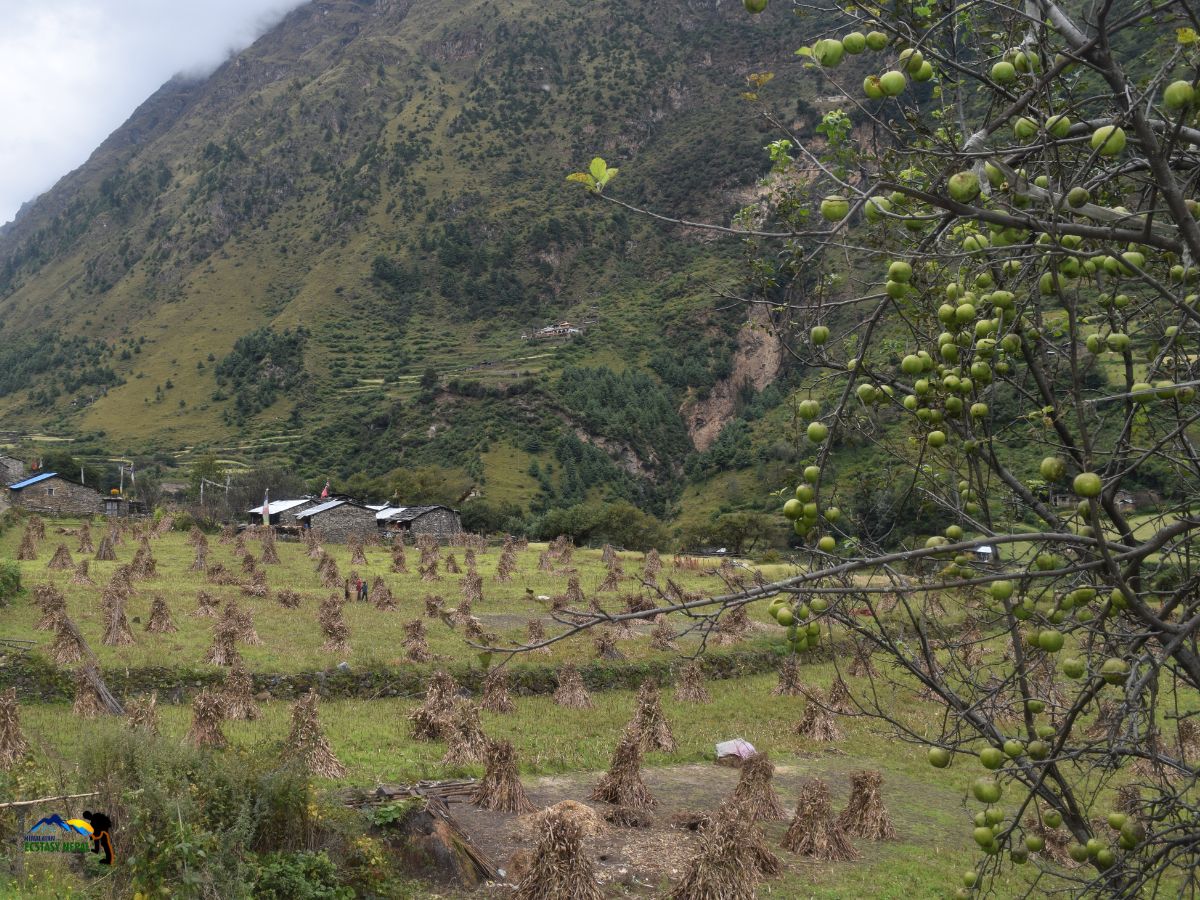
Passing Gapshya (2,150 m), we’ll even meet a route that takes you to Sherang Gumba, but we’ll continue forward towards Namrung (2,630 m). The total hike today is around 17 km that takes 8 to 10 hours. Before reaching Namrung, be sure to try some local apple products on the way.
You’ll stay overnight in Namrung, where you are now in Nubri Valley. So, be sure to interact with the famous Nubri (aka Nupripa) community of Manaslu too.
After breakfast, you will show your permits at the checkpoint in Namrung. As the subalpine climatic zone begins, you also start getting closer views of the surrounding mountains.
Passing Bhanjam, you will reach Lhi, which is home to Henang Gompa. Reaching there requires a diversion, which is also the route to Himalchuli Base Camp. However, that requires an extra day for proper exploration, so we rather continue forward through Shyo and then Lho.
The lunch stop is going to be at Lho, which is home to Ribung Monastery and offers your first clear glimpse of Mt. Manaslu (if the weather permits). It is a perfect place to stop for Dal Bhat, which is indeed one of the best budget-friendly meals in the mountains.
After lunch, you continue the final uphill stretch to Shyala (3,500 m).Today, you’d hike for about 13 km that takes about 7 to 8 hours. Upon reaching Shyala, the air feels thin and the mountain atmosphere becomes stronger!
And let us tell you about the panoramic views of the Mansiri Himal range, which is seriously breathtaking! Even Tibetan Buddhist culture becomes more visible from here onward.
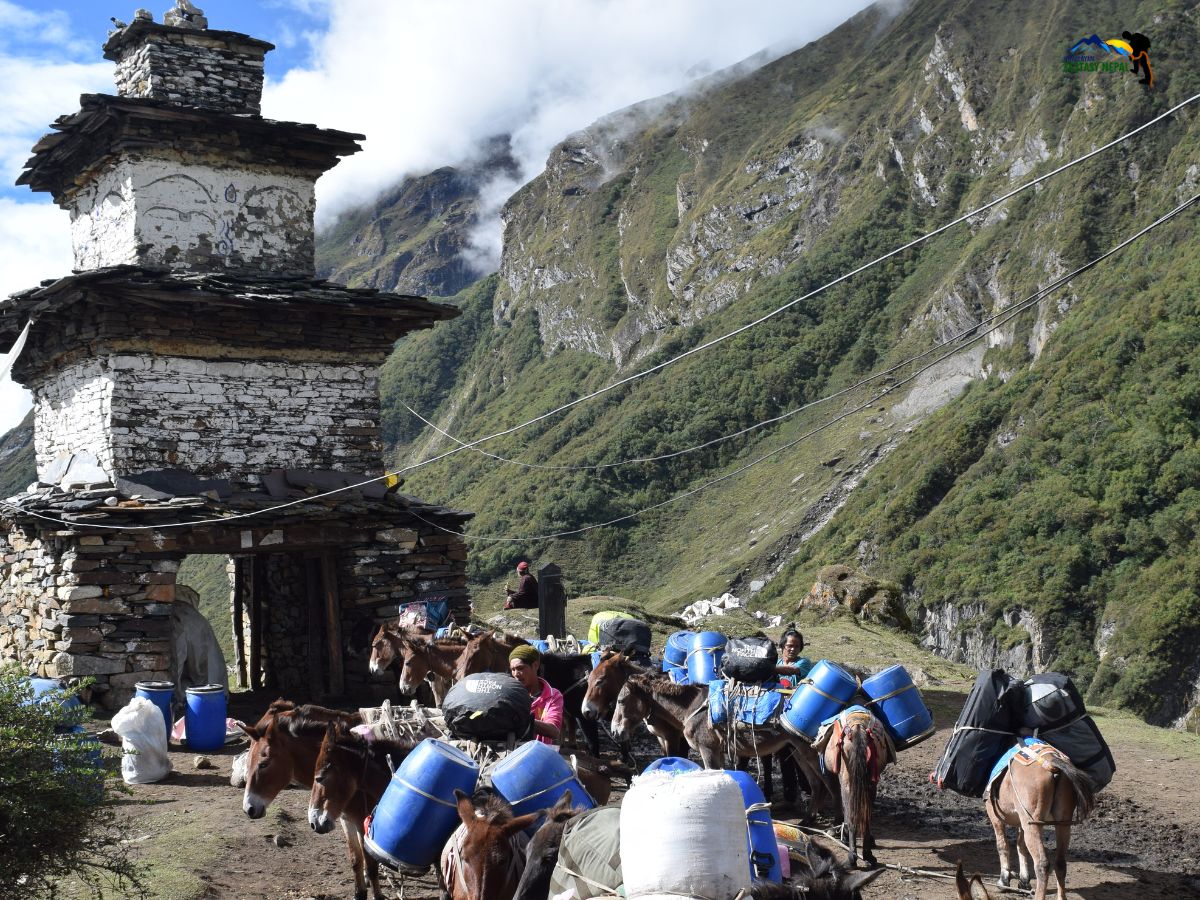
You wake to a beautiful sunrise at Shyala, which will totally mesmerize you. Honestly speaking, that golden view of Mount Manaslu will be one of your favorite memories even after years of this Manaslu Circuit Trek.
After breakfast, you and your guide will pack your bags and begin the hike towards Pungen Gumba, as early as possible. Because the earlier you start, the better, as strong winds usually begin later in the afternoon. First, you pass Shyala Gompa, which is an architectural beauty in itself.
It’s one monastery we often hear praises from our guests. From there, the view of the peaceful settlement of Shyala reminds you how beautiful your stay here was.
Continuing along a slightly rugged path, you will reach the open grounds of Pungen Gumba (4,040 meters) after around 3 hours of hiking. The real highlight here is not just the centuries-old monastery itself, but the towering close-up view of Mount Manaslu surrounded by mountains on all four sides. You can enter the monastery and offer a small donation, which greatly helps the monks living in such a remote region.
After spending some quality time here, have some light snacks (if you’ve packed it form the Shyala teahouse). Nonetheless, that heavy breakfast you had should be enough for the day. Still, we suggest you carry light snacks, like protein bars, chips, and chocolates.
Within the next 3 to 4 hours, completing around 13 km in total for the day, you will reach Samagaun(3,530 m). As the biggest village in the Manaslu region, the local vibe truly kicks in here. You will see children playing, locals doing their daily work, and yaks grazing peacefully.
Your guide will assist you in showing the permits before checking into a local lodge. Be sure to try local delicacies and learn more about the Nubri culture while you are here.
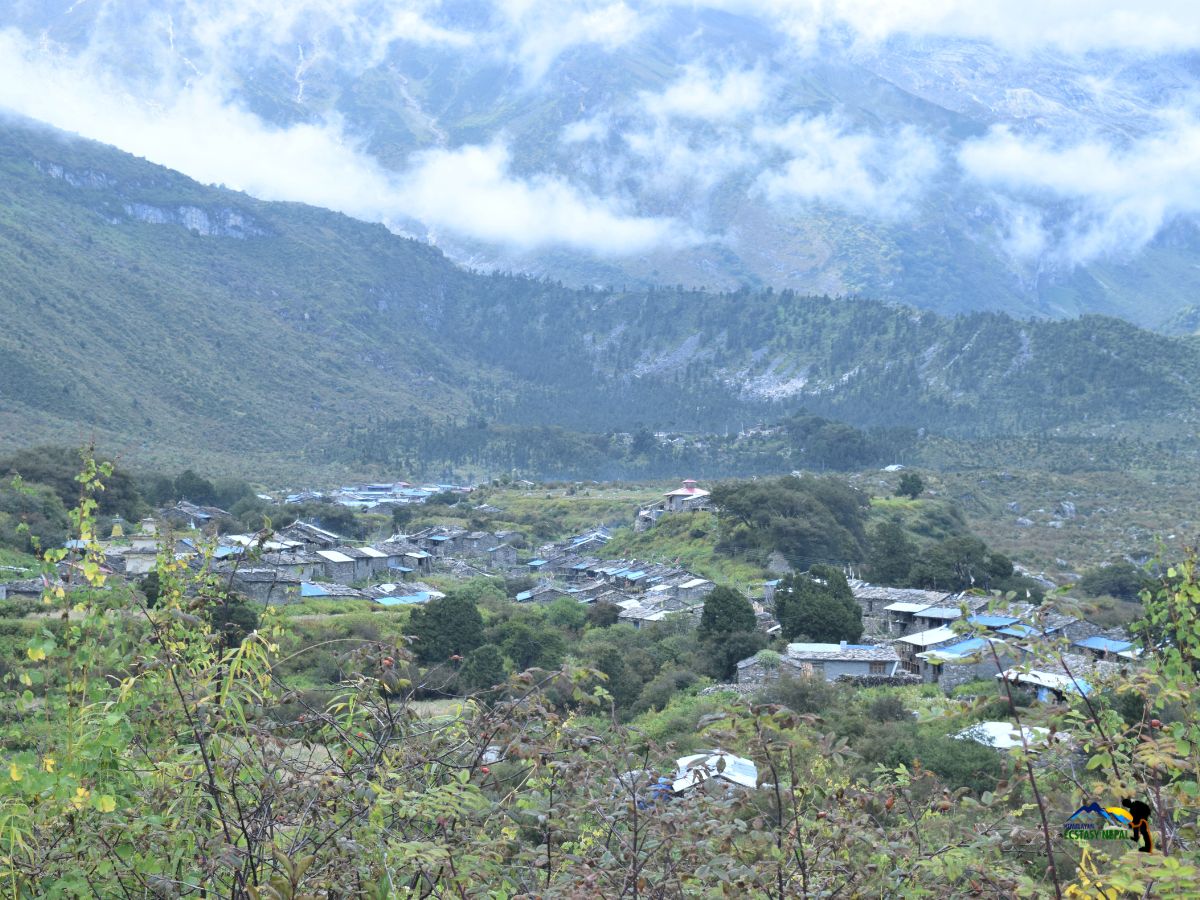
You will wake up to another breathtaking sunrise, and even this time, the golden Mount Manaslu will greet you (just like it did in Shyala). Note that after trekking for several days, your body requires sufficient rest.
But if you are still feeling cheerful, we can arrange an optional hike to the Manaslu base campat 4,800 m for you. Whether to trek to the base camp is completely up to you! Considering this Manaslu Circuit Budget Trek covers just 13 days, it is preferable to spend the day resting in Samagaun rather than making the trek to the base camp. And this is especially the case if you are feeling exhausted or the weather becomes unsuitable.
What you can do instead is visit Pema Choling Monastery and also go for a short trek to Birendra Lake. Both of these landmarks provide a peaceful and refreshing environment, exactly what you need after six long days of travel.
In case you choose to hike to the base camp, know that you’ll get a magnificent aerial view of Birendra Lake from above. The route to base camp is rocky and filled with moraine sections. The total round trip takes around 9 to 10 hours, and thus, can be physically exhausting.
That is why some trekkers prefer adding an extra acclimatization day after the MBC visit. But for budget travelers, extra days mean more budget allocation, so resting in the village is a wise choice.
Also, proper rest is very important to prevent altitude sickness. Since physical exhaustion is one of the main reasons why the Manaslu Circuit is considered moderately challenging, some trekkers even return without crossing Larke Pass.
And the main reason is poor acclimatization! So, the best thing for today would be to eat well, rest well, explore the village, and experience the cultural richness of Samagaun (often called the “lotus feet of Manaslu heritage”).
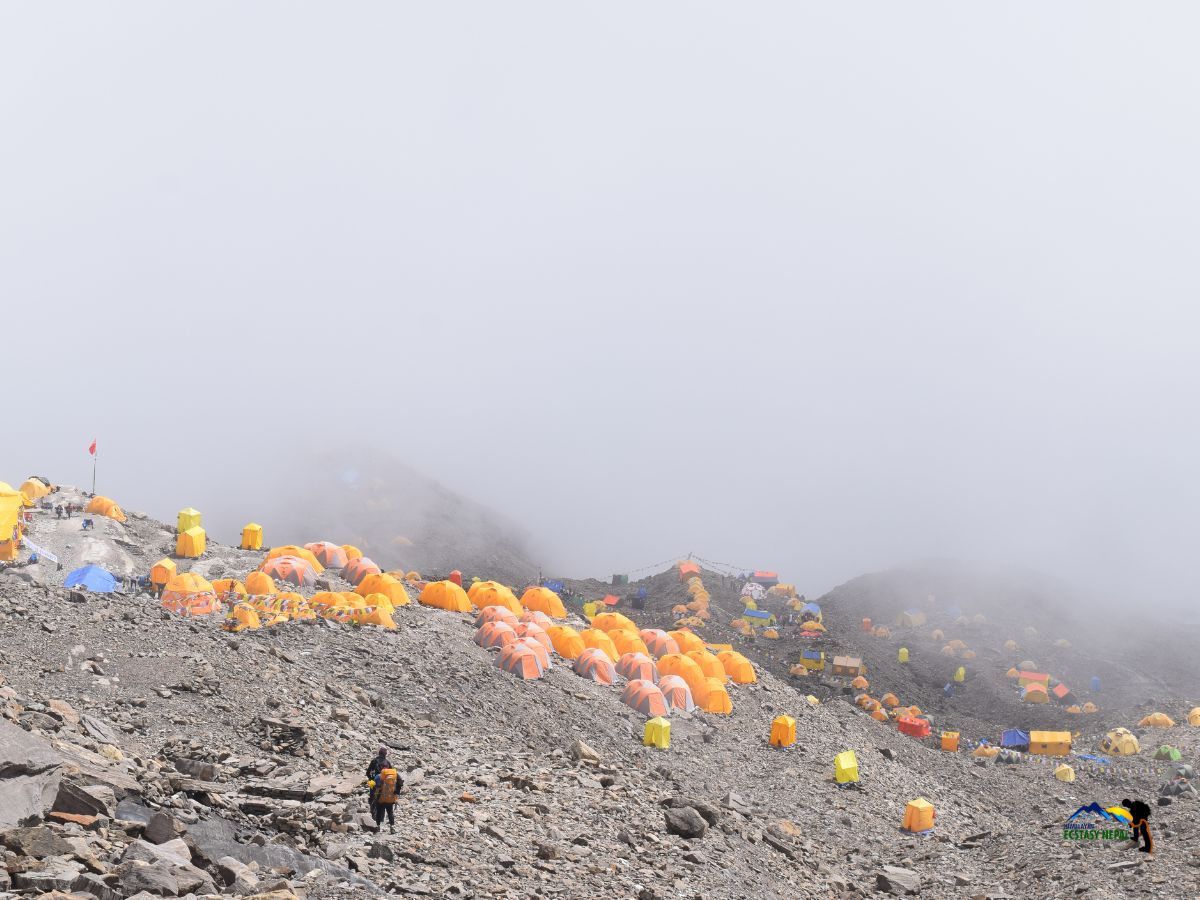
Those who want a short morning exploration can hike to Birendra Lake via Pema Choling Monastery. It takes about 45 minutes to reach the lake’s viewpoint and then you can continue downhill towards the lake.
The calm water reflecting the surrounding mountains creates a very peaceful environment. You might even spot wildlife along the way, including the rare snow leopard, although sightings are not guaranteed. But yaks grazing along the trail are almost certain though.
After breakfast, you will begin your trek towards Samdo. The trail starts relatively flat and then gradually ascends. Suspension bridges and closer mountain views make the walk very scenic despite the more rugged terrain in the high-altitude region. You will also finally feel that you are truly circling Mount Manaslu as the perspective of the mountain keeps changing.
The hike from Samagaun to Samdo is about 8 km and can be completed in 3 to 4 hours at a comfortable pace. If you choose to include Birendra Lake, the total distance becomes around 11 km and takes about 5 to 6 hours.
Reaching Samdo (3,860 m) means you are gaining significant altitude. If you arrive early, you may hike to a nearby monastery or do a short acclimatization hike. There is also a high pass called Lajung Pass leading towards Tibet, but you won’t be able to get there, because that’s one reason the Manaslu region is made a ‘restricted area’.
No matter where you hike to, it helps greatly with acclimatization, making the next days easier. Most importantly, it helps you sleep peacefully tonight! Still, keep monitoring your health carefully, as the risk of altitude sickness increases at this elevation.
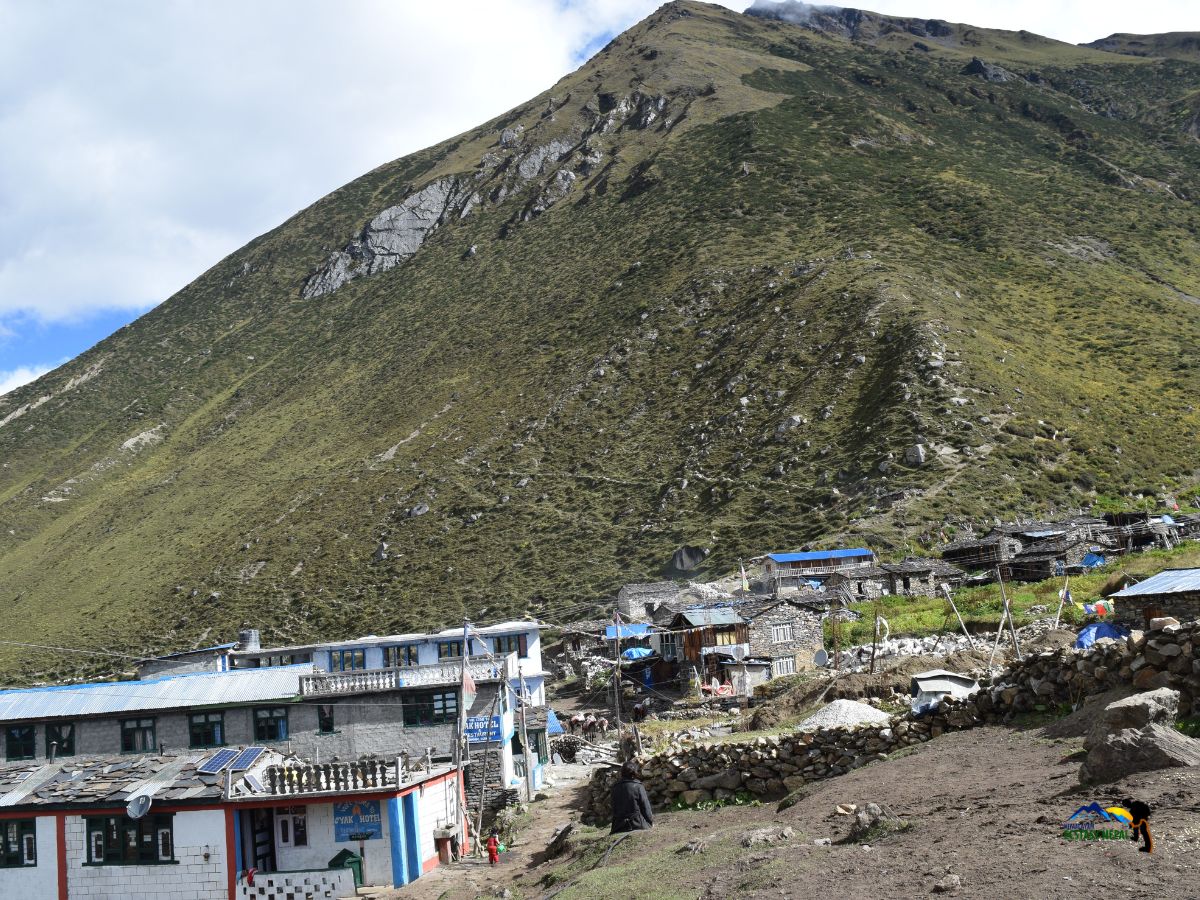
If you had a good night’s sleep and are feeling healthy (with no signs of AMS), today is another short but important trekking day.
The hike from Samdo to Dharmashala (4,460 m) is around 6 km and can be completed in 4 to 5 hours easily. On the way, you will pass Larke Bazaar, which has only one lodge but serves as the last place to buy snacks and essentials.
Locals from Samdo come here to sell items to support trekkers before the pass crossing (be sure to buy a few bars of chocolate to help them out). From here onward, you should walk slowly and steadily while enjoying the breathtaking mountain views.
The goal is to reach Dharmashala as early as noon, and allow your body to adjust before heading to cross the Larke Pass the next morning. But please avoid exhausting yourself. Keep drinking plenty of water and rest properly. If you can, eat dinner early and go to bed.
Also, inform your guide when you want to eat breakfast the next day, as the kitchen team starts cooking meals from midnight because there aren't many teahouses and the crowd level is high during peak seasons.
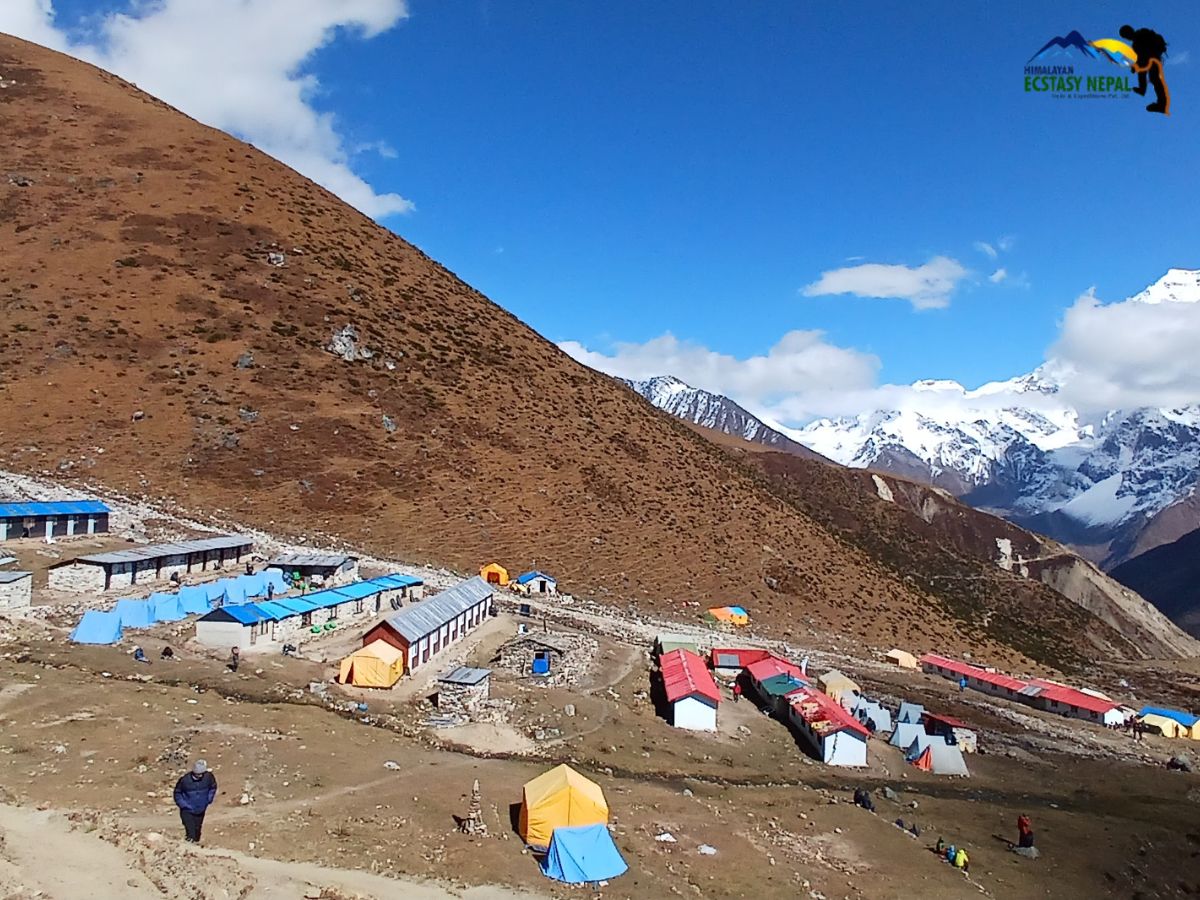
Today you need to wake up around 2 to 3 AM and get ready for the most challenging and rewarding day of your trek. Breakfast will be early, so it is recommended to carry extra snacks because there are no teahouses from here onwards.
The earlier you start, the better, as afternoon winds can make crossing Larke Pass difficult. Watch your steps carefully, as streams can be frozen in the early morning. If the trail is slippery, you may need to wear crampons. And in case of heavy snowfall or bad weather, the crossing may not be possible, which means you may have to return back.
Walk slowly and steadily. Take short breaks when needed and maintain your pace. After a gradual 7 km uphill climb, you will finally reach the vantage point of Larke Pass at 5,106 meters. There are two signboards at the top, perfect for pictures! However, do not stay too long if you feel a headache or symptoms of AMS. Begin descending immediately!
The 360-degree mountain views are breathtaking, but the downhill section is long and can be tough on your knees. After crossing rocky and moraine trails, you will reach High Camp (4,400 m), where you can stop for lunch and celebrate crossing one of the longest passes in the Himalayas.
Remember that now, you’re in the Annapurna region inside the Mustang district. You may visit Ponkar Lake if time allows, which is about 1.5-hour extra hike. After approximately 16 km of combined ascent and descent, you will finally reach Bhimthang (3,720 m), a true paradise. From here, the far Annapurna range sits in front while Mount Manaslu is still behind you (it looks quite different now).
You have done it! So, don’t forget to celebrate with another plate of Dal Bhat. Of course, there are other menu items available, but we’re sticking with the low budget yet again.
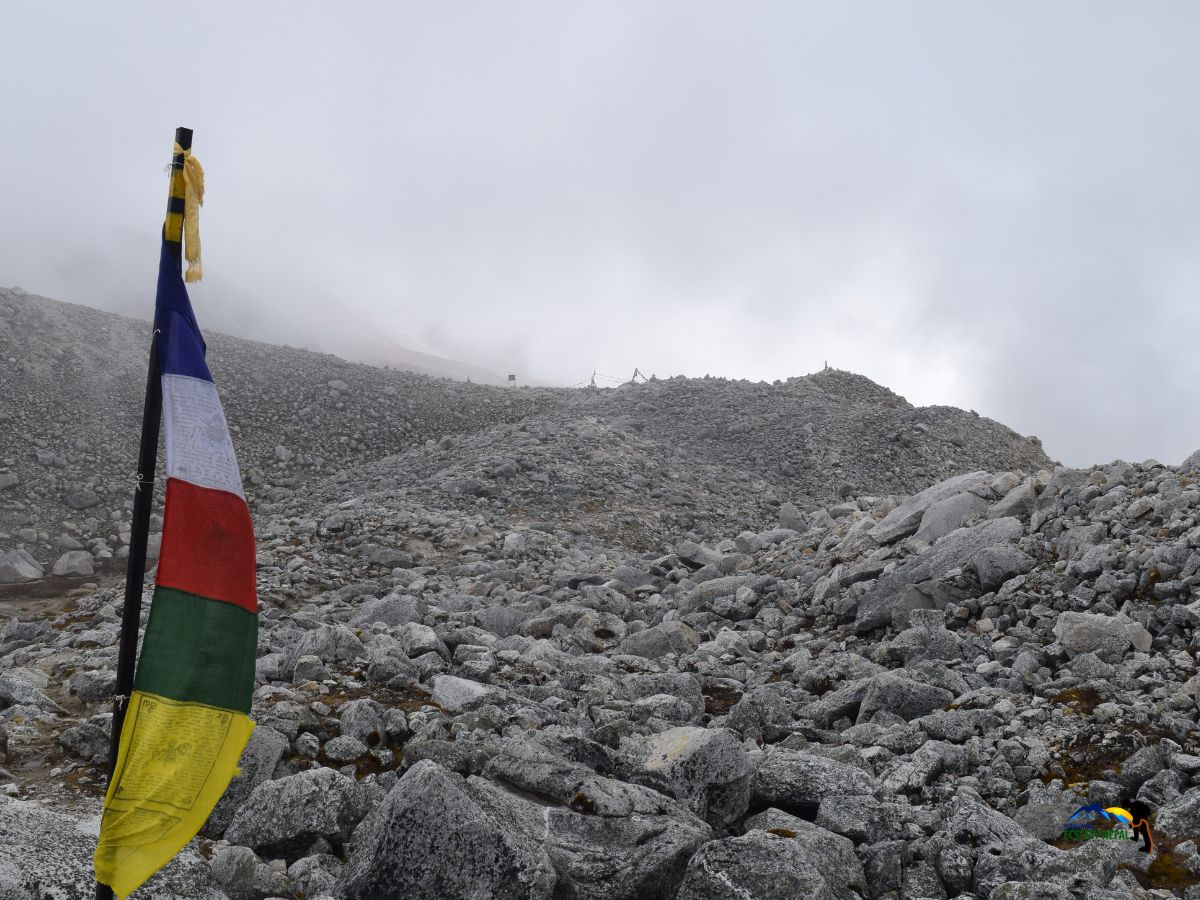
Morning at Bhimthang is equally spectacular (as it was with Shyala and Samagaun), with mountains surrounding you and open meadows filled with grazing horses and yaks.
Start your downhill hike early today. The Annapurna trail is a combination of straight paths and gradual descents. If time allows, you can take a short diversion to Milarepa Cave; otherwise, continue towards Surki Khola for lunch after passing Habu and Chauri Kharka.
The rhododendron forests of the Annapurna Conservation Area make this section very scenic. You will finally reach Gowa, where the road begins, and motorbikes may offer rides. However, since you are on a budget trek, it is better to continue walking towards Tilche (2,260 m) and then to Dharapani (1,860 m).
The total hike today is around 24 km and may take 9 to 10 hours. Although you can stay at Tilche, Dharapani offers more budget-friendly options, which is why our guides at HEN will escort you there.
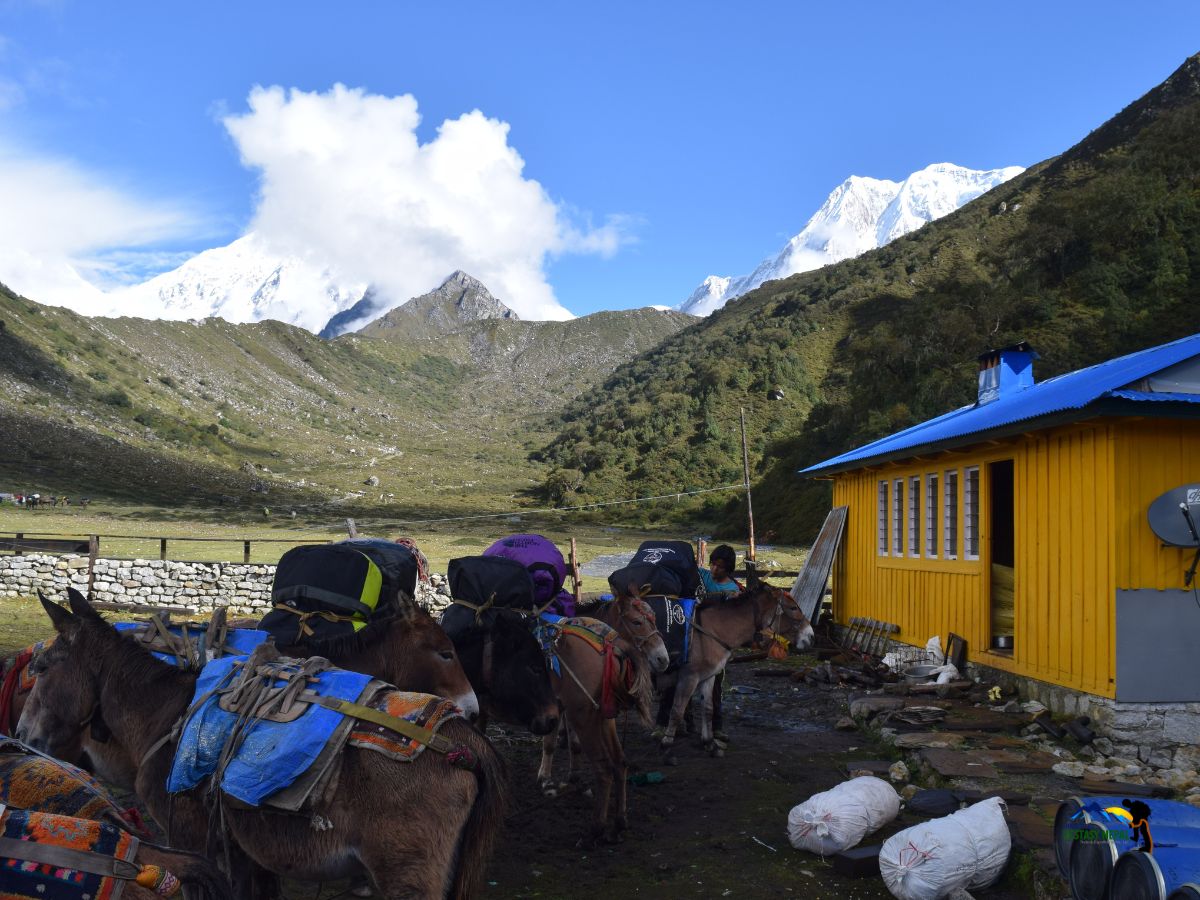
You are no longer close to Mount Manaslu now, but the memories will stay with you forever for sure!
After breakfast, your guide will arrange a shared jeep to Besisahar. You will need to show your ACAP permits before you leave because you are now in the Annapurna region. The jeep ride from Dharapani to Besisahar is about 65 km long and takes about three hours.
When you get to Besisahar (760 m), you will have lunch before getting on the bus or van (whichever seems feasible) to go back to Kathmandu. It takes about 6 to 7 hours to reach Thamel, Kathmandu. We will get there by the evening, where our representative will meet you again.
We’ll help you check into your hotel, where you may take a warm/cold shower, and have dinner of your choice. We will let you rest peacefully after this long journey, because you deserve it. But don’t hesitate to explore Thamel’s nightlife!
But if you're willing to visit Pokhara, the tourism capital of Nepal, we can arrange a local bus/van service to get you there as well. The Lakeside vibe is spot on and much better to end the trip than in Kathmandu. It's up to you to decide!
Note: In case you decide to stay in Pokhara, we will end the trip there. You can then explore some of our other tour packages if you're willing to do side trips with HEN.
Our Himalayan Ecstasy Nepal team will meet you and arrange your airport transfer depending on your flight time. But if you plan to extend your stay in Nepal and are looking for further packages, our doors are always open for you!
On this last day, we will even drop you to the airport and say goodbye in a Nepali style. We are sure you will fall in love with Nepal, and we hope to see you again on your next adventure. Be sure to stay in touch and don’t forget to pen down a review!
Trip Cost Details
Includes
The package cost for the Manaslu Circuit Budget Trek includes the following essential services for a safe, well-managed, and comfortable trekking experience:
- Transfers to and from the airport
- 2 nights in a tourist-friendly hotel in Kathmandu (or Pokhara, after the trek)
- 11 nights'foods and accommodation in teahouses lodge ( B.L.D) during the trek in the Manaslu.
- A shared local bus or jeep ride from Kathmandu to Machhakhola, Dharapani to Besisahar, Besisahar to Kathmandu/Pokhara
- All permits [Manaslu Conservation Area (MCAP), Annapurna Conservation Area (ACAP), Restricted Area Permit (RAP), Chumnubri Rural Municipality Permit-V.D.C]
- An English-speaking licensed trekking guide will be with you the whole time.
- The guide's salary and his insurance.
- Two cups of tea/coffee (during breakfast and dinner).
Excludes
- Costs for personal expenses on the trek
- Airplane tickets to and from Nepal
- Fees for the tourist visa to enter Nepal (you need two passport-sized photos)
- Personal travel and health insurance (which covers for emergency evacuation)
- Meals that aren't listed in the itinerary, like drinks, snacks, chocolate bars, and alcoholic/non-alcoholic drinks
- Hot showers, Wi-Fi, phone, and internet access
- Battery or high-power electric devices charging (in higher-altitude teahouses)
- Services for doing laundry in Kathmandu or Pokhara
- Your hiking gear, equipment, clothes, and personal hygiene stuff.
- Costs that occur because of natural disasters, bad weather, political unrest, or other things that are out of our control
- Any costs that come up because you choose to leave the trek early (not refundable)
- Tips for guides and porters (not required, but common and appreciated)
- Any service that isn't listed in the "Cost Includes" section
Extra services that you can pay for if you want them:
-
Porter service (USD 280 per porter per two trekkers, who can handle 20 to 22 kg weight)
- Private jeep pick-up and drop-off (USD 380 extra)
Essential Information
Best Time to Visit the Manaslu Region
You can visit the Manaslu region at anytime of the year, and every season is beautiful in its own unique way. However, weather conditions, road access, and the possibility of crossing the Larke Pass play a major role in deciding the best time for your trek.
Below is a clear seasonal breakdown to help you plan your journey properly:
Spring (March to April)
This is one of the most popular seasonsfor the Manaslu trek. The weather gradually becomes warmer after winter, and skies are usually clear in the mornings, offering excellent mountain views. Snowfall chances are minimal, although some higher sections may still have leftover snow from winter.
Also, it’s the busiest time of the year for trekking, so the trail might be a little crowded. However, the visibility is excellent, and the blooming rhododendron forests in the lower region add extra color to the journey. If you want stable weather and classic Manaslu views, spring is a very reliable choice.
Early Summer (May to June)
May and early June are often considered an underrated time to trek in the Manaslu region. The weather can be slightly unpredictable, but when the skies are clear, the mountain views remain fantastic (when no cloud). Snowfall chances are low during this period.
There is a possibility of rain, especially as the monsoon approaches. In the alpine region beyond Larke Bazaar, it is possible for rain to turn into snow. Therefore, appropriate preparations are still necessary. Even after the occasional changes in the weather, this season is a good time for trekking due to the absence of large crowds and the greenery of the season.
Monsoon (July to September)
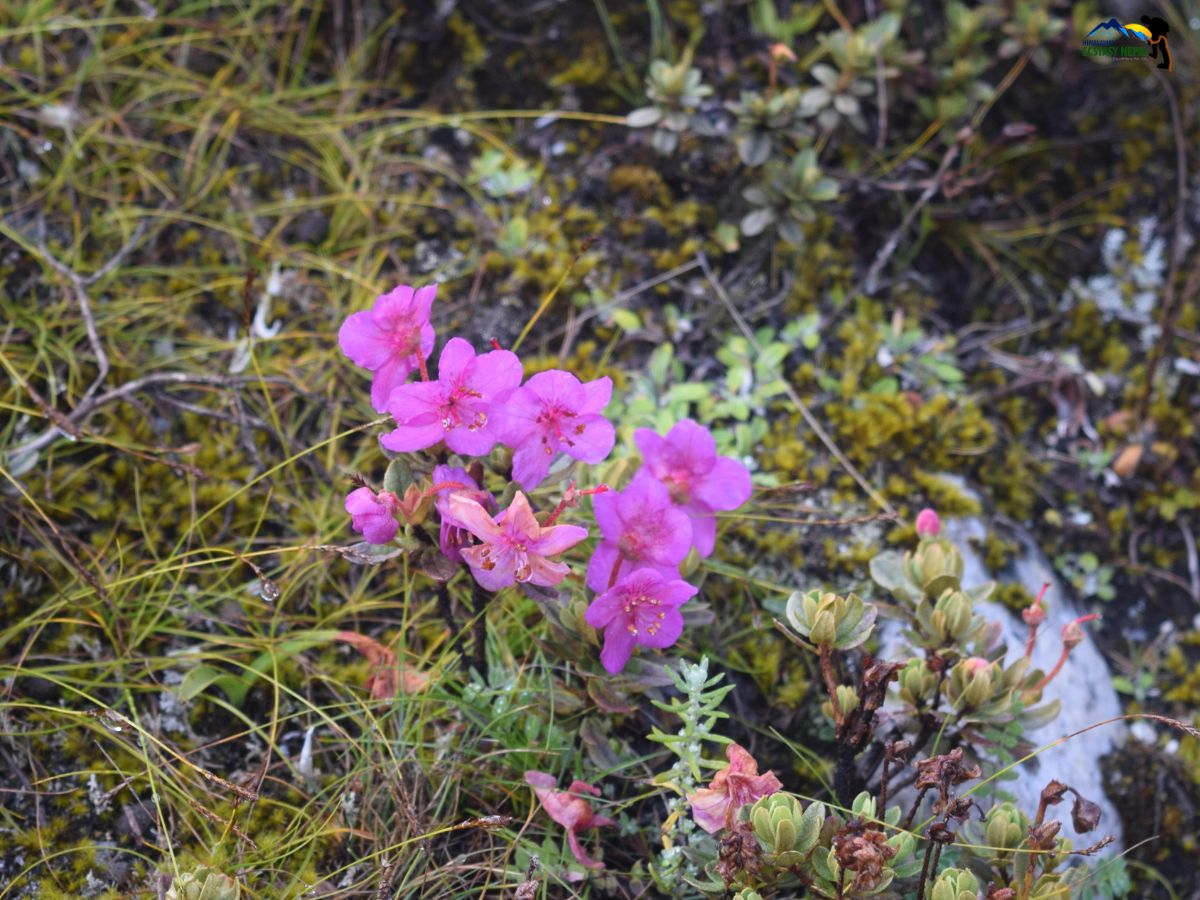
The monsoon season is not recommended for trekking in the Manaslu region. The heavy rainfalltellingly impacts the road conditions in the lower region. There is also a higher risk of flood and landslide hazards and transportation delays in the Budhi Gandaki region.
However, if the conditions of the weather remain stable, the season is very green and vibrant. The waterfalls are at their strongest, and wildflowers bloom along the trail. However, due to the risk factors and accessibility of the region, it is not a popular season for trekking.
Autumn (October to November)
Autumn is widely considered the best time to visit the Manaslu region. The weather becomes stable after the monsoon, and mountain views are usually clear throughout the day, especially in the mornings. Visibility is very good with very low chances of weather changes (although climate change has affected this season pretty badly).
The previous monsoon may still have some effect on the roads, especially in early autumn. But the plants are still green, the waterfalls are still flowing and are active as well as the weather is good for trekking. The best time to go to the Manaslu Circuit trek is usually mid-autumn (late October to early November) because the weather is stable and the views of the mountains are crystal clear.
Winter (December to February)
Winter begins in late November and reaches its peak in January. Mountain conditions remain stable, and the trails are much quieter with very few trekkers. If you like being alone, the good time of year is early winter.
However, at higher altitudes, especially on nights, the temperature drops below freezing. Heavy snow can sometimes block theLarke Pass, which means that trekkers have to turn back or change their plans. So, keep in mind that you need to have the right winter gear and be ready to change your plans.
This season can be encouraging for experienced trekkers looking for fewer crowds and stunning snowy landscapes, even though it's not the most comfortable season, as it's so cold.
Manaslu Circuit Trek Difficulty Explained
The Manaslu Circuit Trek is a challenging adventure that needs good stamina and physical fitness.
Hiking hours vary from 6 to 8 hours a day in the wilderness of the mountains, and the highest altitude of this trek is the Larke Pass, which is 5,106 meters above sea level. The ascent to the pass is long and steep, making it one of the most challenging parts.
However, the main challenges of this trek are the constant increase in altitude, low levels of oxygen after 3,000 meters, freezing weather, and long days of hiking.
Not just physical tiredness, but even you’d be mentally exhausted. So, you have to prepare for both longer hours of trekking as well as mentally prepare for the remoteness of the location with the scarcity of facilities.
In fact, even experienced trekkers can feel the effects of altitude and tiredness. But worry not, as you’re booking this trek with HEN, where we ensure our guides keep your squad motivated!
Here are some early tips to overcome difficulty on this Manaslu Circuit Trek:
- Start physical training 1 to 2 months prior to the trek.
- Start cardio training and stair climbing starting today!
- Go for long distance hikes, possibly carrying a 15-18 kg load every day (as a porter isn’t included).
- Maintain a steady pace. Do not compare your speed with others.
- Listen to your guide at all times.
- Make sure to take proper nutrition.
- Drink at least 3 to 4 liters of water daily.
- Use trekking poles for support (especially on steep uphills and downhills).
- Wear appropriate clothing for a cold climate.
- Rest and sleep are also important. Be sure not to wake up until late hours.
- Start preparing mentally, not just physically. Patience and consistency are important during this Manaslu Circuit trek.
Permits Required for Manaslu Circuit Trek
Kindly note that the Manaslu region is classified as a ‘restricted area’. So, solo trekking is not permitted, and all trekkers (excluding locals) must travel through a registered trekking agency such as Himalayan Ecstasy Nepal and with a licensed trek guide. Here are all the trek permits you require on this trek:
1. Manaslu Conservation Area Project (MCAP) Permit
- SAARC Nationals: NPR 1000
- International Trekkers: NPR 3000
2. Manaslu Restricted Area Permit (RAP)
September to November:
- USD 100 (first 7 days)
- USD 15 per additional day
December to August:
- USD 75 (first 7 days)
- USD 10 per additional day
This permit covers the Chumnubri Rural Municipality’s wards 1, 2, 3, and 4 in the restricted section.
3. Chumnubri Rural Municipality Permit
- Nepali citizens: NPR 200
- International (including SAARC): NPR 1000
4. Annapurna Conservation Area Permit (ACAP)
Required after crossing the Larke Pass and entering the Annapurna region.
- SAARC: NPR 1000
- International: NPR 3000
5. TIMS Card (optional)
Not compulsory these days, but for safety reasons, we still recommend. But in this budget cost, we generally exclude.
- SAARC: NPR 1000
- International: NPR 2000
After booking, Himalayan Ecstasy Nepal arranges all required permits on your behalf. So, honestly, you don’t have to worry about the prices at all. You only need to provide a passport copy, a visa copy, and passport-size photographs.
Altitude Sickness & Prevention
The highest point in the trekking route will be at an altitude of 5,106 meters at the Larke Pass. But altitude sickness or acute mountain sickness (AMS), usually develops at an altitude as soon as you cross 3,000 meters (beyond Shyo).
The main causes are: rapid ascent to high altitudes without proper acclimatization, low levels of oxygen, severe weather due to low temperatures, dehydration, and overexertion.
The most common symptoms of AMS are: headache, nausea, dizziness, lLack of appetite, trouble in sleeping, and fatigue.
But when AMS worsens, you might start getting severe symptoms of HACE/HAPE. These are fatal conditions, and the early signs include inability to walk straight, breathlessness even while resting, bluish lips and fingertips, constant coughing, etc.
So, how do you prevent AMS? Well, here are some of the best tipscoming directly from HEN’s professional guides:
- Proper acclimatization (be sure to keep 1-2 rest days in Samagaun)
- Avoiding rusing just to cross the pass
- Drink at least 3 to 4 liters of fluids per day
- Avoiding alcohol and smoking
- Do not skip meals
- Notify your guide in case of any AMS symptoms
- Take Diamox (but only if you have consulted your doctor prior)
- Make sure you have travel insurance that arranges emergency helicopter evacuation in case of emergencies and covers altitude sickness medications too (with possible trip cancellation due to bad weather)
- Descend, if your symptoms worsen
Caution: This Manaslu trekking route should be avoided in case of serious heart, respiratory, or pregnancy complications. Severe weather due to low temperatures will also increase the level of altitude sickness.
Transportation (Budget Option)
To keep the cheap Manaslu Circuit Trek affordable, transportation is arranged using public and shared vehicles.
- Kathmandu to Machhakhola: Public bus
- Machhakhola to Jagat: Shared jeep (depending on road conditions)
- Dharapani to Besisahar: Shared jeep
- Besisahar to Kathmandu: Public bus or shared van
Note: Private jeep service is not included in the budget package but can be arranged at additional cost upon request.
Basically, this transport management by Himalayan Ecstasy Nepal allows trekkers to experience the region economically while maintaining safety and proper coordination.
Tips For Your Manaslu Circuit Trek: Dos and Don’ts
Things to Do:
- Carry a small trash bag
- Respect local culture and traditions
- Greet locals politely (say Namaste as you pass by)
- Keep permits accessible
- Ask before taking photographs
- Label your trekking gear
- Give priority to mules and porters on the trail
- Inform your guide if you feel unwell
Things to Avoid:
- Do not litter
- Do not bargain aggressively in remote villages
- Do not leave the group without informing your guide
- Avoid loud music on the trail
- Avoid alcohol at high altitude
- Do not wear shoes inside monasteries
- Do not ignore symptoms of altitude sickness
Remember: Responsible behavior ensures a safer and more respectful trekking experience. And our responsible tourism policy speaks for itself.
Food and Accommodation on Your Manaslu Trek
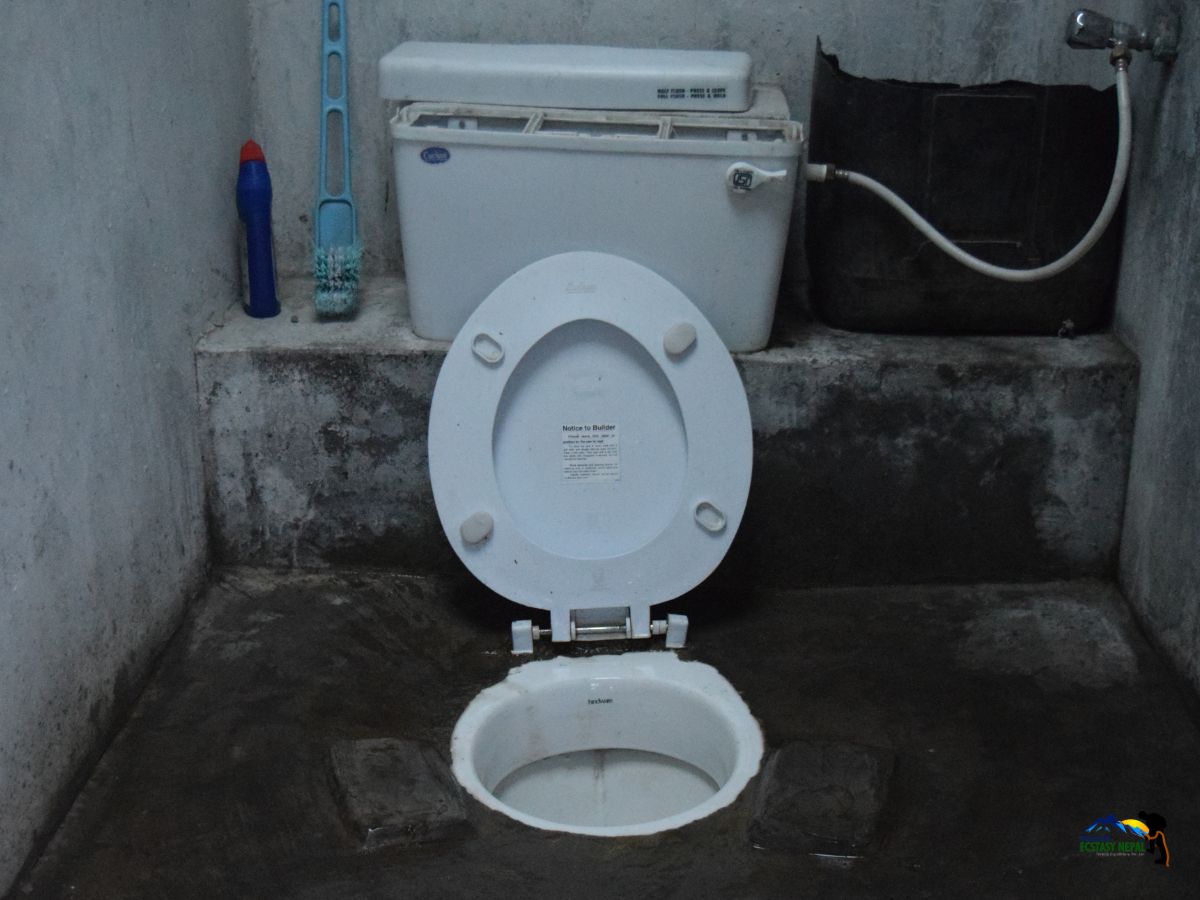
In Kathmandu, a standard tourist hotel will provide accommodations for two people. The rooms are clean and comfortable, and breakfast is included. The hotel is in a good tourist area and gives you enough time to rest before and after the trip. It is not luxurious, but it is a comfortable place to recover. And as mentioned earlier in the itinerary, we even offer an upgrade to 4-star service in Hotel Thamel Park (if you’re interested).
During the trek, accommodation is arranged in local teahouses and lodges (in lower regions). Most of the time, rooms have twin beds, pillows, and blankets. The facilities are simple but clean. Most of the time, bathrooms are shared.
At higher altitudes (mainly in Dharamsala), there are just fewer services. Electricity is available up to Samdo, but services remain minimal. Due to the remoteness of the Manaslu region, even premium packages use similar teahouses (so, budget trek wins on this one).
Talking about meals, we include breakfast, lunch, and dinner during the trekking days. The food will be simple but enough to give the trekkers energy to walk for long hours. There shall be a common dining hall where the food will be served. That’s a teahouse culture that you should be aware of.
Common food options include Dal Bhat, Fried rice, Noodles, Pasta, vegetable and garlic soup, Tibetan bread, Tsampa (local delicacy to try), pancakes, tea, coffee, etc.
Additional Notes
- Hot showers are available (up to Samdo and after Bhimthang) for an additional charge
- Charging high-capacity batteries costs extra
- Electricity in Nepal: 230V voltage and 50Hz frequency (so, be sure to carry a travel adapter)
- WiFi and mobile network are both limited
- Carrying a power bank is recommended (especially for that night in Dharmashala)
- Your guide will handle all the payment, but since you may take extra facilities (that are not included), do carry some Nepali cash on your own too.
Equipment Lists
We all know that proper preparation is essential for trekking in the Himalayan region. And when it comes to the Manaslu Circuit Trek, you're going to reach high altitudes and pass through remote mountain areas. Hence, every trekker must be responsible in carrying suitable clothing, equipment, and other personal items. These are for yourselves, so you stay safe and comfortable throughout the high-altitude, rugged adventure. And for your comfort, here's what the experts at HEN have to say about the equipment list that you will require for a successful Manaslu Circuit trek (even if this is a budget trip):
Head
- Sun hat (wide brim or cap) for protection from strong sunlight
- Warm beanie or fleece hat for cold temperatures
- Buff / neck gaiter for wind, dust, and cold protection
- Headlamp with extra batteries for early morning trekking or night use
- Sunglasses with UV protection to protect eyes from strong sunlight at high altitudes
Upper Body
- Thermal base layers (2–3) to keep the body warm and dry
- Fleece jackets for insulation during cold weather
- Waterproof and windproof jacket for protection from rain and snow
- Down jacket for very cold conditions at higher altitudes
- Lightweight trekking shirt (long sleeve recommended for sun protection)
Hands
- Lightweight liner gloves for mild cold conditions
- Warm fleece or softshell gloves for trekking in colder areas
- Waterproof insulated mittens for very cold temperatures at high altitude
Lower Body
- Thermal leggings or base layer pants for warmth
- Trekking trousers (1–2 pairs) made of quick-dry material
- Softshell trousers for higher altitude trekking
- Waterproof rain pants for protection during rain or snow
- Comfortable trekking shorts (optional for lower altitude sections)
Foot Wear
- Waterproof trekking boots with strong ankle support
- Camp shoes or sandals for resting at teahouses
- Trekking socks (3 to 4 pairs) made of wool or synthetic material
- Liner socks (optional) to prevent blisters
- Gaiters for protection against snow, mud, and small rocks
Travel Documents
- Passport and Nepal visa
- Travel and medical insurance
- Airline tickets or e-tickets
- Passport-size photos for permits
- Cash (Nepalese rupees) and credit/debit cards
- Copies of important documents
Sun Stuffs
- Sunscreen with SPF
- Lip balm with SPF
Toiletries
- Toothbrush, toothpaste, and biodegradable soap
- Moisturizer and hand sanitizer
- Quick-dry towel
- Toilet paper and wet wipes
Eating & Drinking
- Energy bars or granola bars
- Nuts and dried fruits
- Chocolate and trail mix
- Crackers or biscuits
- Electrolyte powder or energy drink mix
Sleeping Bags
- Warm sleeping bag with a rating of -10°C to -15°C for cold nights at higher altitudes
- Sleeping bag liner for warmth and hygiene
- Compression sack or waterproof bag to keep the sleeping bag dry during the trek
Bag Packs
- Main trekking backpack (40-60L) for carrying personal gear during the trek
- Daypack (20-30L) for carrying essentials such as water, snacks, camera, and extra clothing
- Rain cover for the backpack to keep gear dry in rain and snow
- Dry bags or waterproof stuff sacks for keeping gear dry
Medical & First Aid
- Diamox (Acetazolamide) for altitude sickness prevention
- Paracetamol or Ibuprofen for headache, pain, or fever
- Anti-diarrhea medication (Loperamide / Imodium)
- Oral Rehydration Salts (ORS)
- Antibiotics (if prescribed by your doctor)
- Anti-nausea medication
- Cough and cold medicine
- Throat lozenges
- Antihistamines for allergies
- Blister treatment (Compeed / moleskin)
- Antiseptic cream or wipes
- Adhesive bandages (Band-Aids)
- Elastic bandage for minor sprains
- Personal prescription medications
- Water purification tablets or drops
Miscellaneous
- Trekking poles help you stay steady and put less strain on your knees.
- Water bottles or hydration bladders that can be used again
- Tablets for cleaning water or a water filter
- Headlamp with extra batteries for early mornings or late nights
- Sunglasses that block UV rays
- Sunscreen with an SPF of 30 or higher and lip balm with an SPF
- Towel that dries quickly
- Toiletries and hand sanitizer for personal use
- Power bank for charging gadgets