Ama Yangri Short Trek is a 5-day journey to the sacred summit of Ama Yangri (3,771 m) in Nepal's culturally rich Helambu region, Sindhupalchok district, at approximately Latitude: 27.895° N, Longitude: 85.696° E. Just a few hours from Kathmandu, this short trek blends Himalayan scenery with the Buddhist heritage of the Hyolmo (Yolmo) people. The trail passes through the historic village of Tarkeghyang, peaceful rhododendron and pine forests, and Ama Yangri Base Camp before reaching one of the finest viewpoints near the capital. From the summit, you can see Langtang Lirung, Dorje Lakpa, Ganesh Himal, Jugal Himal, and Gaurishankar. On exceptionally clear days, distant views may extend as far as Mount Everest. Himalayan Ecstasy Nepal takes care of your permits, accommodation, transportation, guide, and logistics, making this an ideal short Himalayan escape for nature lovers, culture enthusiasts, and first-time trekkers.
Grade: Easy to Moderate
Trip Overview
Duration5 Days
Trip GradeEasy
Treks up from 2,000 meters to 3,000 meters on well-defined trails with short durations. Suitable for beginners and those with average fitness.
CountryNepal
Maximum Altitude3,771 m
Group Size1 to 12
StartsKathmandu
EndsKathmandu
ActivitiesCultural Exploration, Buddhist Pilgrimage
Best TimeSpring (Mar–May), Autumn (Sep–Nov)
TREK HIGHLIGHTS
Sacred summit of Ama Yangri (3,771 m), regarded by the Hyolmo people as a guardian deity watching over the Helambu valley
Views of Langtang Lirung, Dorje Lakpa, Ganesh Himal, Jugal Himal, and Gaurishankar, with distant views sometimes extending as far as Mount Everest on exceptionally clear days
Overnight stay at Ama Yangri Base Camp (approx. 3,300 m), built into the itinerary for a more gradual, comfortable ascent
One of Nepal's oldest Hyolmo settlements at Tarkeghyang, with an ancient Buddhist monastery rebuilt after the 2015 earthquake
Trail through rhododendron, pine, and oak forest, past prayer flags, mani walls, and chortens along the way
A complete Himalayan trek in just 5 days from Kathmandu, with no domestic flights required, ideal for first-timers and short breaks
5-Day Ama Yangri Trek in Helambu: What to Expect?
Just a few hours north of Kathmandu, the Ama Yangri Short Trek is one of Nepal's most rewarding short Himalayan adventures. Rising above the traditional Hyolmo village ofTarkeghyang, Ama Yangri combines mountain scenery with the living Buddhist traditions of the Langtang's Helambu region.
Helambu is widely associated in Tibetan Buddhist tradition with one of the sacred Beyuls (hidden valleys) blessed by Guru Padmasambhava.
The trek starts with a scenic drive from Kathmandu toTarkeghyang, one of the oldest Hyolmo settlements in Nepal. The village grew up around its monastery, and its stone houses, prayer wheels, mani walls, and prayer flags still shape daily life here. From Tarkeghyang, the trail climbs gradually through forest toward Ama Yangri Base Camp.
For the Hyolmo people, Ama Yangri is not only a viewpoint. Locally, the peak is regarded as a guardian deity watching over the Helambu valley, and pilgrims climb it through the year to offer prayers and renew prayer flags at the small chorten on the summit.
Unlike many Himalayan treks that need domestic flights or several weeks on the trail, Ama Yangri is easy to reach from Kathmandu, which makes it a good choice if your time is limited.
Because this is a short trek, many travellers already staying in Nepal on a long-term visa can simply join the trip without worrying about airport arrival and departure arrangements. The Ama Yangri Trek is also an excellent choice for families with children, college and university groups, corporate outings, and anyone looking for a rewarding Himalayan experienceover just five days.
Our itinerary includes an overnight stay at Ama Yangri Base Camp before the summit day. This breaks the elevation gain into two shorter stages, giving your body more time to adjust and making the summit day more comfortable, particularly for international visitors arriving directly from Kathmandu. We'll explain why this matters a bit further down.
Whether you want your first Himalayan trek, a cultural journey through Helambu, or a quiet mountain escape close to Kathmandu, this 5-day Short Ama Yangri Trek delivers all three!
Why Trek Ama Yangri with Himalayan Ecstasy Nepal?
We arrange all required permits and logistics before your journey begins.
Our licensed, English-speaking guides share the history, Buddhist traditions, and Hyolmo culture that make this trek unique.
Our 5-day itinerary, including an overnight at Ama Yangri Base Camp, allows a more gradual ascent and a more comfortable trekking experience.
We organize private transportation, accommodation, and all meals throughout the trek.
We offer flexible departures from Kathmandu, making the trek ideal for visitors already in Nepal as well as families, student groups, and small private groups.
Main Attractions of the Ama Yangri Trek
Five days is short, but this trek still packs in real Himalayan scenery, Buddhist heritage, and mountain culture. Here's what makes the journey memorable.
Ama Yangri Summit (3,771 m)
The summit is the highest point of the trek and one of the finest viewpoints near Kathmandu.
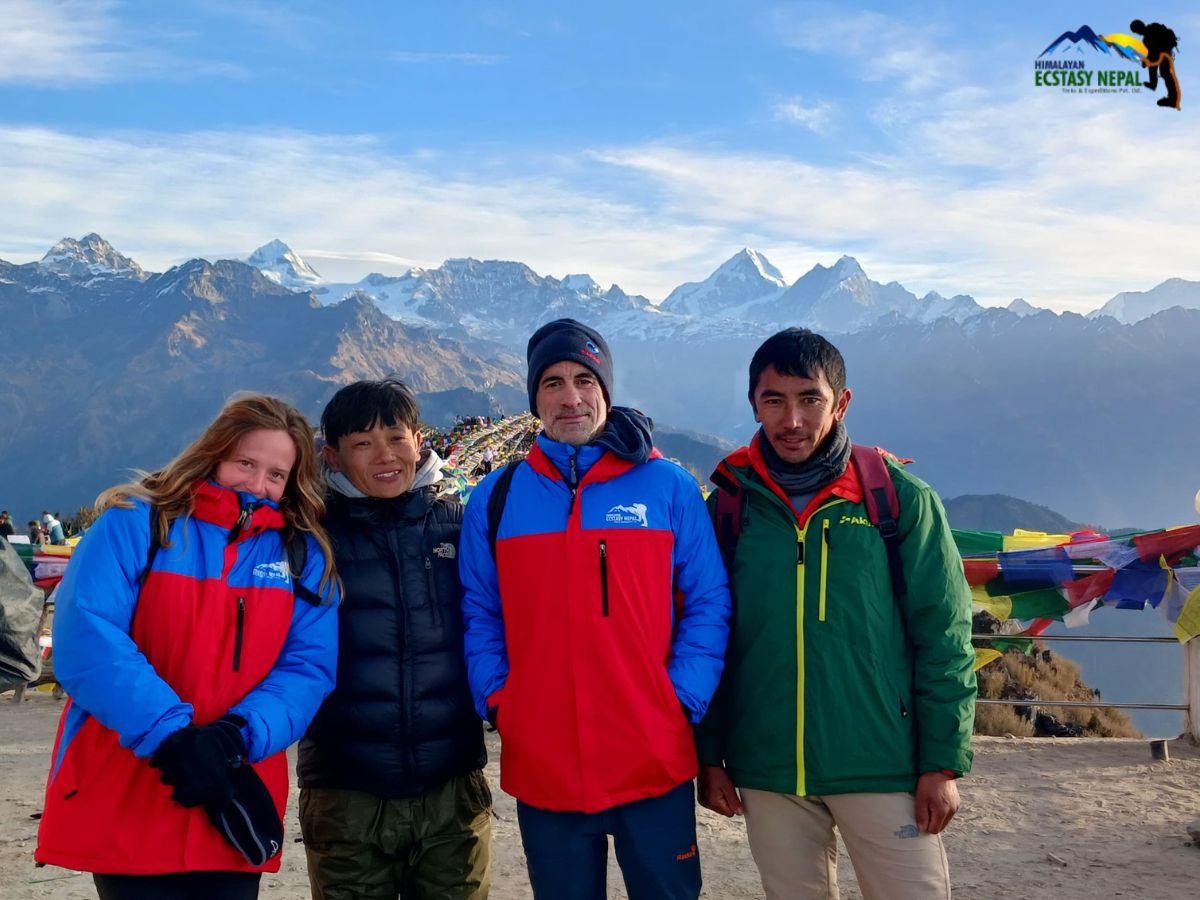
On a clear day you'll see Langtang Lirung, Dorje Lakpa, Ganesh Himal, Jugal Himal, and Gaurishankar. On exceptionally clear days, distant views may extend as far as Mount Everest.
Prayer flags cover the summit, a reminder of why this place matters so much to the Hyolmo community.
Tarkeghyang Village
Tarkeghyang is one of the oldest and largest Hyolmo settlements in Helambu.
Its stone houses, narrow lanes, and strong Tibetan-influenced culture give you a real sense of everyday mountain life before the trek even begins. It's also the trailhead for the climb to Ama Yangri.
Milarepa Cave
On the drive from Kathmandu toward Melamchi Ghyang, trekkers can make a worthwhile stop at Milarepa Cave, located below Nakote. The cave is only about a 10-minute walk from the road, near the Kathmandu Water Supply Tunnel, before continuing north toward Nakote.
According to Buddhist tradition, this sacred cave is associated with the great Tibetan yogi Jetsun Milarepa, one of the most respected meditation masters in Himalayan Buddhism.
Today, it remains an important pilgrimage destination for Buddhist practitioners and visitors interested in the region's spiritual heritage.
Ancient Buddhist Monastery
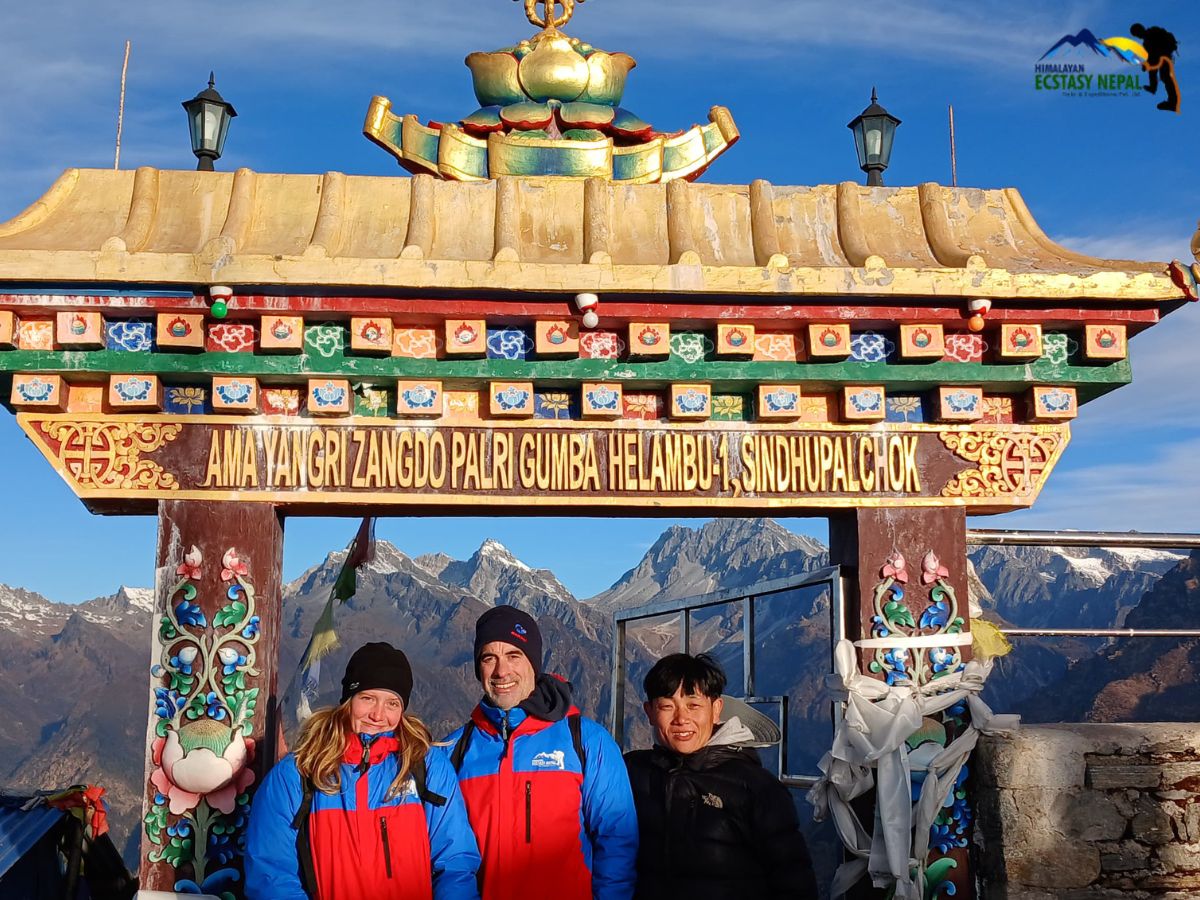
Zangdo Palri Gumba
Tarkeghyang's monastery is one of the oldest and most significant in the region, and has anchored the community's spiritual life for generations.
Like much of Helambu, it suffered serious damage in the 2015 earthquake and has since been rebuilt, but it still carries its original religious weight, from prayer ceremonies to its murals and prayer wheels. It's worth a visit before you set out.
Ama Yangri Base Camp
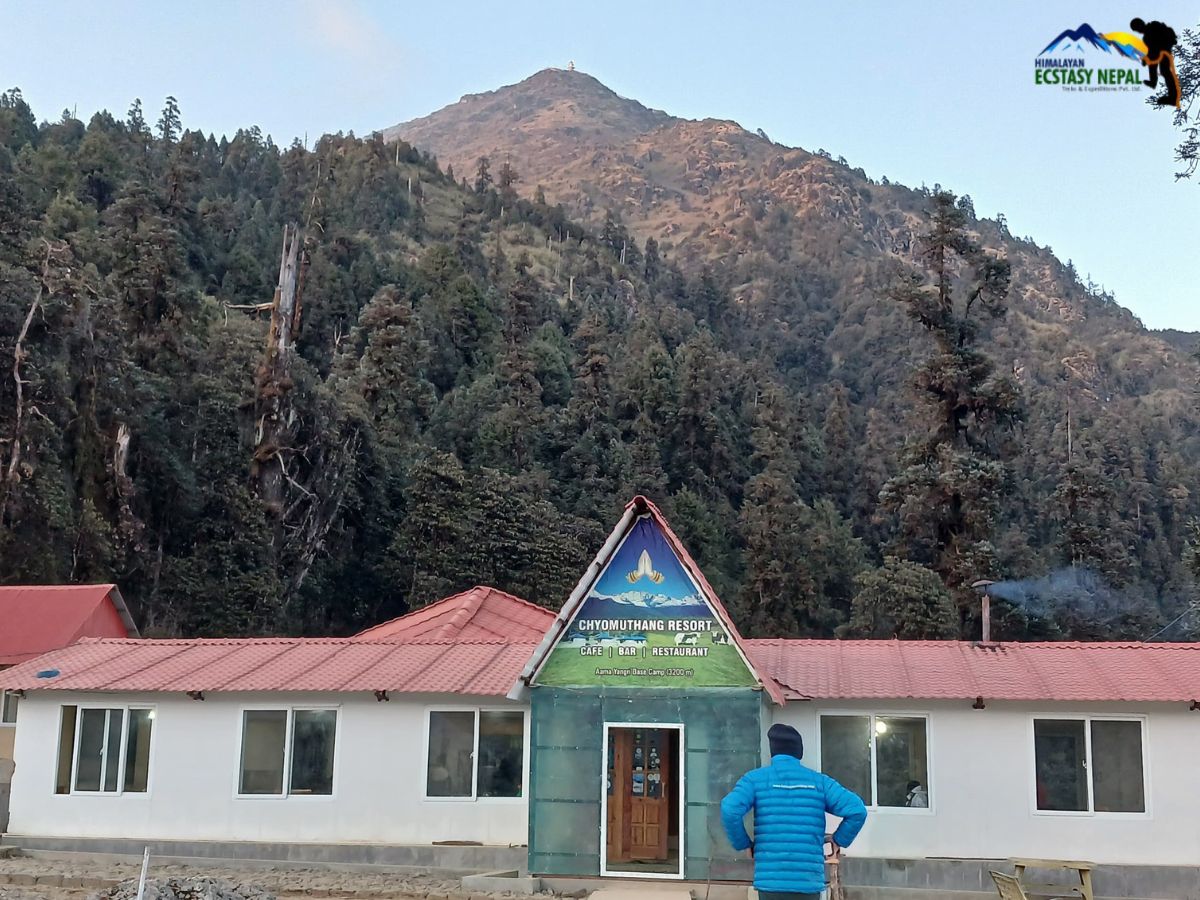
Below the summit, Ama Yangri Base Camp gives you a quiet overnight stop surrounded by forest.
Staying here breaks the elevation gain into two more manageable stages instead of pushing straight to the top, which makes for a noticeably easier and more enjoyable climb the next morning.
Forest Trails and Himalayan Landscapes
The trail runs through rhododendron, pine, and oak forest the whole way.
Spring brings blooming rhododendrons; autumn brings clear air and sharp mountain views. Along the route you'll pass prayer flags, chortens, and the occasional break in the trees that opens onto the peaks ahead.
Hyolmo Culture and Buddhist Heritage
Helambu is the homeland of the Hyolmo people, whose Nyingma Buddhist traditions trace back to Guru Padmasambhava.
Prayer wheels, mani walls, monasteries, and prayer flags are part of daily life here, not just tourist scenery. Staying in family-run lodges gives you a genuine taste of local hospitality and cooking.
Buddhist Prayer Flags and Chortens
Prayer flags line much of the trail from Tarkeghyang toward the summit, while mani walls and small chortens reflect the everyday Buddhist traditions of the Hyolmo people.
These sacred structures are not simply landmarks but active places of worship, and they add a peaceful spiritual atmosphere throughout the journey.
Ama Yangri Festival and Pilgrimage
Ama Yangri is not just a trekking destination. It's an active pilgrimage sitefor the Hyolmo community, who regard the peak as a protective figure.
The name itself roughly translates to "Mother Yangri." Local pilgrims regularly visit the summit to offer prayers, burn incense, and replace prayer flags during important days of the Buddhist calendar.
Even outside any particular occasion, the summit keeps a quiet, spiritual atmosphere that sets this trek apart from a simple viewpoint hike.
Notice: Sacred Buddhist Meditation Sites in the Helambu Region
The Helambu region is home to several sacred meditation caves and spiritual sites that hold great importance in Tibetan Buddhism. Travelers interested in Buddhist history, meditation, and pilgrimage may visit these sites by extending their itinerary. Additional days and costs apply.
The most significant sites include:
Hyandak Choki Dufuk Cave, located about one hour beyond Ama Yangri.
Khendo Zangpuk and Ngindha Rangjen Cave (Sun and Moon Cave), both regarded as important meditation sites.
Zulthi (Chair of Guru Rinpoche), together with Chalthar Lhoben and Lama Nalzor, which are among the region's most respected Buddhist pilgrimage places.
Ama Yangri Trek - 5 Days Itinerary
Kathmandu to KathmanduExpand all
Your journey starts with arrival at Tribhuvan International Airport, where our team will meet you and transfer you to your hotel in Thamel.
Spend the rest of the day resting or exploring Kathmandu's streets. In the evening, meet your guide for a trip briefing, equipment check, and introduction to Helambu and the Ama Yangri Trek.
Max Altitude: 1,400 m Accommodation: 3-Star HotelTransportation: Private Vehicle
After breakfast, drive north through Melamchi toward Helambu. The road passes terraced farmland, villages, forests, and river valleys before reaching Tarkeghyang, one of the oldest Hyolmo settlements in Nepal.
If time allows, visit the village monastery, where prayer wheels and murals reflect the community's Buddhist roots. Spend the evening exploring the village before dinner at your teahouse.
Max Altitude: 2,600 m Meals: B, L, DAccommodation: Local TeahouseTransportation: Private Vehicle
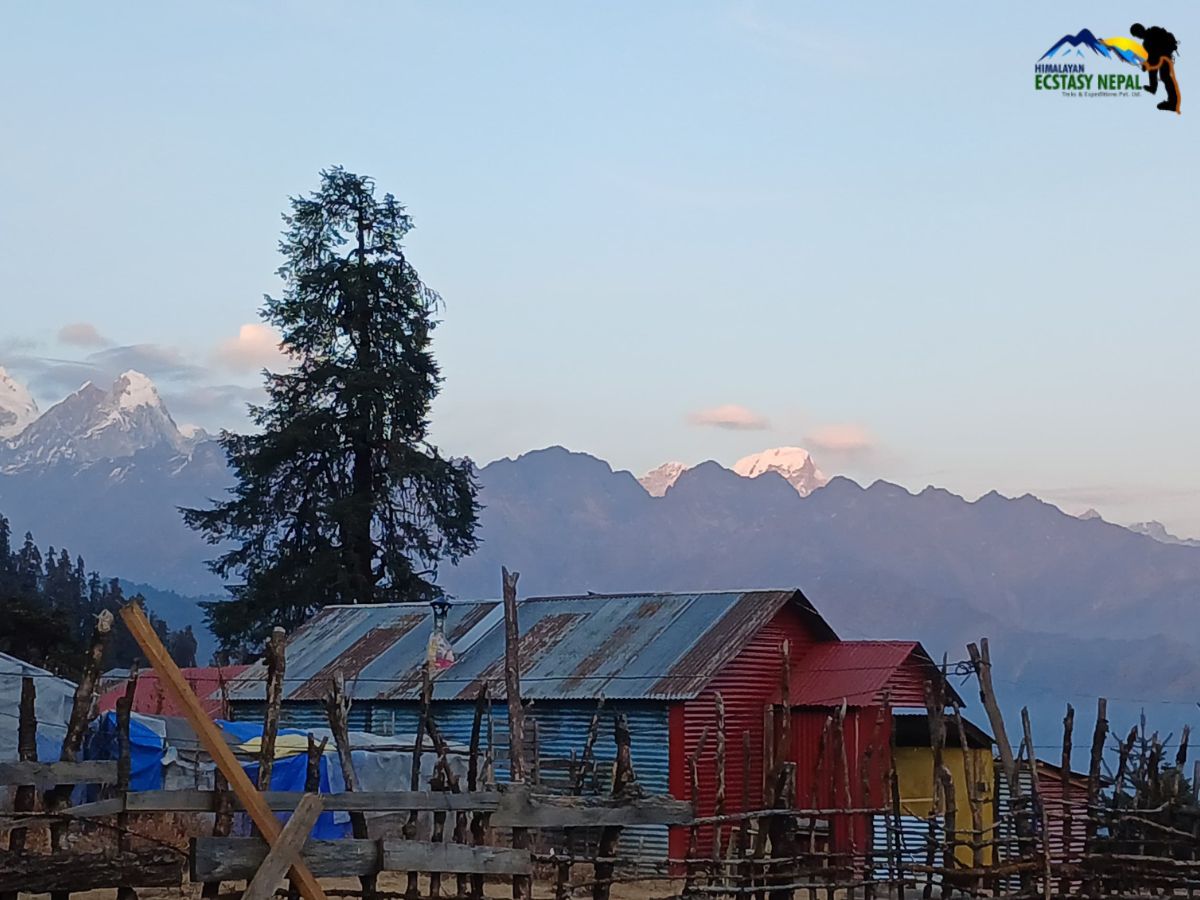
Today's walk climbs gradually through rhododendron, pine, and oak forest. You'll pass prayer flags, mani walls, and small chortens along the way, and occasional gaps in the trees reveal the hills and peaks ahead.
At Base Camp, settle in and enjoy the quiet surroundings. This overnight stop is what makes tomorrow's summit push easier, as explained below.
Max Altitude: 3,300 m Meals: B, L, DAccommodation: Teahouse / Camp (depends on availability)
Start before sunrise for the final climb to Ama Yangri. As the light comes up, the panorama opens across Langtang Lirung, Dorje Lakpa, Ganesh Himal, Jugal Himal, and Gaurishankar.
On exceptionally clear days, distant views may extend as far as Mount Everest. After time at the summit, descend to Base Camp and continue back through the forest to Tarkeghyang, where you can celebrate finishing the trek over dinner.
Max Altitude: 2,600 m Meals: B, L, DAccommodation: Local Teahouse
After breakfast, drive back to Kathmandu through the hills and valleys of Helambu. On arrival, we'll transfer you to your hotel or straight to the airport, depending on your onward plans.
If you'd like more time in Nepal, our team can help arrange further trekking, cultural tours, or sightseeing before you leave.
Meals: BreakfastTransportation: Private Vehicle
Trip Cost Details
Includes
Airport transfers on arrival and departure by private vehicle
2 nights' accommodation in Kathmandu at a 3-star hotel (Days 1 and 5)
Accommodation during the trekking days in local teahouse lodges
All meals during the trek: breakfast, lunch, and dinner (B.L.D) with tea and coffee
Applicable trekking entry permits for the route
Licensed English-speaking trekking guide, including salary, meals, accommodation, and insurance
1 porter for every 2 trekkers (maximum 20 kg load)
Private transportation between Kathmandu and Tarkeghyang
All government taxes and official service charges
Excludes
Personal expenses
International flights
Nepal tourist visa fee
Personal travel and medical insurance, including emergency helicopter evacuation
Meals in Kathmandu except those mentioned in the itinerary
Hot showers, Wi-Fi, charging fees, and personal beverages during the trek
Laundry services
Personal trekking gear and clothing
Expenses caused by weather, natural disasters, road conditions, strikes, or other circumstances beyond our control
Costs from early departure or itinerary changes
Tips for guides and porters
Any service not listed under Includes
Essential Information
Best Time for the Ama Yangri Short Trek
Spring (March–May) and autumn (September–November) are the best seasons. The weather is generally stable, temperatures are comfortable, and mountain views are at their clearest.
Spring brings blooming rhododendrons to the forest; autumn brings crisp air and some of the year's best panoramas.
Winter (December–February) also works well if you're prepared for cold conditions and possible light snow, and you'll likely have the trail to yourself.
The monsoon (June–August) brings frequent rain, slippery trails, and cloud-covered views, so we generally don't recommend this window.
Permits Required for the Ama Yangri Short Trek
Foreign trekkers require the Langtang National Park Entry Permit, currently USD 30 per person. A separate TIMS card is no longer required for Helambu-side routes, but Nepal's trekking rules require trekkers to be accompanied by a licensed guide, which we provide as standard.
Our HEN team arranges all required permits before your trek begins, so you won't need to worry about paperwork. Permit rules and fees can change with government regulations, and we always confirm the latest requirements before your trip.
Difficulty Level of the Ama Yangri Short Trek
The Ama Yangri Trek is one of the best short treks and graded Easy to Moderate. The trail isn't technically difficult, but it does involve sustained uphill walking through the forest and over mountain ridges. Most people with reasonable fitness and some hiking experience manage it comfortably.
The main factor to plan around is rapid altitude gain. In a single day, you travel from Kathmandu at around 1,400 m to Tarkeghyang at about 2,600 m, a jump of over 1,200 m.
Pushing straight to the 3,771 m summit the next day, without a break in between, would raise the risk of Acute Mountain Sickness (AMS) for many trekkers.
That's exactly why our itinerary adds an overnight stay at Ama Yangri Base Camp (around 3,300 m) before the summit push. Instead of one large elevation jump, you gain height in two smaller stages, giving your body time to adjust.
This isn't just a scenic add-on. It's the piece of the itinerary that makes the trek noticeably safer and more comfortable, especially if you're arriving straight from a lower altitude.
AMS is less common here than on higher Himalayan treks, but symptoms like headache, dizziness, nausea, or unusual fatigue can still occur. Walking at a steady pace, staying hydrated, and telling your guide right away if you feel unwell are the best ways to manage the risk.
Why Ama Yangri Is a Great Choice Right Now?
Ama Yangri has become a popular pick for travelers who want real Himalayan views without committing to a domestic flight or a multi-week trek. It suits:
First-time trekkers looking for an accessible introduction to Himalayan trekking
Travelers with limited time, since the whole trip fits into five days from Kathmandu
Cultural travelers interested in Hyolmo Buddhist heritage, not just mountain scenery
Photographers, thanks to the summit's wide panorama and the forest's seasonal colors
Weekend and short-break trekkers who want a complete Himalayan experience without a long absence from work or family
Travelers seeking a peaceful Himalayan environment for meditation, mindfulness, and Buddhist pilgrimage can also extend the trek to visit sacred caves and monasteries throughout the Yolmo region.
Accommodation and Food to Expect
You'll stay in local lodges (called teahouses) throughout the trek. In Tarkeghyang, family-run lodges offer simple, clean rooms, home-cooked meals, and genuine Hyolmo hospitality. Wi-Fi, charging, and mobile coverage are sometimes available here, though connections can be patchy.
At Ama Yangri Base Camp, facilities are more basic, in keeping with the remote setting, but the quiet surroundings make the overnight stop worthwhile before the summit climb.
Meals are freshly prepared and typically include dal bhat, noodles, fried rice, soups, potatoes, eggs, seasonal vegetables, and hot tea or coffee, solid fuel for a day of walking in the mountains.
Important: While comfortable teahouses are available in Tarkeghyang, the number of rooms is limited, especially during the busy spring and autumn trekking seasons. If you prefer the best rooms with attached bathrooms, hot showers, and more comfortable facilities, we strongly recommend confirming your trek at least 3 to 4 months in advance. Early booking allows us to secure the highest standard accommodation available along the route.
Preparation Tips for the Ama Yangri Short Trek
Physical preparation: Regular walking, hiking, stair climbing, or light cardio in the weeks before your trek will make the uphill sections easier.
Mental preparation: Weather can change quickly, and facilities get more basic at altitude. Realistic expectations make the trip more enjoyable.
Acclimatization: Because the elevation gain from Kathmandu is fast, stay hydrated, keep a steady pace, and let your body adjust. The overnight at Base Camp is built into the itinerary for exactly this reason.
Hydration and nutrition: Drink at least 2.5 to 3 litres of water a day and eat balanced meals to keep your energy up.
Travel insurance: We strongly recommend insurance that covers trekking in Nepal, including emergency medical treatment and helicopter evacuation.
Meditation Retreats and Extended Spiritual Stay
Beyond its mountain scenery, the Helambu region is one of Nepal's most important Buddhist spiritual landscapes. For centuries, Buddhist masters and meditation practitioners have travelled here seeking solitude, sacred caves, and peaceful surroundings for meditation and spiritual practice.
If you would like to spend additional time meditating, visiting monasteries, or exploring sacred sites beyond the standard itinerary, Himalayan Ecstasy Nepal can arrange a longer customized meditation journey upon request. Extra days, guides, accommodation, and monastery visits can be organized for an additional cost.
Equipment Lists
The Ama Yangri Short Trek reaches a moderate altitude of 3,771 m, and temperatures can drop sharply in the early morning and at night, especially around Base Camp and the summit. Here's what our HEN team recommends packing.
Head
Sun hat or cap for daytime hiking
Warm fleece beanie for chilly mornings and evenings
Buff or neck gaiter for wind and cold
Headlamp with spare batteries for the early morning summit hike
UV-protection sunglasses
Upper Body
Moisture-wicking base layer
Fleece jacket for insulation
Lightweight down or insulated jacket
Waterproof and windproof outer shell
Hands
Sun hat or cap for daytime hiking
Warm fleece beanie for chilly mornings and evenings
Buff or neck gaiter for wind and cold
Headlamp with spare batteries for the early morning summit hike
UV-protection sunglasses
Lower Body
Quick-dry trekking trousers
Thermal leggings for colder nights
Waterproof rain pants during monsoon or winter
Foot Wear
Comfortable trekking boots with good ankle support
Camp shoes or sandals for the teahouse
Two to three pairs of trekking socks
Gaiters if trekking after snowfall
Travel Documents
Passport and Nepal visa
Travel insurance documents
Passport-size photographs
Cash in Nepalese Rupees (NPR) for personal expenses
Copies of important travel documents
Sun Stuffs
Sunscreen (SPF 50+)
SPF lip balm
Toiletries
Toothbrush and toothpaste
Biodegradable soap
Quick-dry towel
Hand sanitizer and wet wipes
Toilet paper
Eating & Drinking
Reusable water bottle (minimum 1 litre)
Water purification tablets or a filtration bottle
Electrolyte powder
Energy bars, dried fruit, or nuts
Sleeping Bags
Sleeping bag rated to around -10°C, since nights at Base Camp can get surprisingly cold even outside of winter
Sleeping bag liner for extra warmth and hygiene
Bag Packs
Trekking backpack (30–40 litres)
Small daypack for personal essentials
Rain cover for your backpack
Dry bags or waterproof stuff sacks for electronics
Medical & First Aid
Personal prescription medication
Basic pain relief medication
Blister treatment
Adhesive bandages
Antiseptic cream
Oral rehydration salts (ORS)
Talk to your doctor about altitude medication before the trek
Miscellaneous
Trekking poles for uphill and downhill sections
Power bank for charging electronic devices
Camera or binoculars for mountain views
Notebook or journal, if you'd like to record the trip
Ama Yangri Trek - 5 Days FAQs
Yes, families with reasonably fit older children can join. The walking days are short, and the trail isn't technical, though the altitude gain on Day 2 and Day 3 is worth discussing with your guide beforehand, especially for younger children.
Yes. Ama Yangri connects well with the wider Helambu Trek, including villages like Sermathang and Melamchi Ghyang, if you'd like to extend your trip beyond five days. Talk to our team about tailoring a longer route.
Coverage is patchy. You'll usually get a signal in Tarkeghyang, though it can be unreliable, and there's little to no coverage at Ama Yangri Base Camp or the summit.
Teahouses in Tarkeghyang usually offer charging for a small fee. At Base Camp, facilities are limited, so a power bank is worth packing.
On exceptionally clear days, distant views may extend as far as Mount Everest, alongside closer peaks like Langtang Lirung and Dorje Lakpa. Visibility is best in autumn, right after the monsoon clears the air, and it's never guaranteed.