Explore Bhutan on a 10-day cultural journey from Kathmandu, visiting Paro, Thimphu, and Punakha, with Buddhist heritage, historic dzongs, Himalayan scenery, and the hike to Tiger’s Nest. The tour covers Bhutan, located between 26°42′N–28°18′N latitude and 88°45′E–92°10′E longitude.
View Photos
Bhutan Tour via Nepal - 10 Days
Trip Overview
Duration10 Days
Trip GradeEasy
CountryBhutan
Maximum Altitude3,140 m (Dochula Pass)
Group Size2–20 people
StartsKathmandu
EndsKathmandu
ActivitiesCultural Sightseeing
Best TimeMarch–May and September–November
TOUR HIGHLIGHTS
- Flying into Paro, one of the few airports in the world set inside a mountain valley.
- A full day in Thimphu covering monuments, a preserved national animal reserve, and the seat of Bhutan's government.
- Crossing Dochula Pass, marked by 108 chortens and, on clear days, views of the eastern Himalayas.
- Punakha Dzong, built where two rivers meet and still used for religious ceremonies today.
- Walking the long suspension bridge over the Pho Chhu river in Punakha.
- Time in the Paro Valley, including its dzong, watchtower museum, and one of Bhutan's oldest temples.
- The hike to Taktsang Monastery, built into a cliffside where Guru Rinpoche is said to have meditated.
- Traditional Bhutanese architecture, seen in dzongs, farmhouses, and painted village homes along the route.
Bhutan Tour 10 Days: What to Expect?
This 10-day journey takes you from Kathmandu into the Bhutan valleys of Thimphu, Punakha, and Paro, with time built in on both ends for preparation and rest.
You start in Kathmandu, where our team checks your documents and helps you get ready for Bhutan before you fly to Paro the next morning.
The flight into Paro is short but memorable, with mountain views on a clear day before the plane drops into the valley. From Paro, you drive to Thimphu, Bhutan's capital, where you spend a full day visiting monuments, a wildlife preserve, and the dzong that houses the government offices.
From there, the route climbs over Dochula Pass before dropping into the warmer Punakha Valley, where you see one of Bhutan's most striking dzongs and walk across a long suspension bridge.
The return to Paro is a longer drive day, giving you a chance to rest before the tour's most physical day: the hike up to Taktsang Monastery, better known as the Tiger's Nest.
This is a real hike on a mountain trail, so a reasonable level of fitness helps, though the pace is set to let you take breaks. Along the way, you also visit Paro's dzong, museum, and one of Bhutan's oldest temples.
Throughout the trip, you travel by road between towns with a local guide and driver, and each day mixes short drives with walking and sightseeing rather than long hours in the vehicle. After Paro, you fly back to Kathmandu, with your last day free for rest or last-minute shopping before departure!
Why Travel with HEN?
- We handle the coordination between Nepal and Bhutan, so your trip runs smoothly from the moment you land in Kathmandu.
- Our team checks your travel documents and visa status before you fly, so there are no surprises at the airport.
- Once you are in Bhutan, you are looked after by experienced local guides and drivers who know the routes, the pace, and the practical details of each stop.
- We stay in contact with our Bhutan partners throughout your trip, so if plans need small adjustments along the way, such as timing a dzong visit around opening hours, we can respond to that.
- We also focus on the basics that matter on a trip like this: reasonable daily pacing, clear information about what to bring, and attention to your comfort at altitude and on the Tiger's Nest hike.
- Our approach is straightforward. We tell you what to expect, we stay reachable if something comes up, and we manage the logistics so you can focus on the trip itself.
Main Attractions of 10-Day Bhutan Trip via Nepal
Here are the main highlights of this 10-day Bhutan journey:
Thimphu
Bhutan's capital sits in a wide valley at around 2,334 meters and is unusual among world capitals for having no traffic lights, only a traffic officer directing cars at the main intersection.
The city blends modern buildings with traditional Bhutanese architecture, since all new construction here must follow national design rules for roof style, window frames, and painted details.
Walking through the town center, you will see this mix everywhere, from government buildings to small shops. Thimphu also works well as a base for your first full day of sightseeing, since several of the country's most visited sites sit within a short drive of each other, letting you move through the day without long transfers!
Memorial Chorten
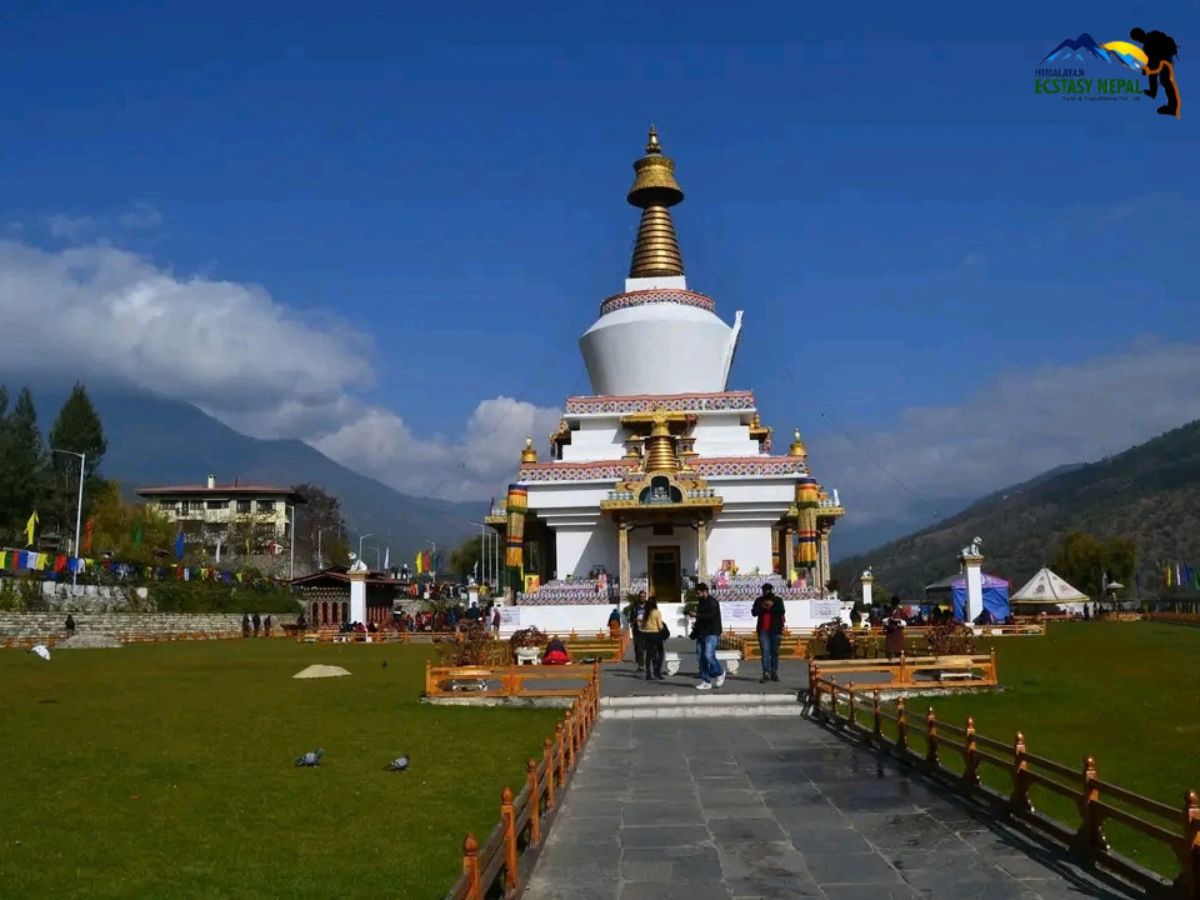
This large white stupa was built in 1974 in memory of Bhutan's Third King, Jigme Dorji Wangchuck, and has become one of the most visited religious structures in the capital.
Unlike many memorials, it holds no physical remains, only a photograph of the king inside its central shrine. What makes it worth visiting is less the structure itself and more the daily activity around it.
From early morning to evening, local residents circle the chorten clockwise, spin the rows of prayer wheels, and recite mantras, giving you a direct look at everyday religious practice rather than a site frozen in the past. It is an easy, short visit, and a good introduction to Bhutanese Buddhism before the larger dzongs later in the trip.
Buddha Dordenma
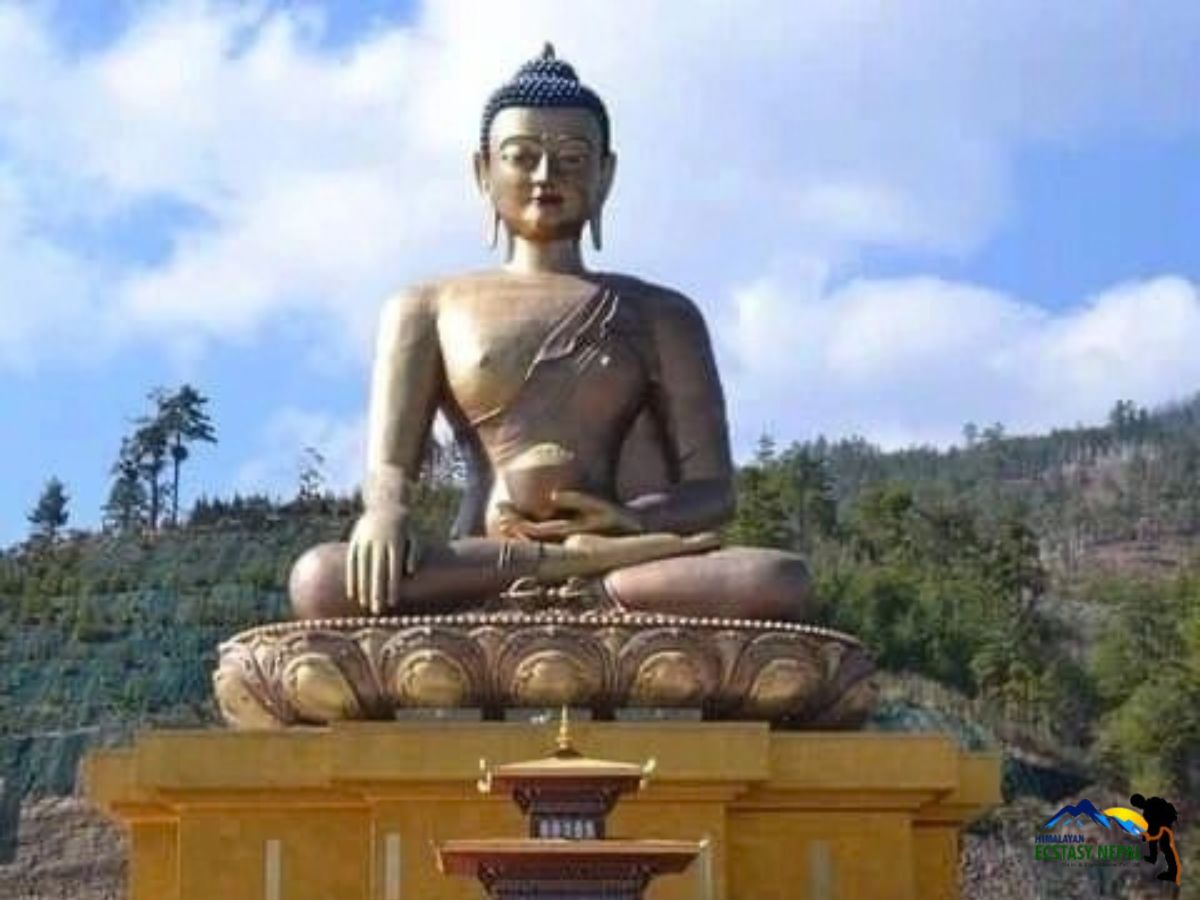
Standing at roughly 51 meters, this bronze statue of Shakyamuni Buddha is gilded in gold and sits on a hill overlooking southern Thimphu.
It was completed in 2015 and holds more than 125,000 smaller gilded Buddha statues inside its base, arranged across a multi-story interior that also serves as a meditation hall.
From the platform around the statue, you get one of the widest views over the Thimphu valley on the entire tour, which makes it worth a slower visit rather than a quick photo stop.
The site is open through the day, and visiting in the late afternoon often gives softer light for photos and a quieter atmosphere, since most tour groups pass through earlier!
Takin Preserve
The Motithang Takin Preserve protects Bhutan's national animal, a stocky creature with a body that looks part goat and part cow, found only in the eastern Himalayas.
The animals live here in a large fenced forest area rather than a traditional zoo enclosure, because earlier attempts to release them into the wild failed, as they kept returning to populated areas in search of food.
Walking through the preserve gives you a chance to see takin at a relaxed pace in something close to their natural habitat, along with the forest setting itself. Keep in mind the preserve is closed on Mondays, so your guide will plan around this when arranging the day's order of visits.
Tashichho Dzong
This large fortress-monastery on the northern edge of Thimphu houses the throne room of Bhutan's king, along with several ministries and the office of the Je Khenpo, the country's chief religious authority.
Because it functions as an active government building on weekdays, visitor access is limited to after office hours, usually starting around 5 pm.
On weekends, when the offices are closed, the courtyards open earlier and you can spend more time walking through the grounds and taking in the whitewashed walls and gold-topped roofs.
Either way, it is one of the more visually striking dzongs on the trip, and your guide will adjust the day's schedule to make sure you see it at a good time!
Dochula Pass
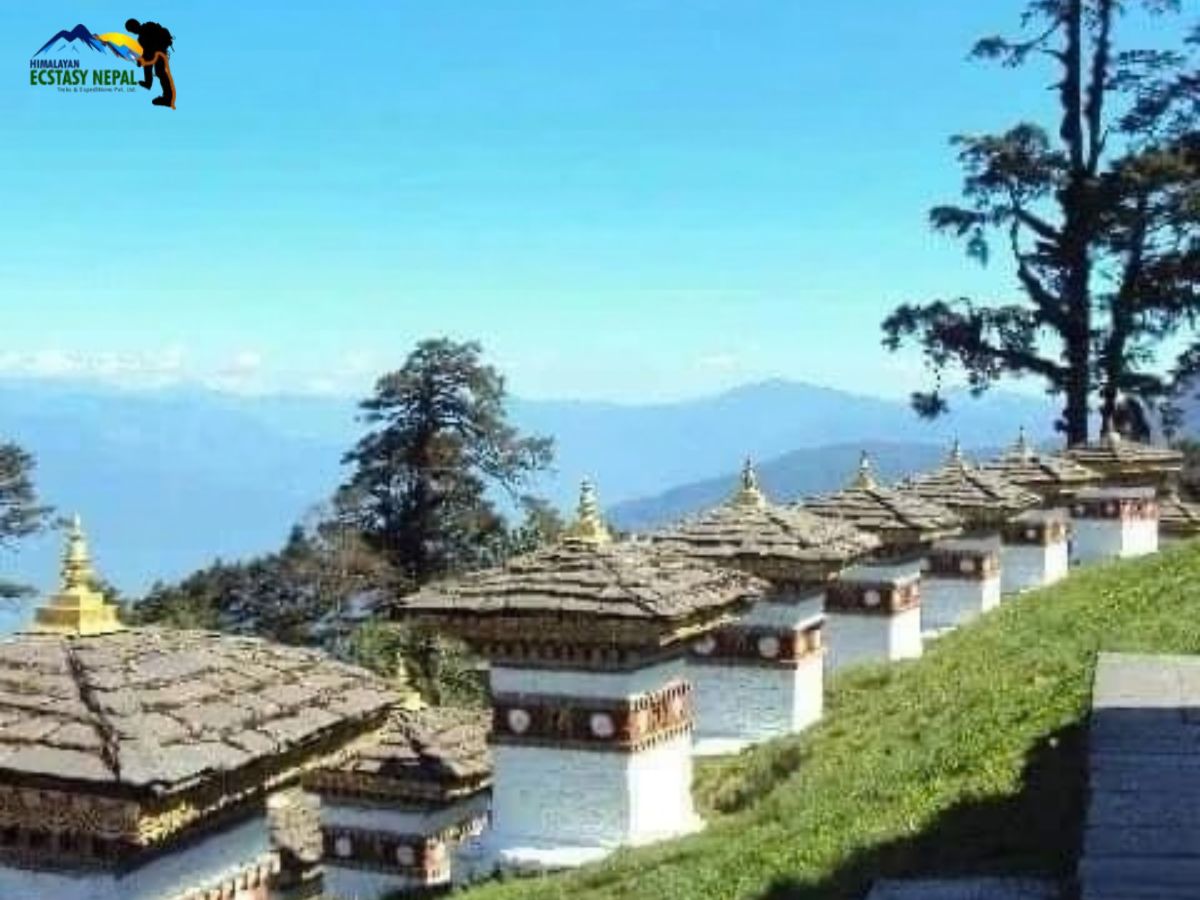
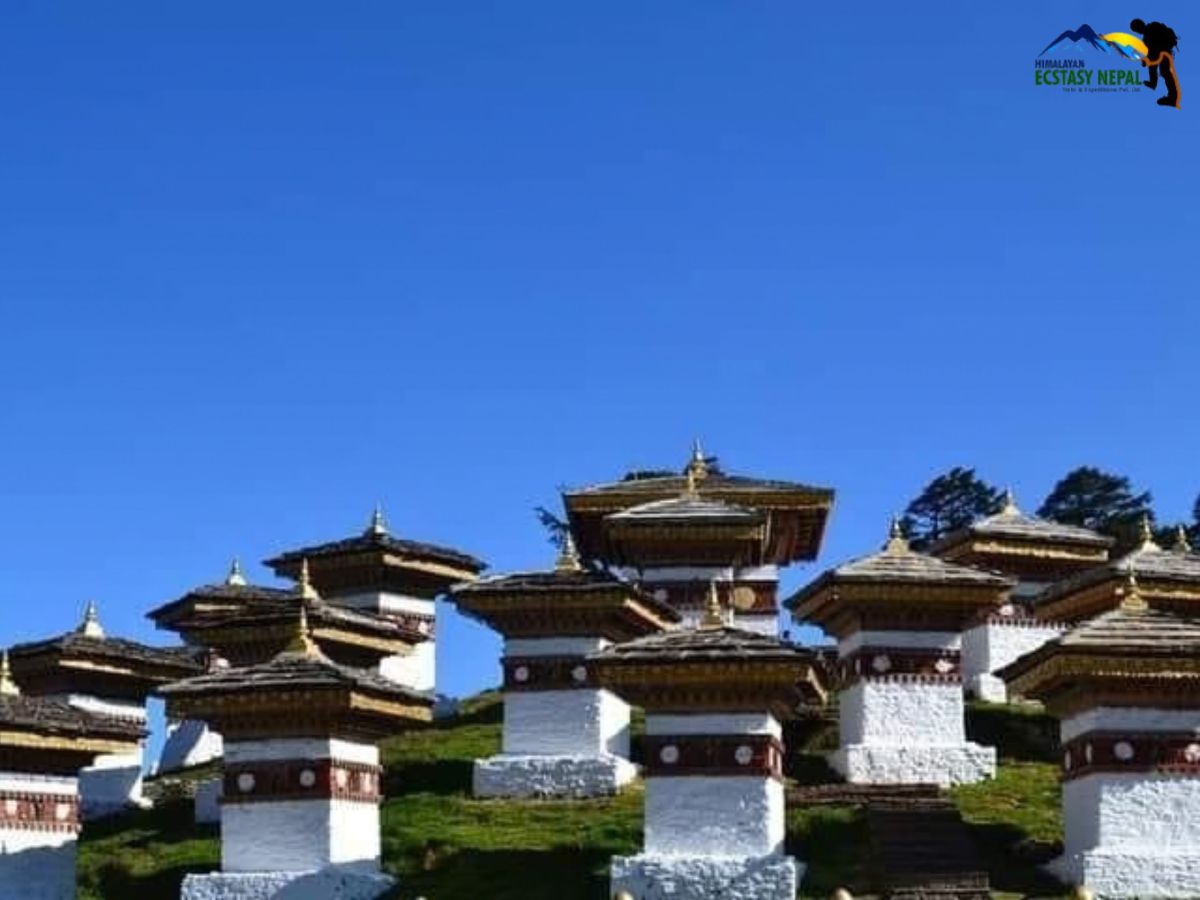
At 3,100 meters, Dochula Pass marks the high point of the road between Thimphu and Punakha and is one of the most photographed stops on the route.
The pass is marked by 108 chortens, built by the Queen Mother in memory of soldiers who died in a 2003 conflict, arranged in rows across the ridge.
Next to them stands a temple built to honor the Fourth King. On a clear morning, the pass offers a wide view of the eastern Himalayan range, though cloud cover can block this view later in the day, so an early start improves your chances.
It is cold here even when the valleys below are warm, so keep a jacket within reach rather than packed away!
Chimi Lhakhang
Known locally as the Fertility Temple, this small site sits on a low hill reached by a twenty-minute walk from Sopsokha village, through active rice fields and past farmhouses.
The walk itself is part of the experience, since it takes you through ordinary rural life rather than straight to a monument. Many of the houses along the way have painted symbols on their outer walls, which local tradition treats as protection rather than decoration.
The temple was built in 1499 and is linked to the saint Drukpa Kunley, and it remains a working religious site rather than a preserved relic, so you may see local visitors here as well as tourists.
Punakha Dzong
Set at the point where the Pho Chhu and Mo Chhu rivers join, Punakha Dzong is often considered the most photogenic of Bhutan's fortresses, particularly in spring when the jacaranda trees in the courtyard bloom.
Built in the 17th century, it served as the country's capital for several hundred years and remains the winter residence of the central monastic body today.
You reach the dzong by crossing a traditional covered wooden bridge, which adds to the sense of arrival. Inside, the courtyards and painted corridors give a clear picture of how these fortresses combined religious, military, and administrative functions in one structure.
Punakha Suspension Bridge
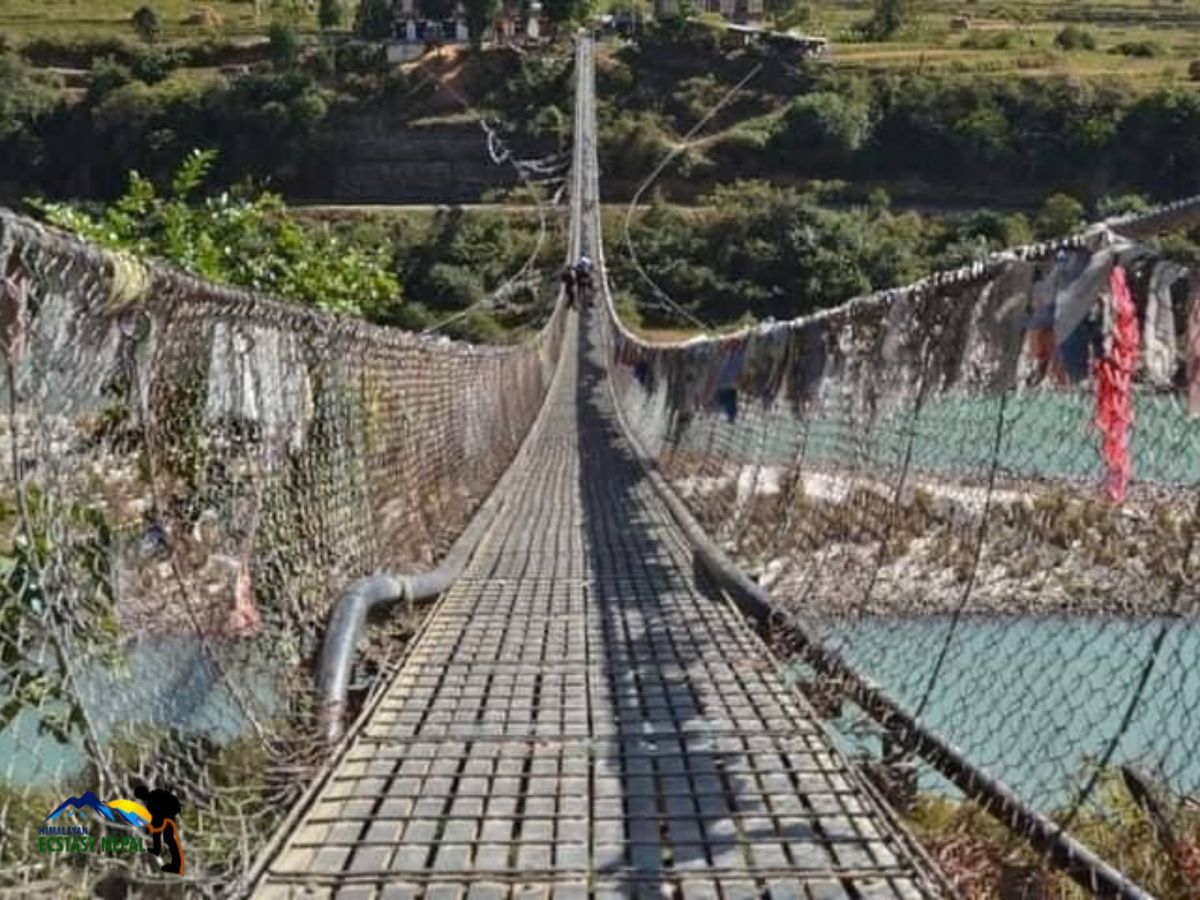
A short walk from the dzong, this bridge crosses the Pho Chhu river and is one of the longer suspension bridges in the region, strung with rows of prayer flags along its length.
It is not a tourist installation but a working bridge, used daily by people from nearby villages to move between the valley and the dzong area.
Walking across gives you a different vantage point on the river and surrounding rice terraces than you get from the dzong grounds, and the light sway of the bridge underfoot is part of the experience rather than something to worry about.
Paro Valley
Paro sits lower and quieter than Thimphu, with a compact main street lined with small shops, bakeries, and guesthouses rather than large buildings.
The valley itself is agricultural, with rice paddies spreading out from the town and mountains rising on both sides, giving it a different feel from the capital.
Because several of the trip's most important sites sit within or close to the valley, Paro also works as a natural place to slow down after the longer travel days, with time in the evenings to walk the town at your own pace.
Rinpung Dzong
Built in the 1640s, this fortress overlooks Paro town and takes its name from a phrase meaning "fortress on a heap of jewels."
You enter across a traditional covered wooden bridge, which remains one of the more distinctive approaches to any dzong in the country. Today it houses Paro's monastic body and local government offices, and while most interior chapels are closed to visitors, the courtyards, wood carving, and wall paintings give a good sense of traditional Bhutanese construction.
The dzong is also lit in the evenings, so if you are staying nearby, it is worth a look after dark as well.
Ta Dzong / National Museum
Originally built as a round watchtower above Rinpung Dzong, this building has served as Bhutan's National Museum since the late 1960s.
Its unusual shape, resembling a conch shell, sets it apart from the rectangular dzongs elsewhere on the trip. Inside, the museum holds thousands of items, including thangka paintings, religious art, historical weapons, and postage stamps, giving useful context for the dzongs and temples you visit afterward.
The building was damaged in a 2011 earthquake and underwent a long restoration before reopening, and it is closed on Mondays, so this is worth checking against your specific schedule.
Kyichu Lhakhang
This is one of the oldest temples in Bhutan, with local tradition dating its origins to the 7th century, making it noticeably older than the dzongs elsewhere on the route. It is smaller and quieter than the fortresses you visit earlier in the trip, with a more intimate, personal atmosphere suited to a slower visit.
In the courtyard, look for the orange trees, which are said to bear fruit throughout the year regardless of season. The temple remains an active place of worship, and visiting here offers a useful contrast to the larger administrative dzongs, showing a different, older side of Bhutanese religious architecture.
Taktsang Monastery (Tiger's Nest)
Built into a sheer cliff face above the Paro Valley, Taktsang Monastery marks the site where Guru Rinpoche is said to have meditated in a cave after arriving in Bhutan in the 8th century.
Reaching it requires a genuine hike, climbing roughly 500 meters over several hours on a trail through pine forest, with a viewpoint cafeteria partway up offering your first close look at the monastery across the gorge.
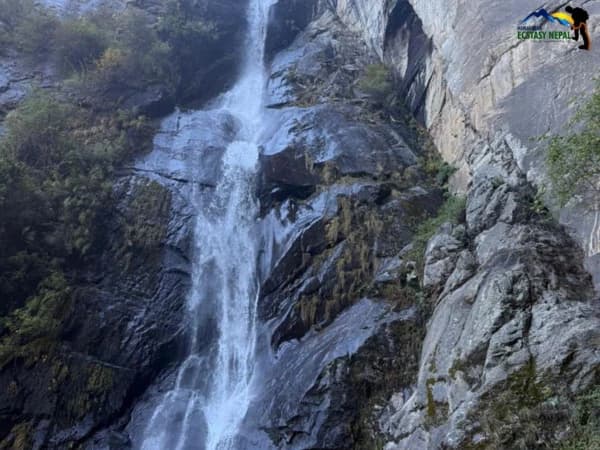
The final stretch involves stone steps down toward a waterfall and then a steep climb up to the monastery gate, which is the most demanding section of the walk.
Photography is not permitted inside the temples, so the visit itself is a quieter, more contemplative stop after the physical effort of getting there. For most visitors, this combination of setting, history, and effort makes it the single most memorable stop of the entire trip!
Bhutan Tour via Nepal - 10 Days Itinerary
Kathmandu to KathmanduExpand all
Welcome to Nepal! Our team meets you at Tribhuvan International Airport and takes you to your hotel in Kathmandu (1,400 m). Settle in and rest after your journey.
This is also our preparation day for Bhutan. Your trip leader checks your passport and confirms that your Bhutan visa is ready. We go through the plan for the coming days and answer your questions.
Pack a few key things for Bhutan. Bring clothes with long sleeves and long trousers for temples and dzongs, a warm layer for cool mornings, and sturdy walking shoes for the Tiger's Nest hike.
If you have free time, take a slow walk near your hotel. Try to sleep early, because your flight to Bhutan is the next day!
Today we fly from Kathmandu (1,400 m) to Paro (2,280 m). The flight takes about 50 to 60 minutes. Sit on the left side if you can.
On a clear day you may see Everest, Lhotse, Makalu, and Kanchenjunga, and then Bhutan's own Jomolhari. The plane then drops into the narrow Paro valley!
After immigration and customs, you meet your Bhutanese guide and driver. We drive about 30 minutes towards Thimphu and stop at Tachog Lhakhang, the "Temple of the Hill of the Excellent Horse". The saint and bridge builder Thangtong Gyalpo founded it in the 15th century, and his family still looks after it.
The old iron chain bridge here washed away in a flood in 1969. It was rebuilt in 2005 using the original chains. Today it is kept for its history, and visitors cross on a newer bridge beside it. The temple is private, so the inside may not always be open.
From here we continue to Thimphu (2,334 m). The full drive from Paro is about 55 km and takes 1 to 1.5 hours without stops. You have gained about 900 m since Kathmandu, so drink water and go slowly. If you feel fresh, take an evening walk around Clock Tower Square.
Today we see the best of Thimphu at an easy pace. We start at the National Memorial Chorten, built in 1974 in memory of Bhutan's Third King, Jigme Dorji Wangchuck. It is about 33 m tall. Local people walk around it clockwise all day, spinning prayer wheels. It holds no remains, only the king's photo in a shrine.
Next is the Motithang Takin Preserve. The takin is Bhutan's national animal, and it looks like a goat and a cow mixed together. A legend says the saint Drukpa Kunley made it that way. The animals live in a fenced forest here because they would not stay away from town when they were set free. The preserve is closed on Mondays.
In the afternoon, visit the Jungshi Handmade Paper Factory to see workers make paper from daphne bark. Nearby is the Centenary Farmers' Market, open from Friday to Sunday. Then drive up to the Buddha Dordenma at Kuensel Phodrang. This bronze Buddha is covered in gold and is about 54 m tall. It was finished in 2015 and holds about 125,000 small Buddha statues.
We end at Tashichho Dzong, which holds the king's throne room and government offices. On weekdays visitors can enter only after office hours, around 5 pm. On weekends it opens through the day, so your guide sets the order of the day to match.
We leave Thimphu in the morning and climb to Dochula Pass (3,100 m), about 22 km and 45 minutes from town. The pass has 108 chortens built by Queen Mother Ashi Dorji Wangmo Wangchuck for the soldiers who died in the 2003 conflict.
Nearby stands the Druk Wangyal Lhakhang, built in 2008 to honour the Fourth King. On a clear day you can see the eastern Himalayas. It is cold up here, so keep a jacket handy.
From the pass the road drops about 1,850 m through changing forest to the warm, green Punakha Valley (1,242 m). The full drive from Thimphu is about 71 to 77 km and takes 2.5 to 3 hours without stops.
Before Punakha town, we stop at Chimi Lhakhang, about 10 km away. We walk 20 minutes from Sopsokha village through rice fields to the temple on a small round hill. People know it as the Fertility Temple.
It was built in 1499 on a site blessed by the saint Drukpa Kunley, known as the Divine Madman. The painted symbols on village houses are protective signs, believed to keep away bad spirits. After the walk, we drive on to Punakha and check in.
Today we start early with the optional hike to Khamsum Yulley Namgyal Chorten. From Yebesa village, we cross a footbridge over the Mo Chhu and climb through rice fields and pine forest for 30 to 45 minutes.
The four-storey temple was built by Queen Mother Ashi Tshering Yangdon Wangchuck and finished in 2004. It has wide views over the valley.
Then we visit Punakha Dzong, built in 1637 and 1638 by Zhabdrung Ngawang Namgyal. It stands where the Pho Chhu and Mo Chhu rivers meet. The first king, Ugyen Wangchuck, was crowned here in 1907.
It was Bhutan's capital until 1955, and it is still the winter home of the Central Monastic Body and the Je Khenpo, the chief abbot. To enter, we walk over the Bazam, a covered wooden bridge rebuilt in 2008.
Last, we walk to the Punakha Suspension Bridge over the Pho Chhu, about 15 minutes from the dzong. It is around 160 to 180 m long and sways a little, with prayer flags along its sides. Villagers use it every day. Allow about 45 minutes. We keep the day relaxed, so there is time for tea and rest.
Today is a long driving day. We go back over Dochula Pass (3,100 m) to Thimphu (2,334 m), then on to Paro (2,280 m). The full route is about 125 to 130 km. Plan on 4 to 5 hours of driving without stops. Mountain roads are slow, and we stop for photos and tea.
We have lunch in Thimphu. After the city, the road follows the Wang Chhu river to Chuzom, where the Pa Chhu and Wang Chhu meet. From there we drive up the Paro valley.
In Paro, check in to your hotel and rest. If you have energy, walk along the main street with its small shops, bakeries and cafes. In the evening you can see the walls of Rinpung Dzong lit up above the town. Tomorrow is a full sightseeing day, so go to bed early.
We begin at Ta Dzong, a round watchtower built in 1649 above Rinpung Dzong. Its walls are 2.5 m thick, and its shape looks like a conch shell.
It has been Bhutan's National Museum since 1968 and holds more than 3,000 items, including thangka paintings, religious art, and stamps. The 2011 earthquake damaged it, and it reopened in 2020 after long repairs. It is closed on Mondays.
From there, walk down to Rinpung Dzong, whose name means "Fortress on a Heap of Jewels". Zhabdrung Ngawang Namgyal ordered it built in 1644, and it was finished in 1646.
We cross NyamaiZam, a traditional covered wooden bridge, to enter. Today the dzong holds Paro's monk body and the district offices. Most chapels are closed to visitors, but the courtyards and the views are the highlight. Wear long sleeves and long trousers!
In the afternoon, visit Kyichu Lhakhang, about 10 minutes from Paro town. Tradition says the Tibetan king Songtsen Gampo built it in the 7th century, as one of 108 temples that pin down a giant demoness.
Kyichu holds her left foot. It is one of Bhutan's two oldest temples. Look for the orange trees in the courtyard, which are said to bear fruit all year.
This is the big day. We leave early and drive about 25 minutes to the trailhead at Ramthangka, around 2,600 m. Paro Taktsang, also called Tiger's Nest, sits at 3,120 m on a cliff. The climb is about 520 m over roughly 4 km one way. The round trip takes 4 to 6 hours, so we plan a full day.
The trail goes up through pine forest with prayer flags. After about 1 to 1.5 hours we reach the cafeteria at roughly 2,940 m, where you get the classic view across the gorge. Horses can carry you only this far, and only uphill. Beyond the cafeteria, the path goes down stone steps towards a small waterfall, then climbs steeply to the monastery gate. This last part is the hardest!
Guru Rinpoche, who brought Buddhism to Bhutan in the 8th century, is said to have flown here on a tigress. He meditated in a cave for three years, three months, three weeks, three days and three hours. The temples were built around that cave in 1692. A fire in 1998 burned the monastery badly, and it was rebuilt by 2005.
Leave your bag, phone and camera outside, because photos are not allowed inside. Wear layers, carry 1 to 1.5 litres of water, and use a walking stick on the steps. Walk slowly and take breaks!
After breakfast, we drive to Paro International Airport. The airport is close to town, so the transfer is short. Your Bhutanese guide tells you when to arrive, helps with check-in and says goodbye.
Try to sit on the right side of the plane. As you climb, you see the Paro valley fall away below you, and on a clear day the Himalayas stretch across the sky. The flight takes about 50 to 60 minutes.
In Kathmandu (1,400 m), our team meets you and takes you to your hotel. The rest of the day is free. The exact time depends on your flight, so you may want to rest, sort your photos, or buy last gifts in Thamel.
Today is your last day in Kathmandu. After breakfast, check out and make sure your passport and flight papers are in your hand luggage.
Our team takes you to Tribhuvan International Airport in time for your flight, based on your departure schedule. If your flight is late in the day, you may have some free hours for a last walk or some shopping.
Thank you for travelling with us. We hope Bhutan's mountains, temples and quiet valleys stay with you. If you would like to add trekking days in Nepal next time, our team is happy to help. Our services end at the airport!
Trip Cost Details
Includes
- Airport transfers in Kathmandu and Bhutan
- 2 nights’ accommodation in Kathmandu on a twin-sharing basis
- 7 nights’ accommodation in Bhutan on a twin-sharing basis
- Breakfast in Kathmandu and full board meals in Bhutan as mentioned in the itinerary
- Kathmandu–Paro–Kathmandu airfare
- Private transportation within Bhutan
- Licensed English-speaking Bhutanese guide throughout the tour
- Entrance fees for the sightseeing places mentioned in the itinerary
- Bhutan visa application and processing
- Sustainable Development Fee (SDF)
- All applicable government taxes and service charges
Excludes
- International airfare to and from Kathmandu
- Nepal visa fee, if applicable
- Travel insurance
- Personal expenses and shopping
- Alcoholic and bottled beverages
- Laundry and other personal services
- Tips for guides, drivers, and other staff
- Additional sightseeing or activities not mentioned in the itinerary
- Expenses caused by flight delays, cancellations, natural disasters, or other circumstances beyond our control
- Any additional costs arising from changes in government regulations or fees after booking
Trip Gallery
Essential Information
Best Time to Visit Bhutan
The best months for this itinerary are March to May and late September to November.
During these periods, the weather across Thimphu, Punakha, and Paro stays mild and mostly dry, and mountain views from places like Dochula Pass are more likely to be clear.
Here are the details:
Spring (March to May)
Days are mild in the valleys, and rhododendrons and other wildflowers bloom on the hillsides. Skies are often clear early in the season, though light rain becomes more common as May moves toward the monsoon.
This is a good season for the Tiger's Nest hike, since trails are dry and temperatures are comfortable for walking.
Autumn (late September to November)
This is generally considered the clearest season in Bhutan. The monsoon has passed, humidity drops, and skies stay blue for long stretches, which improves your chances of good Himalayan views at Dochula Pass and during the Paro flight.
Nights get cooler, especially in Thimphu and at the Dochula Pass, so a warm layer is useful even during the day in the mountains.
What to avoid?
- June to August (monsoon season): heavy rain, slippery trails, and a higher chance of flight delays into Paro due to cloud cover
- December to February (winter): cold mornings and possible snow at higher points like Dochula Pass, which can occasionally affect road travel over the pass
Whichever season you choose, weather in Bhutan can change quickly because of the different altitudes between Thimphu, Punakha, and Paro, so it is worth packing layers regardless of the month.
Bhutan Visa, SDF and Travel Requirements
Bhutan has a controlled tourism system, and a few requirements apply to almost all international visitors before you travel.
- Passport validity: Your passport must be valid for at least six months beyond your departure date from Bhutan.
- Visa: Most nationalities need a visa to enter Bhutan, and this must be arranged in advance through a licensed Bhutanese tour operator. Independent, walk-in travel is not permitted, so your itinerary needs to be confirmed before the visa application goes through. Citizens of India, Bangladesh, and the Maldives follow a different process and do not need the same visa.
- Visa fee: A one-time, non-refundable visa application fee applies per person.
- Sustainable Development Fee (SDF): This is a separate daily fee charged per person for each night you spend in Bhutan. It funds environmental and cultural preservation projects and does not cover your accommodation, meals, transport, or guide services, which are arranged separately. Reduced rates apply for children within certain age groups, and the current discounted rate is in effect through August 2027, though the Bhutanese government can review this.
- Confirmed itinerary: Because your visa is tied to your travel plan, changes to your dates or route need to go through your operator rather than being adjusted freely once you arrive.
- Entry point: For this tour, you enter and exit Bhutan by air through Paro International Airport.
Because visa and SDF rules can be updated by the Bhutanese government, we confirm the exact current fees and documents with you directly when we arrange your trip, and we handle the visa application on your behalf once your itinerary and travel dates are confirmed.
Accommodation and Food in Bhutan
On this tour, you stay in hotels and guesthouses in Thimphu, Punakha, and Paro that meet Bhutan's standard tourist accommodation requirements.
Rooms are generally comfortable and clean, with private bathrooms and hot water, though Punakha and more rural stops tend to feel simpler than Thimphu or Paro, which are the more developed towns on the route. We confirm specific accommodation details with you once your trip is booked.
Meals usually include a mix of Bhutanese and general international dishes, since most hotels and restaurants catering to tourists offer both. Bhutanese food often features rice, vegetables, and cheese, with chili appearing in many dishes, including the well-known ema datshi made from chilies and cheese.
If you prefer milder food, this can usually be arranged, and it is worth mentioning any dietary needs to your guide early in the trip so meals can be adjusted along the way!
Transportation During Bhutan Tour
Travel on this tour involves one flight each way and road transport within Bhutan.
- Kathmandu to Paro flight: This flight takes about 50 to 60 minutes and offers mountain views on a clear day, including Everest and other peaks along the Nepal Himalaya before the plane descends into the Paro valley. Flight schedules and views can vary depending on weather, particularly in monsoon months.
- Road travel in Bhutan: All travel between towns is by road, with a private vehicle, guide, and driver. The main road distances are Paro to Thimphu at around 55 km, Thimphu to Punakha at around 71 to 77 km over Dochula Pass, and Punakha back through Thimphu to Paro at around 125 to 130 km. Mountain roads are winding, so driving times are longer than the distance alone suggests, and stops for photos, tea, or rest are built into the schedule.
- Local transport: Within towns like Thimphu and Paro, most sightseeing is done on foot after your vehicle drops you near a site, since many attractions sit close together.
Bhutan Tour Difficulty Explained
Most of this tour is easy walking, made up of short strolls around dzongs, temples, and town centers, with no major physical demands. The one exception is the Tiger's Nest hike on day 8, which is a real uphill and downhill walk on a mountain trail rather than a short sightseeing stop.
The climb gains roughly 500 meters over about 4 km one way, and most visitors need 4 to 6 hours for the full round trip, including rest stops and time at the monastery. The steepest and most tiring section comes after the halfway viewpoint, where stone steps drop toward a waterfall before climbing again to the monastery gate. Coming down is easier on the lungs but harder on the knees, since the descent is steep in places!
You do not need trekking experience for this hike, but a reasonable level of fitness helps, along with a slow, steady pace and regular water breaks. Horses can carry you partway up on the ascent only, which is worth knowing if you want to save your energy for the upper section.
Altitude also plays a role, since Thimphu, Punakha, and Paro all sit above 1,200 meters, so walking slowly and staying hydrated throughout the trip in general makes the days more comfortable.
Clothing Tips For Your Bhutan Trip
Pack clothes with long sleeves and long trousers, since these are needed for visits to dzongs and temples where bare shoulders and knees are not appropriate.
Bring a few layers as well, because temperatures shift noticeably between the valleys and higher points like Dochula Pass. A warm jacket is worth packing for cool mornings and evenings, especially in Thimphu, even if the daytime weather feels mild.
Bhutan Tour: How to Start Your Trip
At HEN, we offer two options for those planning a Bhutan trip:
Option 1: Start from New Delhi, India
You can also start this Bhutan trip straight from New Delhi, India, as an optional way to begin. Our team will meet you at the airport and take you to your hotel, with breakfast included.
The next day, you fly out of New Delhi International Airport to Paro, Bhutan. Once you land, you check in to your hotel, and we give you a briefing about the trip ahead.
Choosing this option means you go directly from New Delhi to Bhutan, without adding the trip to Nepal. Depending on your flight plans, this can help you save time and skip the extra cost of travelling to and from Nepal.
Option 2: Start from Kathmandu, Nepal
If you want to see Nepal along with Bhutan, you can start the tour from Kathmandu instead. This is what we have been promoting in this package!
Nepal has a lot to offer on its own: mountain landscapes, many different cultures, old temples, heritage sites, rich wildlife, and a strong tradition of welcoming guests. The kindness and warmth of Nepali people are also a big part of what makes visiting the country special.
If you want to come to Nepal to see and experience all of this, starting your Bhutan trip from here lets you combine both countries in one journey. That's why our 10-day itinerary is built to begin and end in Kathmandu, with flights connecting Kathmandu and Paro.
In fact, you can even combine this trip with a few places in Nepal, like Kathmandu Valley and the tourism capital of Pokhara. Just let us know and we will help you customize a proper Nepal-Bhutan tour package!
Equipment Lists
For this 10-day Bhutan tour, you do not need extensive trekking gear. Pack comfortable clothing for changing weather, good walking shoes for sightseeing and the Tiger’s Nest hike, and essential personal and travel items. The list below covers the main things you may need throughout the journey.
Head
- Sun hat or cap
- Warm hat or beanie
- Sunglasses with UV protection
- Buff or neck gaiter
Upper Body
- T-shirts or lightweight shirts
- Fleece or warm mid-layer
- Light down or insulated jacket
- Waterproof or windproof jacket
Hands
- Lightweight gloves
Lower Body
- Comfortable trekking or hiking trousers
- Lightweight trousers for sightseeing
- Thermal trousers for colder months, if needed
Foot Wear
- Comfortable hiking shoes with good grip
- Comfortable casual shoes or sandals
- A few pairs of trekking or walking socks
Travel Documents
- Passport
- Visa and travel documents
- Travel insurance documents
- Copies of important documents
- Some local currency or a suitable payment method
Sun Stuffs
- Sunscreen
- Lip balm with SPF
- Sunglasses
Toiletries
- Toothbrush and toothpaste
- Personal toiletries
- Small quick-dry towel
- Personal medications
Eating & Drinking
- Reusable water bottle
- Water purification tablets or a small filter, if preferred
- Small snacks for the Tiger’s Nest hike
Bag Packs
- Daypack (20–30 L)
- Small luggage or duffel bag
- Waterproof bag or rain cover
Miscellaneous
- Headlamp or small flashlight
- Power bank
- Universal travel adapter
- Phone and charger
- Small umbrella or rain protection
Bhutan Tour via Nepal - 10 Days FAQs
Yes. Since the itinerary starts and ends in Kathmandu, it's easy to tack on extra time in Nepal before or after your Bhutan trip, as long as your flights line up.
It depends on the site. Courtyards, outdoor areas, and the surrounding scenery are usually fair game, but temples and shrine rooms often restrict photography. Your guide will let you know, and there are usually signs posted too.
Cover your shoulders and knees; long pants or a skirt, plus sleeved tops, work well. Some sites will also ask you to remove hats and shoes before entering.
Not at all. It's a demanding few hours of uphill and downhill walking over stone steps and uneven terrain, but you can go at your own pace and stop to rest whenever you need.
Paro's mountain airport means flights are sometimes delayed by weather. If that happens, our team will handle the rebooking and adjust your itinerary as needed.
No technical equipment required. A solid pair of hiking shoes, weather-appropriate layers, a small daypack, water, and sun protection will cover you.
Bhutan's currency is the Ngultrum (BTN), and the Indian Rupee is also widely accepted at the same value, though larger Indian notes are often refused. Cash is the main way to pay outside the bigger hotels, and card acceptance is limited even in Thimphu and Paro, so bring enough cash for the trip, in US Dollars or Indian Rupees, and change it at Paro Airport or a bank in Thimphu or Paro.
Travel insurance is not a legal rule for entering Bhutan, but we strongly recommend it. Medical care varies a lot across the country. The main hospital in Thimphu can provide emergency care and surgery, but hospitals elsewhere are usually basic. If you have a serious problem, you may need to be taken to another country, such as India or Thailand, and that can be very expensive.
Please choose a policy that covers medical treatment abroad, emergency evacuation, and trip delays or cancellations. The last one matters here, because bad weather can delay the Kathmandu to Paro flight. Keep a copy of your policy number on your phone and on paper.
Your guide is your first contact if you feel unwell. Tell them early, even for small problems like a headache, stomach trouble, or a sore ankle. They will arrange a doctor or call the ambulance number, 112. You will cross Dochula Pass at about 3,100 m and hike to Tiger's Nest, so mild altitude effects such as tiredness or a light headache are possible. Walk slowly, drink water, and rest if you need to.
Bring your regular medicines in their original packaging, with a doctor's note if you can, because some medicines can be hard to find in Bhutan.