TREK HIGHLIGHTS
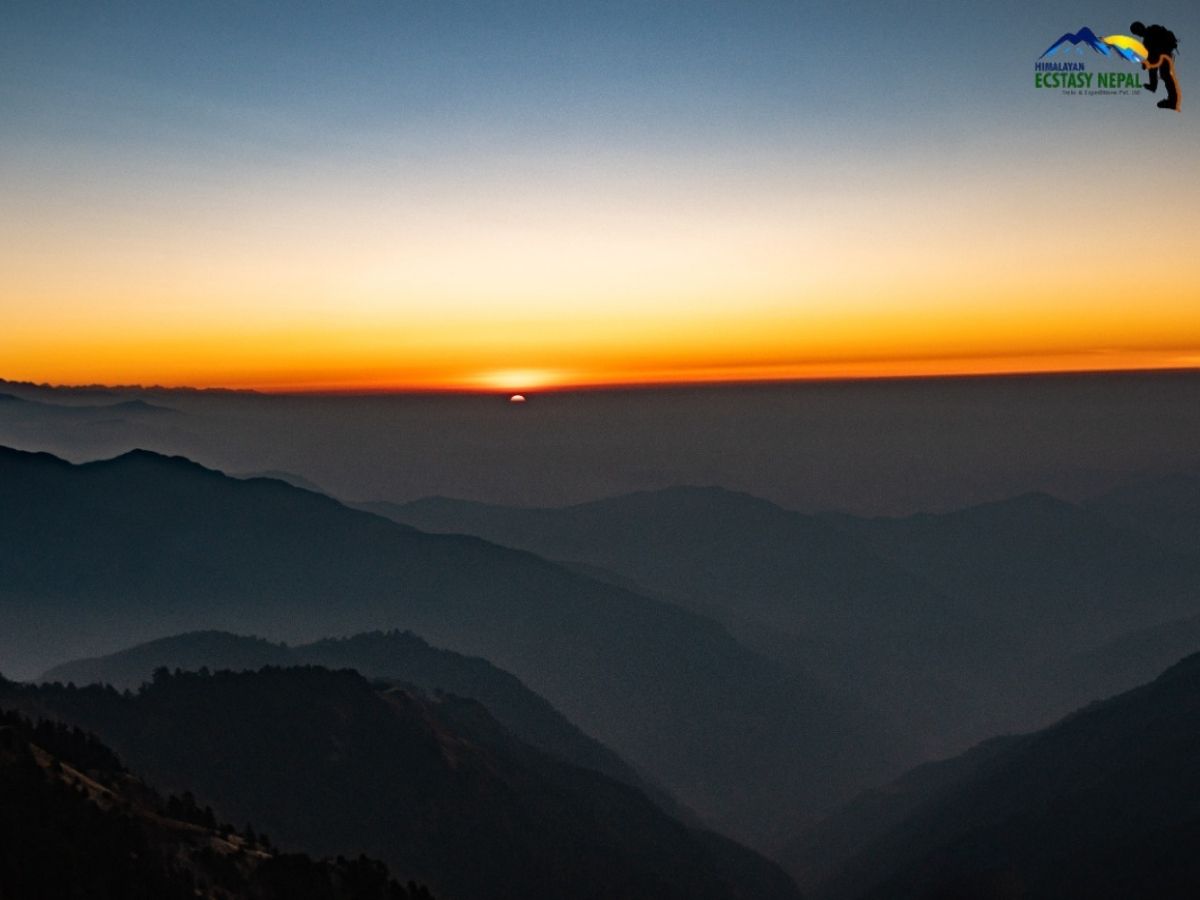
- Overnight stay at Mohare Danda (3,313m), watching sunset and sunrise from the same lodge without the early morning walk that Poon Hill requires.
- Walk through Gurung and Magar villages set among terraced fields and orange orchards.
- Visit Nangi, the birthplace of scientist Mahabir Pun, known for his pioneering work to bring internet connectivity to remote rural communities in Nepal.Stay in small, community-run teahouses rather than large commercial lodges.
- Pass through Ghorepani, Tadapani, and Ghandruk, one of the largest Gurung villages in the Annapurna region, on the way back down.
- Optional shorter route through Ulleri for trekkers who want to shave a day off the standard itinerary.
A note on group size: Since teahouse rooms in Bans Kharka, Nangi, and Mohare Danda are limited, this route works best with smaller groups. Large commercial groups may find lodge space tight in these villages, so we recommend booking early if you are traveling with more than a handful of people.
The Mohare Danda Trek is a 6-day trek in the Annapurna region that takes you away from the busier trails around Poon Hill and into a string of small Gurungand Magar villages that see far fewer visitors.
The trek starts and ends in Pokhara, rather than Kathmandu, so if you are flying into Nepal, you will need to reach Pokharafirst, either on a short domestic flight or a drive of roughly 6 to 7 hours.
If you would rather begin your trip in Kathmandu, we can organize the full trip from there on request, including your transfer down to Pokhara.
From Pokhara, you drive to Galeshwar (1,170m) and begin walking through forested hillsides and terraced farmland toward Bans Kharka (1,450m).
The trail continues up through Nangi (2,250m), a village long connected to the Gorkha regiments, before reaching the main highlight of the trek, Mohare Danda (3,313m).
From there, the route loops back down through Ghorepani, along the ridge near Deurali or Banthanti, then on to Tadapani and the well-known Gurung village of Ghandruk (1,900m), before the drive back to Pokhara.
This is not a technical trek. There are no high passes, glacier crossings, or exposed sections that require special equipment. The main physical demands are the daily walking hours, a steady climb up to Mohare Danda, and some steep stone stairs on the descent through Tadapani and Ghandruk.
Our team at HEN arrange your permits, guide, porter, and teahouse stays, so you can focus on the walking and the villages along the way.
Mohare Danda Trek: Starting from Pokhara or Kathmandu
The Mohare Danda Trek can be started directly from Pokhara, which is the standard option for this 6-day route.
However, if you are arriving in Nepal through Kathmandu, Himalayan Ecstasy Nepal can fully organize the trip from Kathmandu on request, including your arrival transfer, transportation to Pokhara, accommodation, trekking arrangements, and your return to Pokhara after the trek.
Suggested Kathmandu-to-Pokhara Trek Arrangement
If you choose to organize the trip from Kathmandu, the overall journey can be arranged as follows:
- Arrival in Kathmandu and transfer to your hotel
- Drive or flight from Kathmandu to Pokhara and overnight at a hotel
- Drive from Pokhara to Galeshwar (1,170 m) and trek to Bans Kharka (1,450 m)
- Bans Kharka to Nangi (2,250 m)
- Nangi to Mohare Danda (3,313 m)
- Mohare Danda to Ghorepani, followed by lunch and a trek toward Deurali or Banthanti
- Deurali/Banthanti to Ghandruk, with a lunch stop around Tadapani
- Drive from Ghandruk to Pokhara
This arrangement gives you the flexibility to begin your travel experience in Kathmandu while keeping the actual Mohare Danda trekking route starting from Pokhara. The Kathmandu portion can be fully organized according to your arrival plans and travel requirements!
Why Trek Mohare Danda With Himalayan Ecstasy Nepal?
- Local knowledge: We know this route well and can guide you through villages and lodges that sit outside the standard Annapurna trekking circuit.
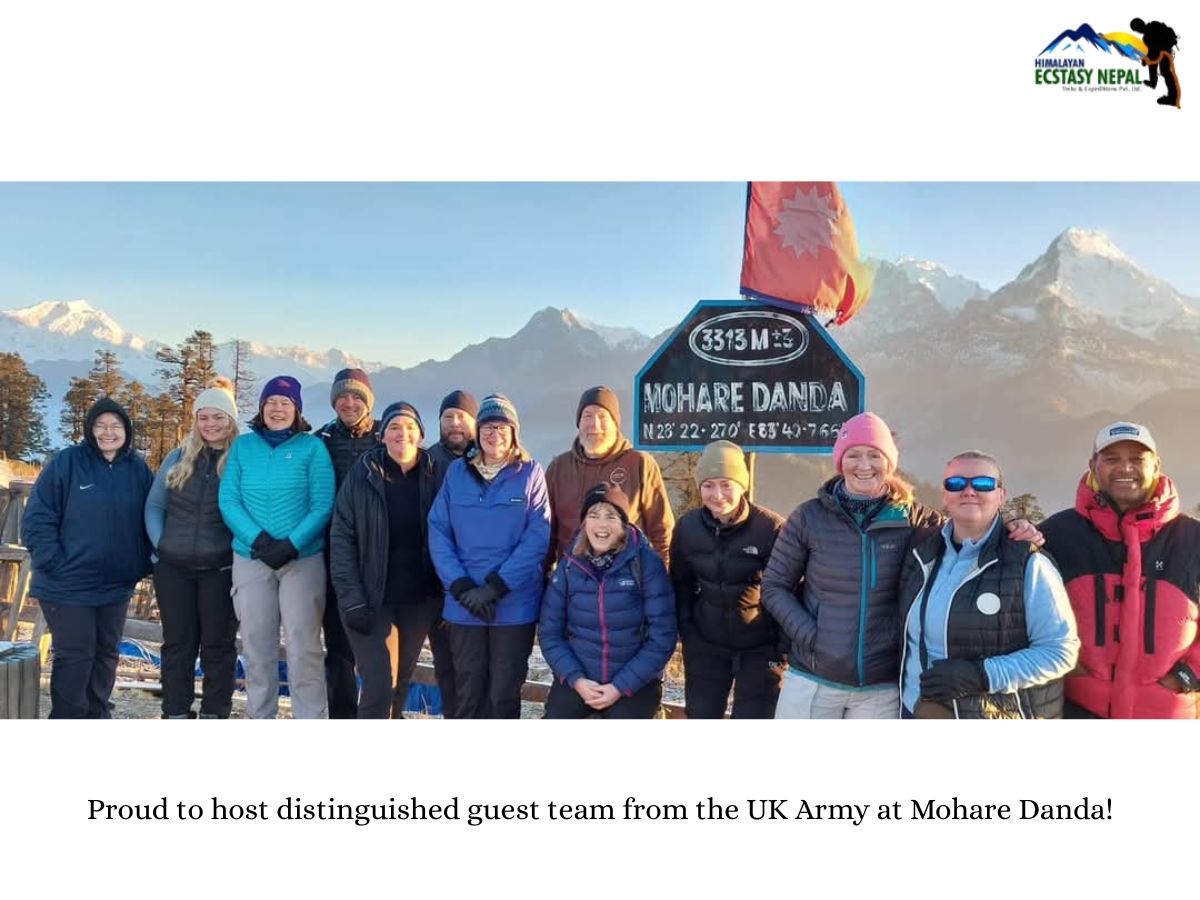
- Experienced guides: Your guide is a licensed, English-speaking trekking professional familiar with this specific trail, its lodges, and its local history.
- Small group focus: Since teahouse space in Bans Kharka, Nangi, and Mohare Danda is limited, we keep groups small so lodges are not overbooked.
- Flexible logistics: We can run this trip starting from Pokhara as planned, or arrange your full trip from Kathmandu if that suits your travel plans better.
- Safety and support: Your guide carries a first aid kit and stays with you through the walking days, watching for early signs of altitude discomfort, particularly on the climb from Nangi to Mohare Danda.
- Route options: If you want a shorter trip, we can adjust Day 4 to route you through Ulleri instead of the overnight at Deurali or Banthanti.
The Community Trekking Concept Behind Mohare Danda
The community-run lodge concept in the Mohare Danda area was developed as part of a wider effort to bring sustainable tourism and economic opportunities to remote mountain communities.
The concept was started around the vision of scientist and social innovator Mahabir Pun, whose work focused on connecting rural communities with new opportunities while keeping local people at the center of development.
Himalayan EcstasyNepal was involved in developing and operating the first community-run trekking experience in this area in cooperation with Far Away Adventure Company from Sweden.
The idea was to move beyond conventional trekking routes and create trips that passed through middle-hill villages, where accommodation and tourism services could be operated by local communities!
This approach allowed trekkers to stay in community-run lodges and local teahouses, while a greater share of tourism income remained within the villages. The model later became an inspiration for operating similar community-based trips through rural villages in other parts of Nepal.
Main Attractions of the Mohare Danda Trek
These are the natural attractions on this 6-day Mohare Danda Trek:
Mohare Danda (3,313 m) and Poon Hill (3,210 m)
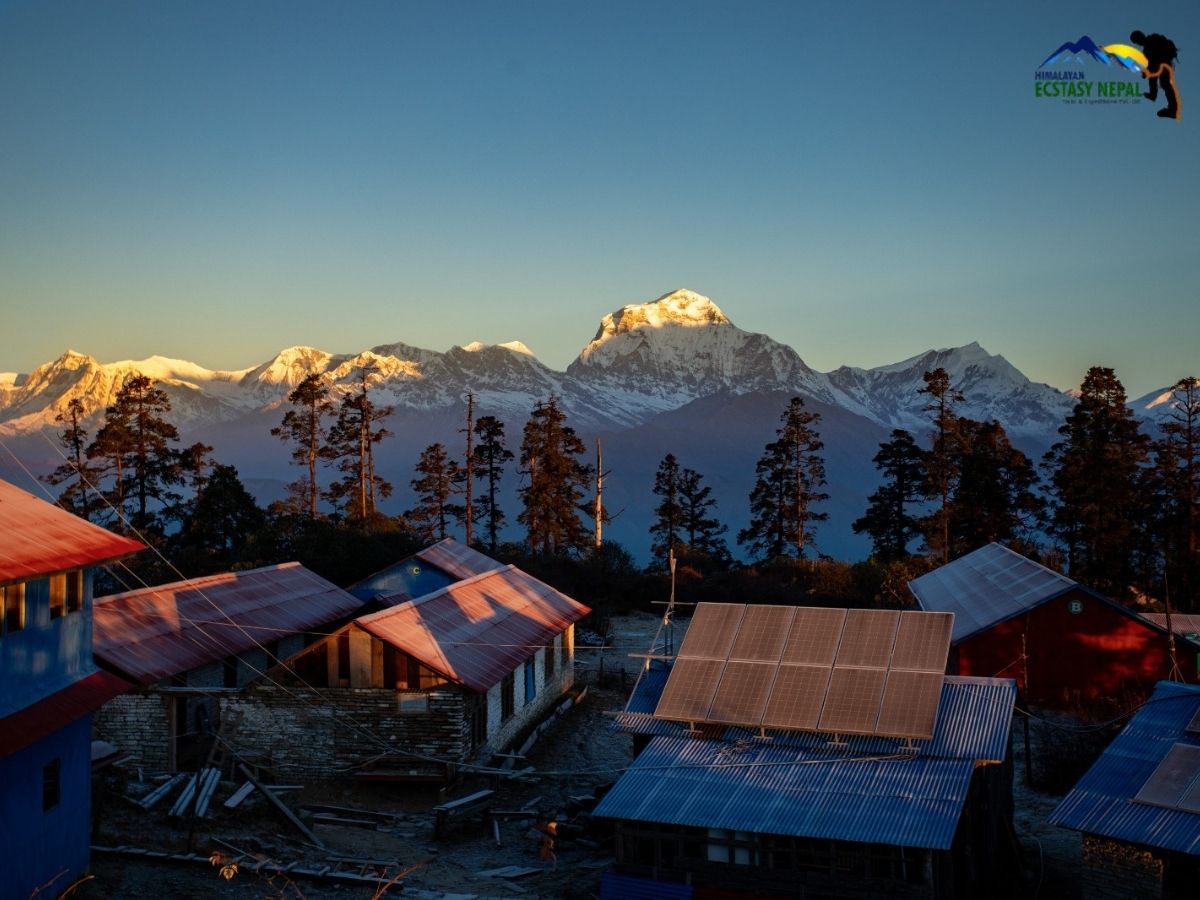
Mohare Danda is the reason most trekkers choose this route. Unlike Poon Hill, where the usual plan is to leave your lodge in the dark and walk uphill for 1.5 to 2 hours to reach the viewpoint before sunrise, your teahouse at Mohare Danda sits right at the viewpoint itself.
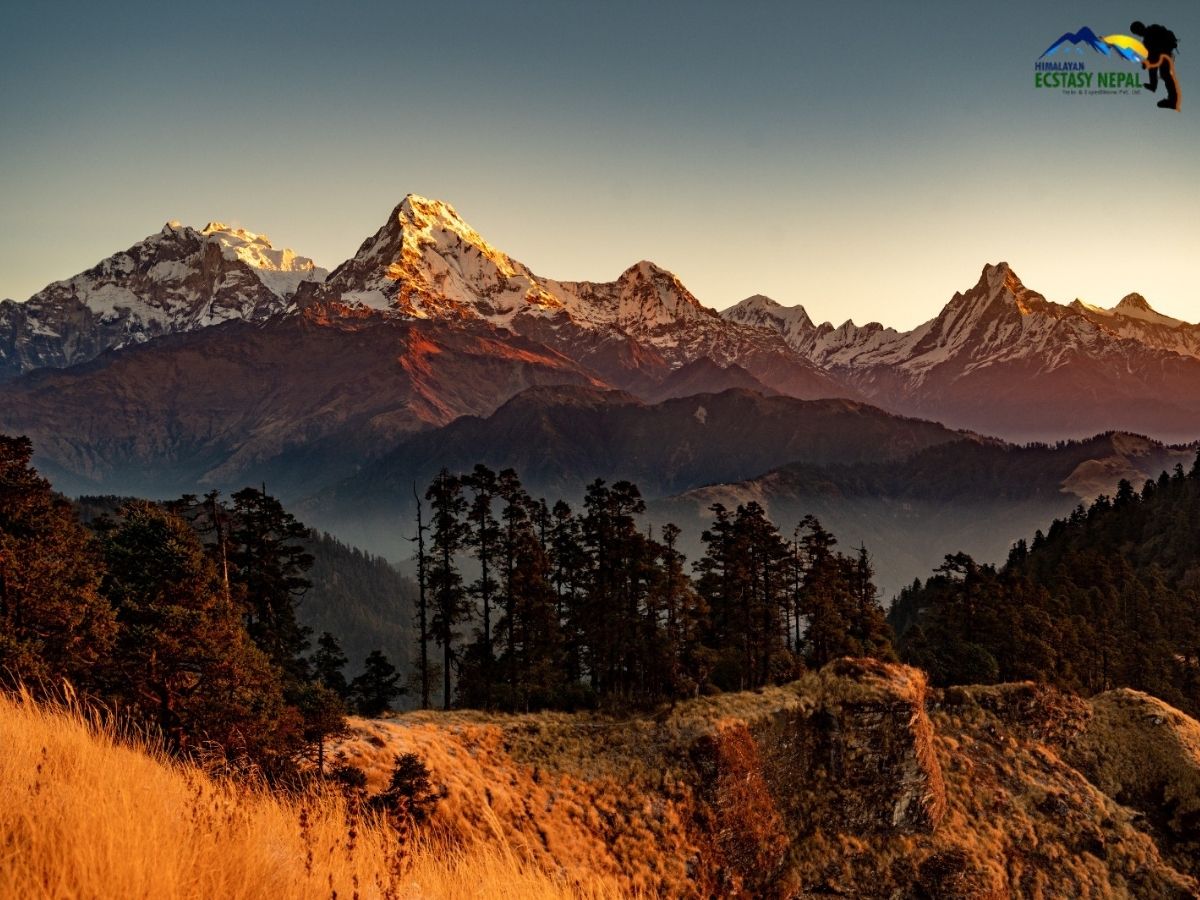
You can watch the sunset the evening you arrive and the sunrise the next morning without leaving the lodge area, with hot tea or coffee and breakfast while the light changes over the Dhaulagiri, Annapurna, and Machhapuchhre ranges.
Mohare Danda also sits a little higher than Poon Hill, at 3,210 m, and draws a much smaller crowd, so the view comes without the early morning rush that Poon Hill has become known for.
Nangi Village
Nangi Village is one of the most important stops on the Mohare Danda Trek and is closely associated with Mahabir Pun, the Nepalese scientist and social innovator. Nangi is his birthplace, and the village became an important starting point for his efforts to bring modern communication technology to remote parts of Nepal.
Long before reliable internet access became common in Nepal's rural mountain communities, Mahabir Pun worked to connect villages like Nangi with the wider world. His approach used wireless communication equipment installed high above the ground, including on large trees, to establish internet connectivity in remote areas.
Nangi became an example of how technology could be used to transform the opportunities available to people living far from Nepal's major towns and cities.
The effort to bring internet connectivity to rural Nepal started from Nangi, making the village significant not only for its place along the trekking route but also for the history of rural technology and community development in Nepal.
Today, trekkers passing through Nangi can experience a village where tourism, community development, education, and technology have all played a role in changing the lives of local residents. The village is also known for its school and its long history of residents serving in the Gorkha regiments of the UK and India.
Gurung and Magar Villages, Terraced Fields, and Orange Orchards
Much of the trail between Bans Kharka and Mohare Danda runs through Gurung and Magar communities.
The hillsides here are heavily terraced, and at the lower and middle elevations, many of these terraces are planted with orange trees, a common and reliable crop in this part of Myagdi and Kaski.
Walking through these villages gives you a close look at farming life that continues much as it has for generations, alongside small community-run teahouses rather than large commercial lodges.
Ghandruk (1,900m)
After the quieter villages earlier in the trek, Ghandruk offers a noticeably different experience. It is one of the largest and most well-known Gurung villages in the Annapurna region, with stone-paved paths, more developed lodges, and a stronger tourism presence than Bans Kharka or Nangi.
Reaching Ghandruk on Day 5 gives you a useful contrast between the working village life you have walked through earlier in the trek and a village that has built more of its economy around trekking itself!
Who This Trek Suits?
- Trekkers who want the classic Poon Hill style sunrise view without the early morning crowd
- Travelers interested in Gurung and Magar village life and the Gorkha heritage of the Nangi area
- Smaller groups and independent trekkers, since lodge space along the route is limited
- Trekkers with some hiking experience who want a moderate trek without technical sections
- Photographers and travelers who prefer quieter trails over the busier main Annapurna routes